Cooking for one with a small pan
You want to keep using your existing small soup pan. What matters is that its base is induction-compatible and that its size meets the specifications for the particular hob.


For a portion of carrot soup, a portable single hob is a good fit if it recognises your induction-compatible pan and its size meets the model’s specifications. For simmering, easy-to-use lower power settings matter more than the highest possible wattage. If space is limited, also check the appliance dimensions, cable and setup instructions. Temperature settings shown on the hob are manufacturer specifications; they don’t measure the temperature of the soup.
You want to keep using your existing small soup pan. What matters is that its base is induction-compatible and that its size meets the specifications for the particular hob.
If you make soup regularly, check how easily you can turn the power down once it has come to the boil. For this purpose, the controls and range of settings tell you more than the maximum wattage alone.
A portable hob can provide an extra cooking option if you have somewhere to store it. Compare the appliance dimensions and check that the cable and setup instructions suit the space you have in mind.
First, check that your pan is suitable for induction and meets the hob’s size requirements. Then weigh up the controls, the space available and the cost of any new cookware you might need.
| What matters | What to check before buying | Who is this important to? |
|---|---|---|
| Recognising a small pan | Check that the base is magnetic and meets the size requirements for the specific model; the glass surface is not automatically the minimum size for the pan base. | If I want to keep using my small soup pan, the hob needs to recognise it reliably. Around 36% of consumers put pan compatibility first. |
| Continuing to cook the soup | Compare the power settings and controls; don’t assume that a temperature setting measures the temperature of the soup. | When cooking gently, I want to be able to turn the power down easily without relying on a temperature shown for the food. Around 29% of consumers prioritise control over the simmering process. |
| Worktop space and connection | Check the dimensions, cable length and setup instructions for the particular model against the space you plan to use. | If my kitchen has little clear worktop space, I need a hob that will fit and can be connected suitably. Around 21% of consumers prioritise a compact setup. |
| Keeping costs in check | Factor in the cost of any induction-compatible cookware you might need; use a lid while cooking and turn down the power once the soup has heated up. | I want to avoid unnecessary purchases and cook the soup using suitable settings. Around 14% of consumers put purchase and running costs first. |
A small pan won’t necessarily work just because it fits on the glass surface. What matters is that its base is suitable for induction and meets the size requirements for the particular model.
Check the base of the pan with a magnet and compare its diameter with the model’s specifications. Haus & Garten Test notes that a magnet sticking to the pan is an indication that the cookware is suitable for induction.
A selected temperature setting doesn’t tell you the actual temperature reached by the soup in the pan.
After bringing the soup to the boil, continue cooking it on a lower power setting and keep an eye on the result rather than relying solely on a temperature display.
When cooking a single portion, the second cooking zone will go unused unless you’re preparing another dish at the same time.
Choose a second zone only if you’ll use it regularly, and bear in mind that it takes up extra space.
The Touch 2000 is a portable single hob. The manufacturer specifies a pan size of 12–24 cm.
The CTS 2000/IN is a single hob with extra settings for slow cooking.
The KP 1071 is a single glass-ceramic induction hob with a timer and stated external dimensions.
The PC-EKI 1062 is a single hob with touch controls, a timer and several settings.
The SIKP 2200 B1 is a specific model of portable single hob.
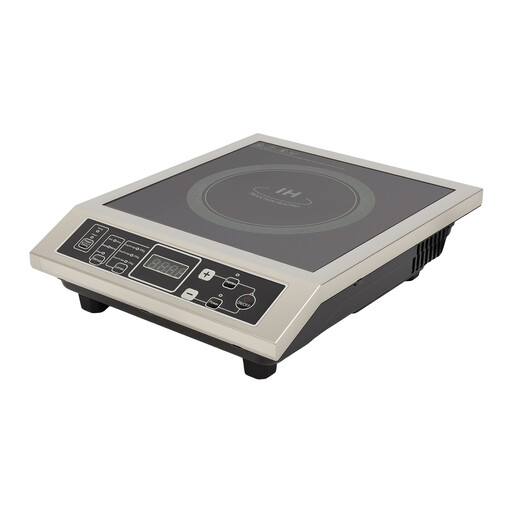
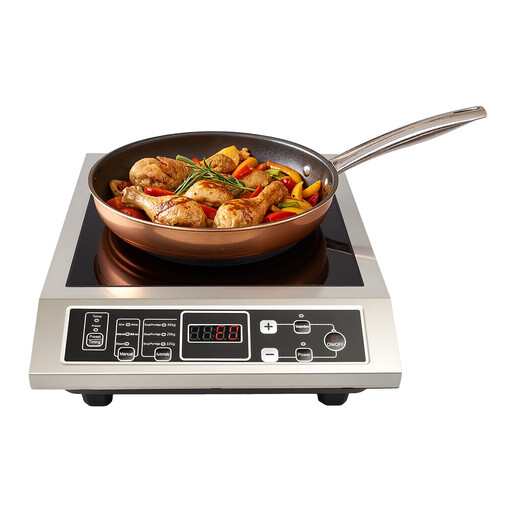
The Joybuy product options below are portable induction hobs for cooking with one pan. Before buying, compare the cookware and control specifications with what you need.
 No image available
An option for a single cooking zone if you’d like to use several temperature settings and a timer.
Listed in the product name: 3,500 W, power range 800–3,500 W, eight temperature settings, timer function and overheating protection.
 No image available
A portable cooking zone for anyone who wants to choose from several heat settings when continuing to cook.
Listed in the product name: 2,100 W, 28 cm, nine heat settings, 8-hour timer and touch controls.
 No image available
A single cooking zone with five selectable power settings for preparing food in one pan.
Listed in the product name: five power settings and 1,000 W.
 No image available
An option if you’d like to choose from several power settings while cooking and use a timer.
Listed in the product name: 3,500 W, ten power settings, timer preset and EU plug.
 No image available
An option with several power settings and automatic pan detection. Check carefully that the cookware specifications suit your small pan.
Listed in the product name: ten power settings, 176–572 °F, 3-hour timer and 23-hour preset. The product listing states that iron or stainless steel cookware with a base diameter under 9.8 inches is compatible.
No. The pan base must be suitable for induction and meet the size requirements for the particular model. The manufacturer specifies 12–24 cm for the CASO Touch 2000; this doesn’t automatically apply to other hobs.
Use a suitable pan with a lid, heat only as much water as you need and turn down the power once the soup has heated up. The German Environment Agency recommends, among other things, cooking with a suitable lid; this doesn’t guarantee a particular saving for an individual recipe.
No. Statutory consumer rights cover claims against the seller for faulty goods; a guarantee is an additional voluntary promise and is subject to its own terms. The Verbraucherzentrale (German consumer advice centre) makes a clear distinction between the two.
New appliances designed for 220–240 V AC and placed on the market in Germany must meet the relevant EU requirements and carry the required CE marking. The European Commission describes the CE mark as the manufacturer’s declaration that the product complies with applicable EU rules, not as an independent test mark.
The German Federal Office for Radiation Protection notes that electromagnetic fields can affect electronic implants and that the individual risk must be assessed by a doctor. This does not mean that a particular person or hob is automatically prohibited or automatically safe to use.