
Lieferung heute & morgen

Qualitätsgarantie

Willkommens-Angebote freischalten: KOSTENLOSE Lieferung | Bis zu 80 % RABATT | Kostenlose 30-Tage-JoyPlus-Testphase
App herunterladen
A dead car battery is more than just an annoyance—it can derail your plans and lead to unexpected costs. A portable jump starter promises a quick fix, but the market is crowded and confusing. Many devices advertise impressive numbers that don't always live up to their claims in practice. As your Joybuy Product Recommendation Officer, I'll help you identify the crucial features and avoid common purchasing traps.
Before you make a decision, you should be aware of three common marketing pitfalls that often lead to disappointment:
To make an informed decision, focus on a few crucial technical specifications. These determine whether a car battery booster will work reliably in an emergency or not.
The peak current indicates the maximum amperage the device can deliver for a short burst. This value is an initial indicator, but compatibility with your engine is more important.
Pay attention to the manufacturer's specifications regarding maximum engine size (e.g., "for up to 8L gasoline and 6L diesel engines"). A 12V jump starter is the standard for cars, SUVs, and motorcycles.
The capacity, often given in milliampere-hours (mAh), determines how many jump-start attempts are possible or how many times you can charge your smartphone. A more meaningful metric is the energy in watt-hours (Wh), as it combines voltage and capacity.
Even more important is the battery type:
A good portable jump starter should have fundamental protection mechanisms. Reverse polarity protection and short-circuit protection are essential to prevent damage to the car's electronics and the device itself. A display that shows the charge status and any error messages enhances user safety.
Additional features like a built-in LED flashlight or a jump starter with a compressor can offer real added value, provided they are well-implemented. Check the specifications carefully here (e.g., air pressure in PSI or light intensity in lumens).
Instead of making a one-size-fits-all recommendation, we have identified products that fit specific user profiles and avoid the pitfalls mentioned.

Why This Fits Their Persona: Ideal for drivers of small and compact cars who need a rock-solid, straightforward emergency solution for the glove compartment. The device focuses on the core function of jump-starting and is highly portable due to its light weight and compact size.
This device avoids the pitfall of unrealistic performance claims. Its 1200A peak current is a realistic figure for small to mid-sized gasoline and diesel engines, and it doesn't over-promise on power.
Very compact and lightweight design (approx. 330g). Integrated LCD display for easy monitoring of the charge status.
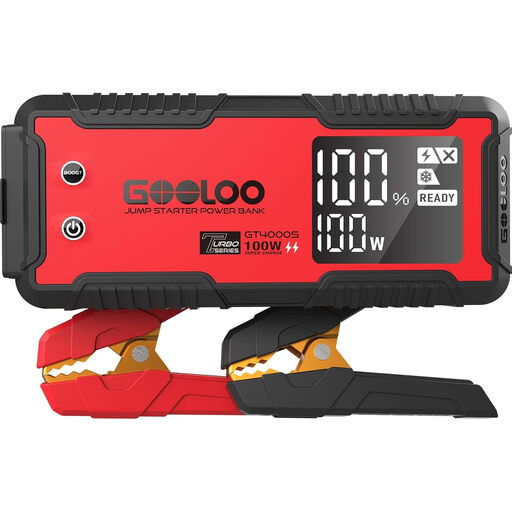
Why This Fits Their Persona: For drivers of SUVs, vans, or large-displacement vehicles who value maximum power and rapid deployment. The extremely fast charging function is ideal for people who are often on the go and can't afford long charging times.
This model escapes the trap of slow recharging. According to the manufacturer, its 100W fast-charging technology allows for a full recharge in just 1.2 hours—a concrete, verifiable advantage.
High peak current of 4000A for large engines. Two-way 100W fast charging for the unit and other devices like laptops.
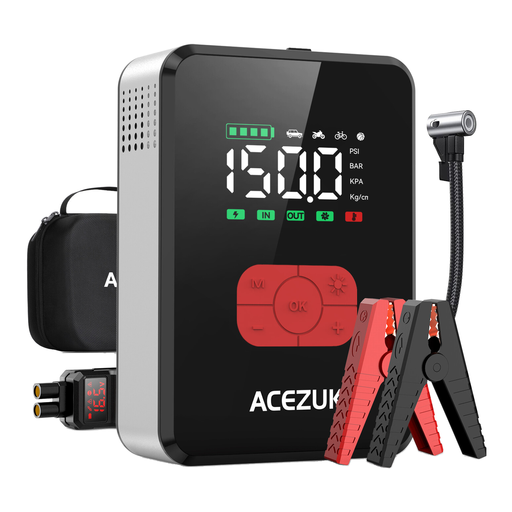
Why This Fits Their Persona: Perfect for campers, RV owners, and DIYers who need a robust multi-tool. The combination of very high jump-starting power and a capable compressor makes it a versatile companion for the road and the garage.
This device sidesteps the "underpowered multi-tool" trap by delivering high performance specs for both core functions—jump-starting (7000A) and air compression (150 PSI). The large pressure display screen underscores its functionality.
Powerful combination of a jump starter and compressor. Smart display with preset modes for easy operation.
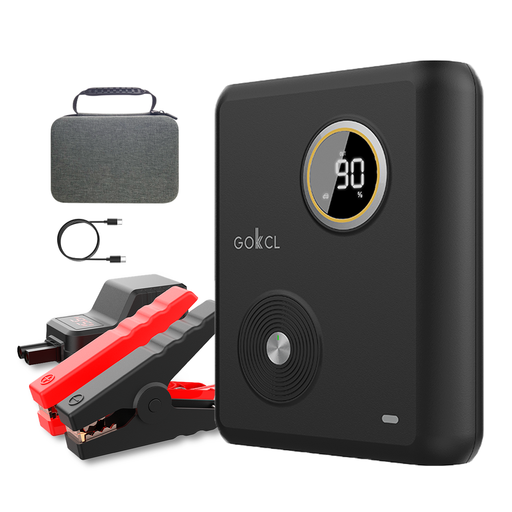
Why This Fits Their Persona: For anyone looking for a "set-and-forget" solution who wants to store the device permanently in their car without worrying about safety in extreme heat or cold. Durability and low maintenance are the top priorities here.
This device directly addresses the weaknesses of battery technology. According to the manufacturer, its sodium-ion technology offers high thermal stability and an extremely low self-discharge rate, solving the typical problems of lithium-ion batteries.
High operational safety across a wide temperature range (-40°C to 80°C). Very low self-discharge for long standby times.
We've compiled a complete, up-to-date list of products that fully meet these strict selection criteria and rigorous safety regulations.
This largely depends on the battery type. Conventional lithium-ion jump starters should ideally be checked and recharged every 3 to 6 months to maintain their lifespan and ensure they are ready for use. Models with sodium-ion technology have a significantly lower self-discharge rate and, according to manufacturers, often only need to be charged once every few years.
Yes, it's possible, provided the device has enough power. Diesel engines require a higher starting current than gasoline engines of a comparable size. When choosing, pay close attention to the manufacturer's specifications regarding compatibility with diesel engines and, when in doubt, select a model with a higher peak current (e.g., 2500A or more).
Modern, high-quality jump starters are equipped with multiple protection mechanisms to safeguard the vehicle's electronics. The most important feature is reverse polarity protection, which prevents current from flowing if the clamps are connected incorrectly. Additional safety features like over-current, over-voltage, and short-circuit protection ensure safe use. It is crucial to choose a device that meets these standards.