
Lieferung heute & morgen

Qualitätsgarantie

Willkommens-Angebote freischalten: KOSTENLOSE Lieferung | Bis zu 80 % RABATT | Kostenlose 30-Tage-JoyPlus-Testphase
App herunterladen
A dead car battery is frustrating. So is a flat tire. If both problems occur at the same time, often in the cold and in an inconvenient location, the situation can quickly become critical. A jump starter with a compressor promises to be the all-in-one solution for both problems. However, the market is filled with products whose advertising claims often suggest more than the technology can deliver.
As your Joybuy Product Recommendation Officer, I'm here to help you cut through the noise. Instead of falling for marketing hype, you should focus on the crucial technical features. We'll highlight the two most common traps that lead to a bad purchase and show you what really matters.
At first glance, many devices look powerful, but they prove to be inadequate in practice. Pay special attention to these two points to avoid disappointment:
To make an informed decision, focus on three verifiable core parameters. These determine whether a Jump Starter is suitable for your vehicle and your needs.
The most important factor is the device's ability to supply your specific engine with enough energy for the starting process.
A good integrated compressor is defined by two key metrics:
The internal battery is the heart of the device. Its capacity, often specified in milliampere-hours (mAh), determines how many start attempts are possible or how many times you can charge your smartphone when using the device as a Powerbank.
Modern safety mechanisms are just as essential. A high-quality 12V battery booster should have at least the following protection features:
These systems prevent damage to the vehicle's electronics and the device itself, even if the clamps are accidentally connected incorrectly.
Here are some recommendations tailored to different user profiles that take the above criteria into account.
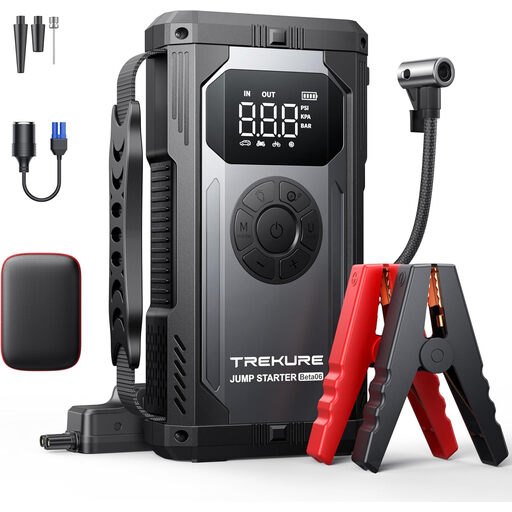
Why This Fits Their Persona: Ideal for owners of large SUVs, RVs, vans, or diesel vehicles with large-displacement engines. This device offers power reserves for demanding jump-starts, even in extremely cold temperatures.
The high 5500A peak current is backed by its compatibility with diesel engines up to 10.0L, proving realistic performance beyond mere marketing figures.
Very high starting power; 150 PSI compressor with a 35 L/min inflation speed; force-start function for deeply discharged batteries.

Why This Fits Their Persona: A balanced choice for most drivers of gasoline or diesel vehicles who need a reliable multi-tool for emergencies, camping, and daily use.
The compressor features an auto-shutoff function once the target pressure is reached. This prevents overheating and inaccurate inflation—a common issue with cheaper devices.
Powerful performance for engines up to 9.0L gas / 8.0L diesel; 150 PSI compressor with 5 preset modes; 10-level smart protection.
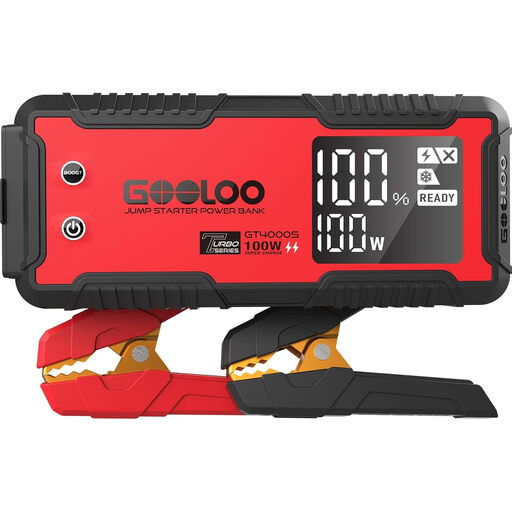
Why This Fits Their Persona: For users who prioritize extremely fast recharging of the jump starter itself and also want to use it as a powerful laptop power bank. Note: This model does not have an integrated compressor.
Instead of integrating a mediocre compressor, this device focuses on one core competency: extremely fast charging. It avoids the compromise of a weak all-in-one unit.
100W two-way fast charging (fully recharges in about 1.2 hours); can function as a laptop power bank; very high 4000A starting power.
We've compiled a complete, real-time list of products that fully meet these strict selection criteria and safety regulations.
Modern lithium-ion jump starters have a low self-discharge rate. Nevertheless, it is recommended to check the charge level every 3 to 6 months and recharge the device if necessary. This ensures it is fully ready for use in an emergency. Ideally, store the device at room temperature, as extreme cold or heat can affect battery performance.
Yes, many high-quality models feature a "Boost" or force-start function. This function bypasses the automatic voltage detection and allows a strong current pulse to be sent to even deeply discharged batteries (with a voltage below 9V). The exact procedure can be found in the user manual of the respective device.
That depends on the maximum pressure (PSI/Bar) of the compressor. A device with a 150 PSI rating is typically more than capable of delivering the required pressure for most SUV tires (often between 2.4 and 3.0 Bar). Additionally, look for a high airflow rate (L/min) to keep the inflation time within an acceptable range.