What to look for when buying
Start by comparing the layout and typing feel with the photo tasks you do. Then consider the connection and size to suit your visits to the library.
| What matters |
What to check before buying |
Who this matters most to |
| Typing noise |
Try the keys yourself if possible, and ask about the rules in the specific reading room. |
If I’m rating images at a shared reading desk, I want to disturb others as little as possible. Around 31% of consumers prioritise typing noise when buying. |
| Layout and usability |
Check that it has the DE-QWERTZ layout you want and that the commands in your photo app are easy to reach. |
If I’m entering lots of ratings and image captions, I need a familiar layout and easily accessible keys. Around 25% of consumers prioritise input and ease of use. |
| Connection |
Check the operating system, supported connections and permitted ports on your device. |
If I switch between my own devices, I need to be able to connect the keyboard to the devices I plan to use. Around 25% of consumers prioritise device compatibility. |
| Portability |
Consider the dimensions, available desk space and suitable protection for carrying it. |
If I take the keyboard to the library, it needs to fit in my bag and on my workspace. Around 19% of consumers prioritise portability. |
Joybuy products for organising photos on the go
The following Joybuy keyboards are designed for mobile typing. For each model, check that the layout and connection suit your device and how you plan to use it at the library.
 No image available
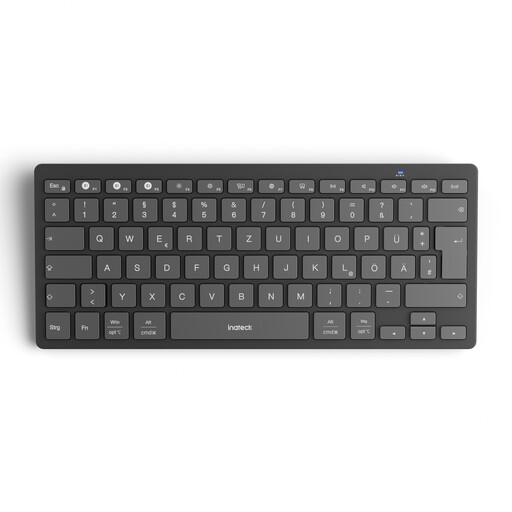
Inateck KB01003G Bluetooth keyboard with QWERTZ layout
The German QWERTZ layout and touchpad may suit typing and cursor control at a mobile workspace.
The product description lists three Bluetooth connections, a thickness of 5 mm, a weight of 228 g and 1.5 mm key travel.
View at Joybuy
 No image available
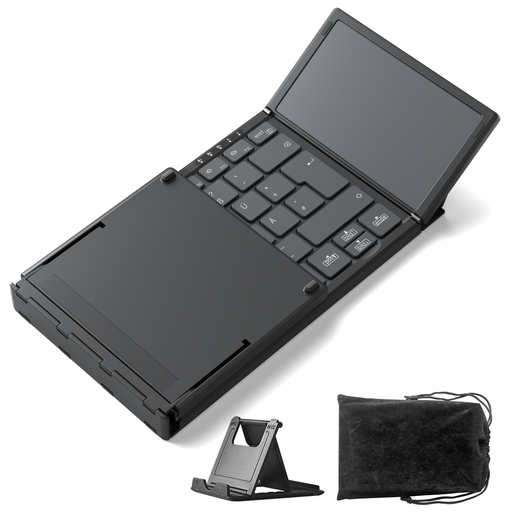
Inateck N0153BK foldable mini keyboard with touchpad
The foldable design and built-in touchpad may suit mobile typing without a separate mouse.
The product title lists QWERTZ, three Bluetooth channels and compatibility with iPadOS, Android and Windows. The product description calls the keys quiet; this isn’t a measurement taken at a library desk.
View at Joybuy
 No image available
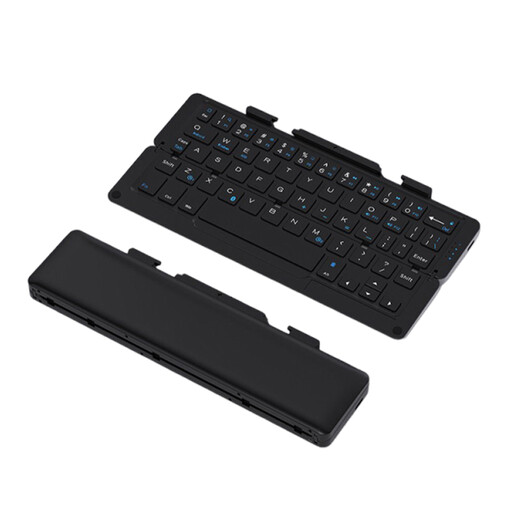
NAXSIR foldable Bluetooth keyboard with magnetic stand
The foldable design and detachable magnetic stand may be useful when working on the go with a phone or tablet.
The product description lists a Type-C charging port and scissor switches. The product title describes the keys as quiet; this doesn’t tell you how loud they’ll be in a reading room.
View at Joybuy
 No image available
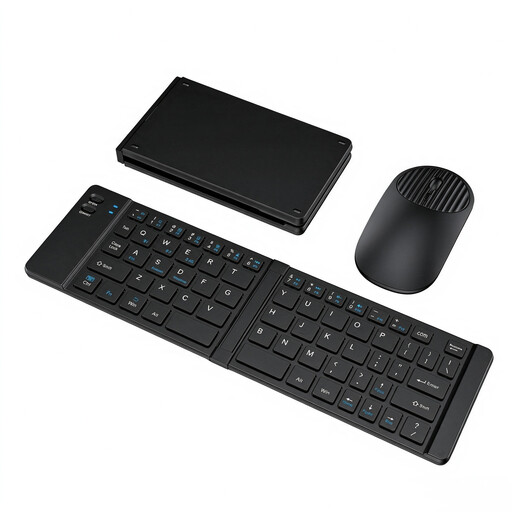
Foldable Bluetooth keyboard with wireless mouse
The wireless mouse may suit you if you want to carry both together.
The product title lists scissor keys, three connection modes, connections to up to three devices and USB-C charging. Compatible systems listed include Windows, Android and iOS. The title describes the keys as quiet, but this hasn’t been independently measured.
View at Joybuy
 No image available
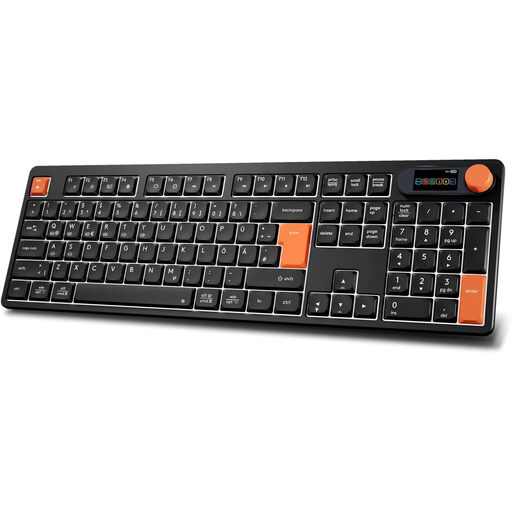
Wireless QWERTZ keyboard with LCD display and rotary dial
The QWERTZ layout is useful for typing in German; check that the listed connection options work with your device.
The product title lists Bluetooth, 2.4 GHz wireless and USB-C, four Bluetooth connections, a 2000-mAh battery and backlighting.
View at Joybuy
Frequently asked questions
Which keys should I try for sorting photos?
Check the commands in the photo app you actually use. Adobe documents commands for flagging, labelling and rating photos in Lightroom Classic, among others; you can’t assume other programmes use the same key commands.
Does every USB-C charging connection also work as a wired keyboard connection?
No, you can’t tell from the charging port alone. CHERRY explicitly describes a cable mode for data transfer on the KW 9200 MINI; check that the model you’re considering has this feature and that your device has the right port.
What should I check to make sure a Bluetooth keyboard complies with requirements in Germany?
Check the specific product’s information on CE marking, product identification and manufacturer details. The German Federal Network Agency includes Bluetooth products in its market surveillance; simply naming a model doesn’t confirm that it complies.
Can I return a keyboard bought online?
For a consumer distance contract where the rules apply, you generally have a statutory right to cancel. Under section 355 of the German Civil Code (BGB), the cancellation period is 14 days; for an ordinary purchase of goods, it starts when you receive the goods (section 356 BGB). Statutory exceptions and the terms of the specific purchase should also be considered.


