What should you look for when buying?
First, check that your device supports the video signal and power requirements. Then consider the space available, image detail, input options and how to protect confidential designs.
| Consideration |
What to check |
Who is it important to? |
| Connection and power |
Video output through the appropriate port, the required power output and, if necessary, a separate power adapter or built-in monitor battery. |
If I can’t count on having a power socket at my seat, the video signal needs to work through my device and I need to know how the monitor will be powered. Around 26% of consumers prioritise connectivity and power. |
| Space and portability |
Dimensions with the stand set up, tilt and weight, including the case you’ll need. |
If there’s little room alongside my laptop, a portable set-up matters more to me than the largest possible screen. Around 26% of consumers prioritise desk space and portability. |
| Image detail |
Resolution, aspect ratio and screen finish. Also check that the user interface remains legible in your preferred viewing layout. |
If I’m comparing small drawings and annotations, I want to see the detail without taking up more table space than necessary. Around 21% of consumers mainly want a detailed view. |
| Touch and pen input |
Touch support for your operating system, the type of pen required and compatibility with your annotation software. |
If I want to comment directly on storyboard panels, the input needs to work with my device and software. Around 16% of consumers prioritise direct input. |
| Confidentiality |
Check whether you’re allowed to show the material while travelling and whether your seat and set-up could let other passengers see it. |
If a design is confidential, I want to check whether it’s permitted and adequately protected to review it in a public carriage before opening it. Around 11% of consumers prioritise confidentiality. |
Joybuy picks for reviewing storyboards on the go
This selection includes portable second screens from 14 to 16 inches, including one model with a built-in battery. The key considerations are the table space available and a suitable connection for video and power.
 Image unavailable
PM14R 14-inch monitor
Could suit reviewing work where space is limited, provided your source device has a suitable video output.
IPS display with 1920 × 1200 pixels in a 16:10 format; ports: Type-C and Mini-HDMI.
Joybuy
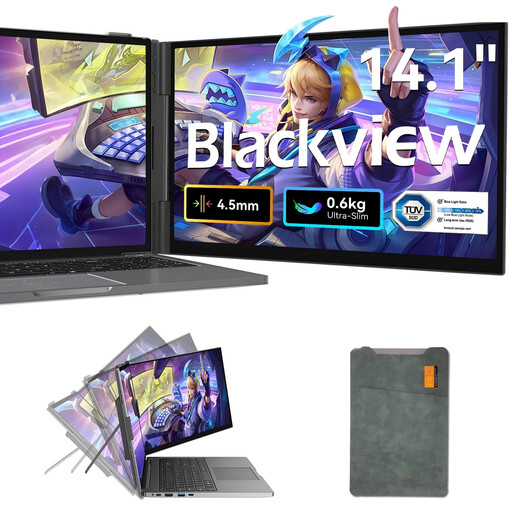 Image unavailable
Blackview SCM6 14-inch monitor
The 14-inch screen with built-in stand could be an option for reviewing work at a train table, if there’s enough room.
Listed in the product title: Full HD, IPS, 600 g and 4.5 mm.
Joybuy
 Image unavailable
UPERFECT 15.6-inch monitor
The larger screen could give you more room to work, provided there’s enough space on the table alongside your laptop.
Listed in the product title: 100% sRGB, adjustable built-in stand and USB-C.
Joybuy
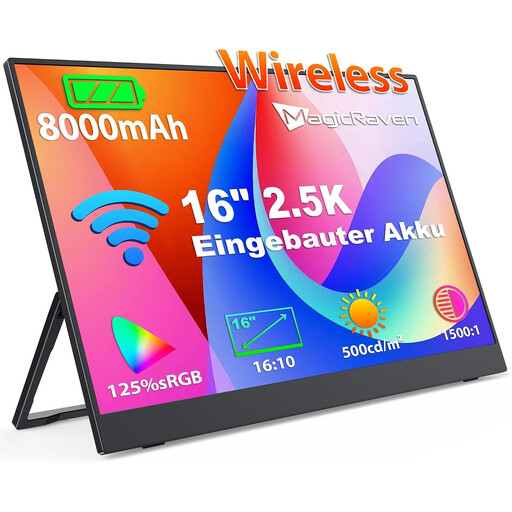 Image unavailable
16-inch monitor with built-in battery
A built-in battery could be an option if you can’t rely on your laptop or a seat-side socket for power; also check the weight and stated battery life.
Listed in the product title: 16 inches, IPS, 8000 mAh battery and wireless connection.
Joybuy
 Image unavailable
Arzopa Z1RC 16-inch monitor
Could be suitable for checking fine storyboard details, provided the larger screen fits on the table.
IPS display with 2560 × 1600 pixels and a 16:10 format.
Joybuy
Frequently asked questions
Is a USB-C cable between my laptop and monitor enough?
Only if the port on your source device can output video and provide enough power for the monitor. For the LG gram +view 16MR70, LG specifies DisplayPort Alt Mode and a power output of more than 7.5 W; ViewSonic specifies more than 10 W for the TD1656-2K. These requirements apply to specific models and aren’t a universal standard for all portable monitors.
Can I connect the monitor via HDMI and still draw on it?
It depends on the model and connection. For the Verbatim PMT-15-4K, the manufacturer requires an additional USB cable for touch and a power adapter when using HDMI. The software you’re using must also support input.
Can I expect to have a power socket right by my seat on an ICE train?
No, you can’t count on having a dedicated socket at every seat. Deutsche Bahn generally lists one power socket per pair of seats in second class, and one per seat on selected train models. This doesn’t guarantee the same arrangement on other types of trains or on a specific service.
Am I allowed to show a confidential storyboard on the train?
That depends on the classification of the material and, where relevant, your organisation’s policies. The BSI recommends that organisations set out which information may be handled outside their premises. Also check whether other passengers can see your screen.
Can I return a monitor bought online if it doesn’t fit on the train table?
For online purchases by consumers in Germany, there’s generally a 14-day right to cancel, starting from the day the goods are received; you must notify the retailer that you’re cancelling. The Verbraucherzentrale distinguishes this right from the legal guarantee that applies to faulty goods.


