
Lieferung heute & morgen

Qualitätsgarantie

Willkommens-Angebote freischalten: KOSTENLOSE Lieferung | Bis zu 80 % RABATT | Kostenlose 30-Tage-JoyPlus-Testphase
App herunterladen
A reliable portable power supply is no longer a luxury, but a practical necessity. Whether for charging an electric car on the road, running appliances while camping, or as a backup during power outages, the right equipment is crucial for functionality and safety. However, the market is flooded with products whose specifications often create more confusion than clarity. This guide will help you identify the key features and avoid common purchasing pitfalls.
Before making a purchase, you should be aware of three common issues that can lead to useless products and financial loss.
To make an informed decision, focus on the technical facts relevant to your specific use case.
For operating more than just simple tools in an RV or on a construction site, a 12V to 230V power inverter with a pure sine wave is the right choice. Calculate the required continuous power by adding up the wattage of all devices you plan to operate simultaneously. Plan for a buffer of about 20% to avoid overload.
A portable Type 2 charging cable, often called an emergency Schuko charging cable, allows you to charge from any standard household socket. Pay attention to the following features:
For off-grid power for camping, a foldable solar panel is a practical solution. Efficiency is largely determined by the type of solar cells, with monocrystalline cells generally offering higher efficiency. Also, check the included connectors (e.g., XT60, Anderson, DC adapters) to ensure compatibility with your power station or other devices.
Here are some product recommendations tailored to the needs of different user profiles, taking into account the criteria mentioned above.
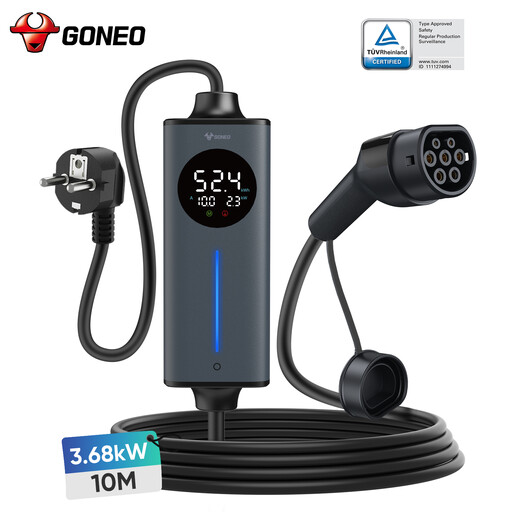
Why This Fits Their Persona: Ideal for owners of EVs or PHEVs who need a flexible charging solution for home and on the go without installing a fixed wallbox. The 10-meter cable provides sufficient reach for most parking situations.
Addresses the safety trap with integrated RCD protection (30mA AC + 6mA DC) and overheat protection, features often missing in cheaper alternatives.
Adjustable current to adapt to the building's wiring and a timer function to schedule charging for off-peak, cheaper electricity tariffs.
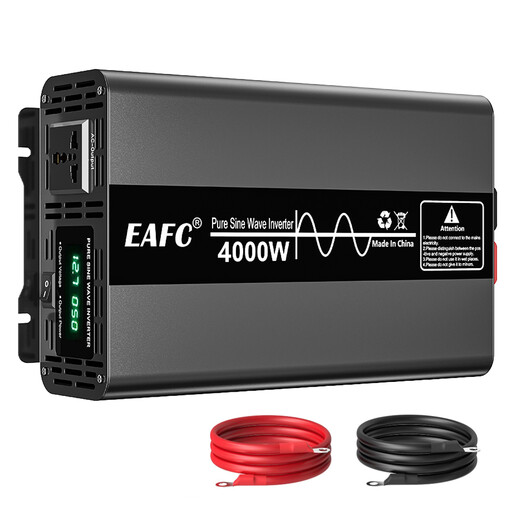
Why This Fits Their Persona: Perfect for use as an RV inverter, in a truck, or on a construction site. With 2000 watts of continuous power, it can reliably run demanding appliances like coffee machines, microwaves, or power tools.
Avoids the peak power trap by clearly stating the rated power of 2000W. It also generates a pure sine wave, protecting sensitive electronics from damage.
Comprehensive protection mechanisms (over-temperature, short circuit, over/under voltage) and a dual cooling system ensure safe and stable continuous operation even under heavy load.
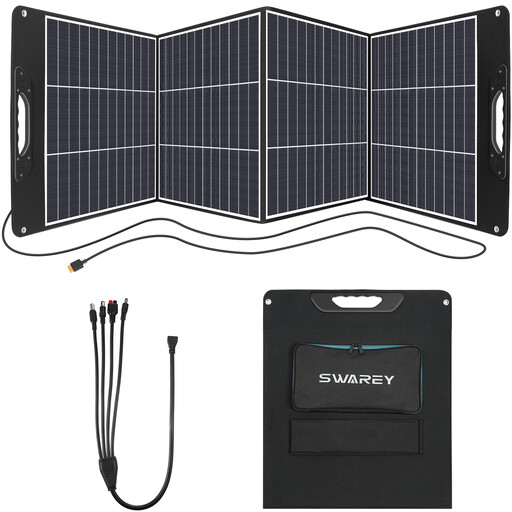
Why This Fits Their Persona: An excellent solution for campers and outdoor adventurers who want to charge their power stations, laptops, or smartphones off-grid using solar energy. The foldable design and carrying handle make it extremely portable.
Solves the compatibility problem with a 4-in-1 cable featuring XT60, Anderson, and DC adapters, fitting most common power stations. Direct charging options via USB-A and USB-C are also integrated.
High efficiency of up to 23% thanks to monocrystalline cells. The adjustable kickstand allows for optimal alignment with the sun for maximum energy yield.
We've compiled a complete, up-to-date list of products that fully meet these strict selection criteria and safety regulations.
Yes, this is possible with a suitable EV charging cable for a standard outlet (also known as a Mode 2 charging cable). While the charging power is lower than a wallbox at a maximum of 3.7 kW, it offers enormous flexibility for charging at home, at a friend's house, or on vacation. It is important to use a charging cable with integrated safety features and adjustable current, and to ensure that the socket and the building's wiring are rated for the continuous load.
The three most important points are:
A PC power supply is an internal component of a computer. It converts the 230V alternating current (AC) from the wall socket into various low DC voltages (e.g., 12V, 5V, 3.3V) needed by the motherboard, CPU, and other components. An external 12V to 230V power inverter does the exact opposite: it converts 12V direct current from a car battery into 230V alternating current, allowing you to run household appliances in your vehicle.