
Lieferung heute & morgen

Qualitätsgarantie

Willkommens-Angebote freischalten: KOSTENLOSE Lieferung | Bis zu 80 % RABATT | Kostenlose 30-Tage-JoyPlus-Testphase
App herunterladen
Whether for a camping trip, as an emergency power supply at home, or for your RV, a reliable off-grid energy source is becoming increasingly essential. A portable power station offers a flexible and silent alternative to traditional generators. However, the market is vast, and technical specifications can be overwhelming. This guide provides an objective overview to help you understand how power stations work and make an informed choice based on your individual needs.
The decision for a specific model depends on key technical parameters. Three criteria are particularly crucial for the device's functionality and longevity.
These two values are critical but often confused.
Modern power stations increasingly rely on LiFePO4 batteries (Lithium Iron Phosphate). Compared to older lithium-ion batteries (NMC/NCA), this technology offers significant advantages:
For a long-term and safe investment, a LiFePO4 battery is therefore highly recommended.
A good portable power supply should offer flexible charging options. Standard methods include charging from a wall outlet, in the car via the 12V port, and through a solar panel. Models with fast-charging technology can be fully charged from a wall outlet in just one to two hours.
The ability to use the power station as a solar generator is particularly relevant for off-grid use, such as providing power for camping or serving as a balcony power plant storage unit. Pay attention to the maximum solar input power (in watts) to optimise charging time with solar energy.
Based on the criteria mentioned, we have selected three models with different strengths for various use cases.
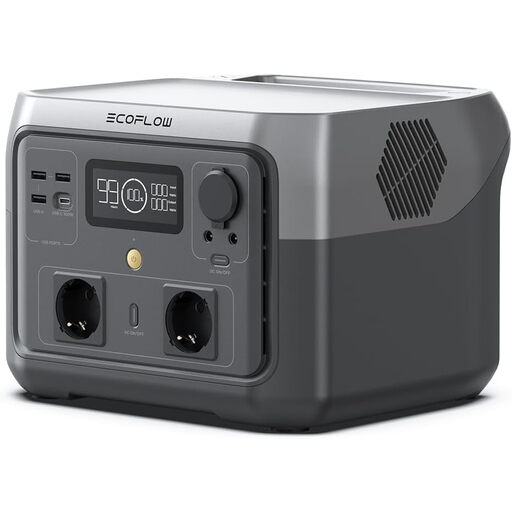
What sets it apart: The EcoFlow RIVER 2 MAX stands out for its extremely fast charging speed. According to the manufacturer, its X-Stream technology allows it to be fully charged from a wall outlet in just one hour. With 512Wh of capacity and a weight of only 6 kg, it offers a balanced combination of power and portability.
Advantages:
Who is it for? Ideal for outdoor enthusiasts and campers who need a lightweight yet powerful portable power station and value rapid recharging.
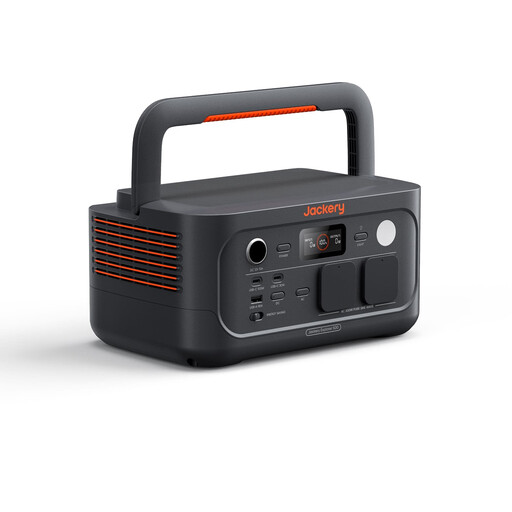
What sets it apart: The Jackery Explorer 500 V2 is designed for longevity and reliability. The manufacturer states a lifespan of up to 6,000 charge cycles with at least 70% capacity retention. With quiet AC charging at up to 36 dB and a rugged housing, it's a solid companion as a power station for RVs and extended trips.
Advantages:
Who is it for? A great choice for travellers and RV owners looking for an exceptionally durable and quiet portable power supply for continuous operation of devices like coolers or laptops.
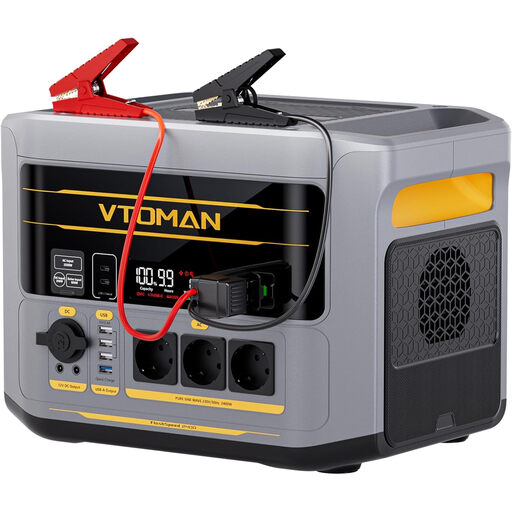
What sets it apart: The VTOMAN FlashSpeed 2400 is a powerhouse for demanding tasks. With a high rated output of 2400W and a capacity of 1408Wh, it can power energy-intensive appliances and power tools. Its capacity is also expandable to 2688Wh with an additional battery. The uninterruptible power supply (UPS) function with a 10ms switchover time and the included jump starter cable make it a versatile emergency power generator for home use.
Advantages:
Who is it for? Perfect for homeowners seeking a powerful emergency power solution, as well as for tradespeople or event organisers who need a reliable power source for high-performance equipment.
The models presented here cover common use cases. However, if you have a different capacity, specific ports, or another budget in mind, there are numerous other alternatives available.
Explore our full range of Solar Batteries and find the perfect solution for your needs.
1. What is the difference between a power station and an emergency generator? A power station is a battery-powered energy storage device. It operates silently, is emission-free, and can be safely used indoors. A traditional emergency generator is powered by a combustion engine, is loud, produces exhaust fumes, and is suitable only for outdoor use. Additionally, power stations are often lighter and more portable.
2. How long does a power station with a LiFePO4 battery last? The lifespan is measured in charge cycles. One cycle describes a complete discharge and recharge. Models with a LiFePO4 battery often achieve 3,000 or more cycles before their storage capacity noticeably declines (e.g., to 80% of the original capacity). With weekly use, this can correspond to a lifespan of over 10 years.
3. Can I use a power station as storage for my balcony solar system? Yes, many power stations are suitable as storage for a balcony solar system. They are charged during the day with the excess power from the solar panels. The stored energy can then be used in the evening or during bad weather to reduce electricity costs. It is important that the power station's solar input specifications (voltage and power) are compatible with the output values of the balcony solar system.