
Lieferung heute & morgen

Qualitätsgarantie

Willkommens-Angebote freischalten: KOSTENLOSE Lieferung | Bis zu 80 % RABATT | Kostenlose 30-Tage-JoyPlus-Testphase
App herunterladen
Whether you're camping in the great outdoors, on an off-grid construction site, or preparing for a power outage at home, a reliable portable power supply is becoming increasingly essential. A portable power station offers a flexible and quiet alternative to conventional generators. However, the market is vast, and technical specifications can be overwhelming.
This article serves as your guide. We'll explain the most important selection criteria and present a curated selection of models for various applications to help make your decision easier.
To find the right power station for your needs, three technical aspects are of key importance.
These two values are crucial but often confused.
Most modern power stations use Lithium Iron Phosphate batteries, known as LiFePO4 batteries. Compared to older Lithium-Ion (NMC) batteries, they offer significant advantages:
A device with a LiFePO4 battery is therefore a future-proof investment, especially if you plan to use the power station frequently, such as for powering your RV.
A good power station is versatile. Look for a sufficient number and variety of ports:
Charging options are just as important. In addition to charging from a wall outlet, compatibility with solar panels is a major plus. This turns your power station into a self-sufficient solar generator—ideal for extended off-grid stays. Some models also offer a UPS function (Uninterruptible Power Supply), which seamlessly keeps connected devices running during a power outage and serves as a backup generator for sensitive electronics.
Based on the criteria mentioned, we have compiled a selection of models suited for different needs.
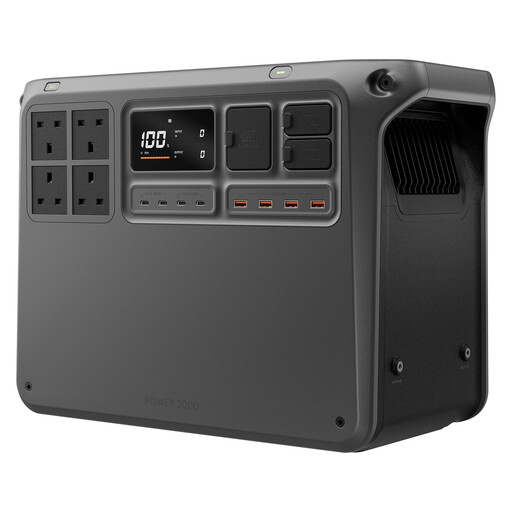
View the DJI Power 2000 on Joybuy.de
Why it stands out: The DJI Power 2000 is a powerhouse distinguished by its very high capacity and output. It's designed to run even power-hungry devices like electric kettles or power tools.
Pros:
Who is it for? This model is an excellent choice for homeowners seeking a powerful backup solution, as well as for demanding campers with RVs or DIY enthusiasts who depend on high, stable performance.
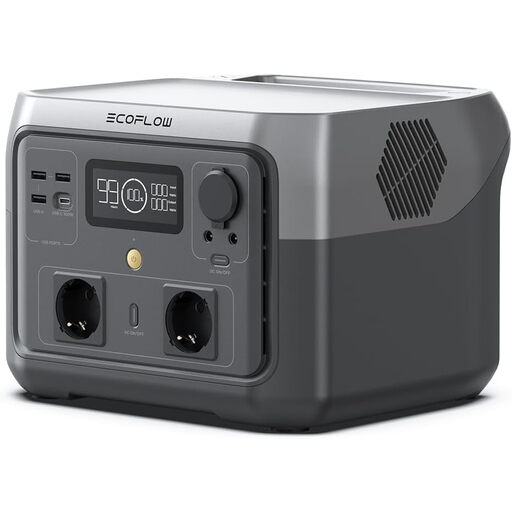
View the EcoFlow RIVER 2 MAX on Joybuy.de
Why it stands out: The EcoFlow RIVER 2 MAX offers a balanced combination of portability, fast charging, and sufficient capacity for many common applications. At just 6 kg, it's easy to transport.
Pros:
Who is it for? Ideal for camping trips, outdoor photographers, or anyone who needs a lightweight yet capable portable power supply for weekend getaways or use in the garden.
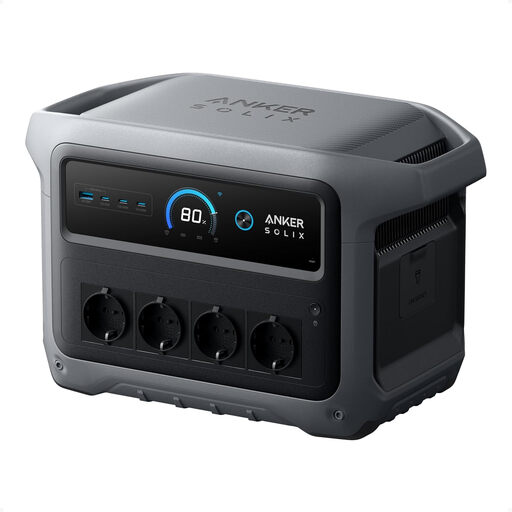
View the Anker Solix C1000 on Joybuy.de
Why it stands out: The Anker Solix C1000 combines a high 2000W output with a solid 1024 Wh capacity and very fast charging times. It's a versatile all-rounder.
Pros:
Who is it for? An excellent choice for tech-savvy users looking for a reliable all-round solution for various scenarios—from powering an RV and use in the garden to providing backup power for essential devices at home.
Haven't found the perfect model for your specific needs yet? Every application is unique and may require a different combination of capacity, power, and portability.
For a broader overview of portable energy storage solutions and matching accessories, we invite you to explore our dedicated category.
Discover more models in the Battery Backpack category
The runtime depends on the power station's capacity (in Wh) and the power consumption of the connected device (in W). A simple formula for an estimate is:
Runtime (in hours) ≈ Battery Capacity (in Wh) × 0.85 / Device's Power (in W)
The 0.85 factor accounts for energy loss during power conversion. For example, a 1000 Wh power station can run a 100W lamp for about 8.5 hours.
Yes, a portable power station is well-suited as a home backup power supply for essential devices. Models with high capacity (e.g., 2000 Wh) and a UPS function are particularly ideal for this purpose. During a power outage, they can run a refrigerator, internet router, lights, and medical equipment for several hours. They represent a quiet, emission-free alternative to a gasoline-powered backup generator.
UPS stands for "Uninterruptible Power Supply." When this function is active, the power station is placed between the wall outlet and the device (e.g., a computer). Power passes through the unit. If the mains power fails, the power station switches to battery power within milliseconds. This prevents sensitive devices like PCs or servers from shutting down abruptly, avoiding data loss.