
Lieferung heute & morgen

Qualitätsgarantie

Willkommens-Angebote freischalten: KOSTENLOSE Lieferung | Bis zu 80 % RABATT | Kostenlose 30-Tage-JoyPlus-Testphase
App herunterladen
Whether you're camping in the great outdoors, on a long road trip in an RV, or preparing for a power outage at home, a reliable portable power source is becoming increasingly essential. The market offers a wide variety of solutions, from compact battery-powered generators to high-performance power inverters. However, choosing the right device can be a challenge given the many technical specifications and terms.
This guide is designed to bring clarity. We'll explain the most important criteria to consider when making your selection and present a range of devices suited for different applications. Our goal is to provide you with an informed basis for making a decision that fits your specific needs.
To make the right choice, it's helpful to understand a few basic technical aspects. These three points are crucial for most users.
These two values are often confused, but they describe different characteristics:
Therefore, check the power requirements of your most important devices (often listed on the power adapter) and choose a power station with sufficient continuous and peak power.
If you plan to use a portable power supply for sensitive electronics like laptops, cameras, drones, or medical equipment, a pure sine wave inverter is essential. These devices produce a clean and stable alternating current (AC) that matches the quality of the power from your home outlet.
Cheaper models with a modified sine wave can cause interference, buzzing, or even permanent damage to sensitive devices. A pure sine wave inverter protects your investments and ensures smooth operation.
A good portable power solution should offer a wide range of ports to charge multiple devices simultaneously. Look for a combination of:
Here is a selection of devices designed for different needs and use cases. We distinguish between all-in-one power stations and pure power inverters that require an external battery.
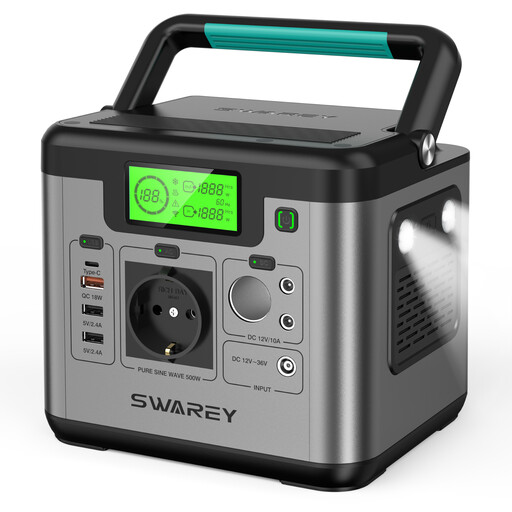
Why it stands out: The SWAREY S500 is a classic all-in-one solution. It combines a battery, an inverter, and various ports into a single compact, portable unit. With the ability to be recharged via a solar panel, it functions as a fully-fledged solar generator. The pure sine wave AC output makes it safe for sensitive electronics.
Advantages:
Who is it for? Ideal for campers, outdoor enthusiasts, and as emergency power for camping or minor power outages at home. If you're looking for a straightforward, ready-to-use solution, this is it.
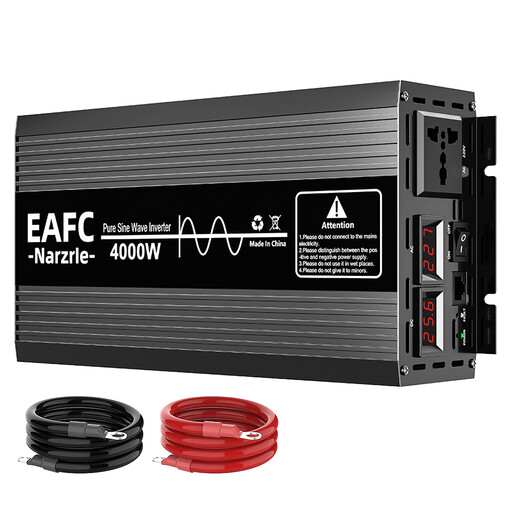
Why it stands out: This device is a pure 12V to 230V power inverter. It does not have a built-in battery but connects to an external 12V battery (e.g., a car battery or a leisure battery in an RV). Its strength lies in its high continuous power output of 2000W, which can even run power-hungry devices like coffee makers or power tools.
Advantages:
Who is it for? Perfect for RV owners, truck drivers, or DIY enthusiasts who already have a 12V battery system and need a powerful 230V source for demanding appliances.
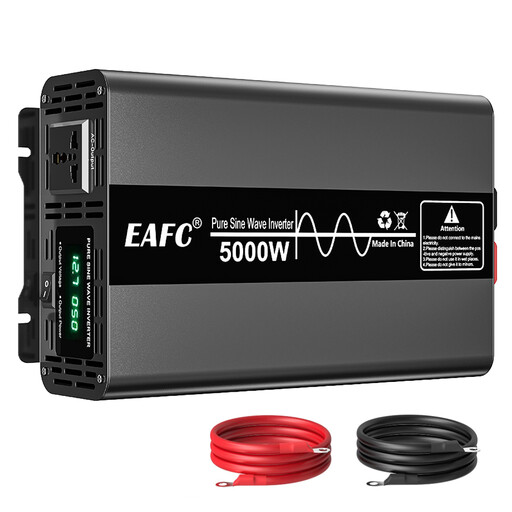
Why it stands out: Similar to the 4000W model, this is a high-performance power inverter that requires an external 12V battery. With a rated power of 2500W and a peak power of 5000W, it offers even more reserves for running multiple devices simultaneously or handling the startup surge of motors and compressors. The detailed LCD provides comprehensive information on the system's status.
Advantages:
Who is it for? For users with high energy demands, such as in off-grid applications, on construction sites, or in fully-equipped RVs, who need reliable and powerful energy conversion.
The products presented here cover common use cases. However, if you are looking for more specific charging solutions, smaller power banks, or matching accessories, you can find a wider selection of products to meet your needs in our USB Power Supply category.
A 500W power station can power a variety of devices. These typically include:
Devices with a high startup surge or a continuous power draw over 500W (e.g., electric kettles, hair dryers, space heaters) generally cannot be operated.
A battery generator, often called a power station, is an all-in-one device. It contains a battery, a charge controller, and an inverter in a single housing. It is ready to use out of the box. A power inverter is a single component. It converts direct current (DC) from an external source, like a 12V car battery, into alternating current (AC) for 230V devices. It does not have its own energy storage.
Most power stations offer three common charging methods: