
Lieferung heute & morgen

Qualitätsgarantie

Willkommens-Angebote freischalten: KOSTENLOSE Lieferung | Bis zu 80 % RABATT | Kostenlose 30-Tage-JoyPlus-Testphase
App herunterladen
A portable power station can come in handy when you’re camping, travelling in a motorhome, working from home or dealing with a temporary power cut. But not every portable power station is right for every situation. High wattage, fast charging and large capacity figures may look impressive at first, but they don’t tell you on their own how well a model will perform in everyday use.
Capacity in watt-hours (Wh) describes how much energy the battery stores. Output power in watts (W) tells you which devices the power station can run, and how many at once.
For example, a 500 Wh power station may be enough for smartphones, cameras, lights and laptops. A kettle, fan heater or circular saw, on the other hand, needs considerably more power. These appliances call for models with a higher continuous output and sufficient peak power.
The usable energy is lower than the calculated Wh figure because the inverter and electronics also use power. As a rough guide:
Run time in hours = capacity in Wh × efficiency ÷ power consumption in W
So, with a 512 Wh power station and a 60 W laptop, you shouldn’t expect a run time of exactly 8.5 hours. The connections, conversion losses and charge level all affect the result.
Not every package includes a solar panel, car charging cable or specialist adapters. When comparing products, check:
Compact models between around 200 and 600 Wh are often enough for mobile devices and lighting. A camping power station or a power station for a motorhome should also have suitable 12-volt connections, as well as enough capacity.
If you plan to run tools, kitchen appliances or several devices, check the continuous output. Peak power only matters for short periods, such as when a motor starts up. It’s no substitute for a sufficiently high rated output.
A power station with a LiFePO4 battery uses lithium iron phosphate cells. Manufacturers often state that these batteries can manage several thousand charge cycles before reaching a specified remaining capacity. These figures depend on factors such as temperature, charge level, depth of discharge and usage.
A battery management system (BMS), overcurrent protection, overcharge protection and good ventilation are also important. Don’t keep a lithium power station in a damp room, in direct sunlight or in a hot vehicle.
A solar generator isn’t a standalone power source. It’s a power station that can be charged using solar panels. Check the permitted voltage range, maximum solar input and whether it has a built-in MPPT charge controller.
A power station with UPS can switch to battery power automatically during a mains failure. The switchover time, usually stated in milliseconds, should be suitable for the equipment you connect. This type of solution isn’t suitable for medical emergency equipment unless you’ve first consulted the equipment manufacturer and your healthcare professional.
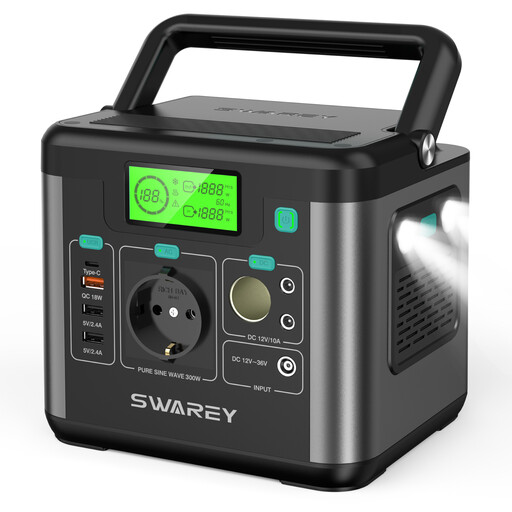
Why it suits this profile: This compact model is for anyone who wants to power a smartphone, camera, laptop or camping light while out and about. It weighs around 7 pounds according to the product details and has eight outputs.
The product details list continuous and peak power separately: 300 W continuous and 600 W peak. This makes it easier to check whether the power station is suitable for your devices.
222 Wh capacity, a 65 W USB-C port and several charging options via a mains socket, car or optional solar panel.
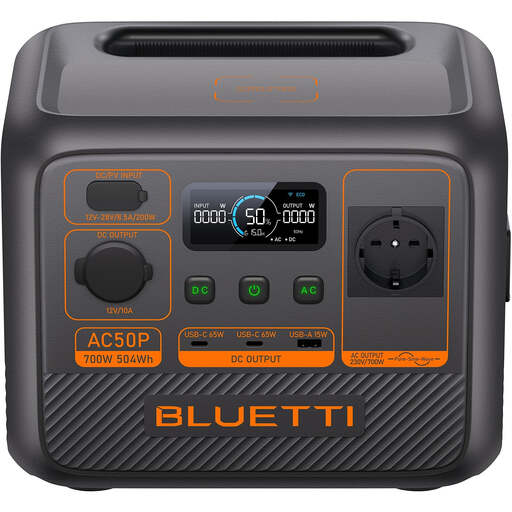
Why it suits this profile: This model combines 504 Wh capacity with 700 W continuous output, app control and a UPS function. It’s a good fit for more demanding camping and home-working setups.
The product details specify a pure sine wave, a 20 ms switchover time and several charging options. This lets you check the connection type and whether the UPS function meets your needs before buying.
LiFePO4 battery, 0–80% charge in 50 minutes according to the supplier, a 120 W 12-volt output and 15 W wireless charging.
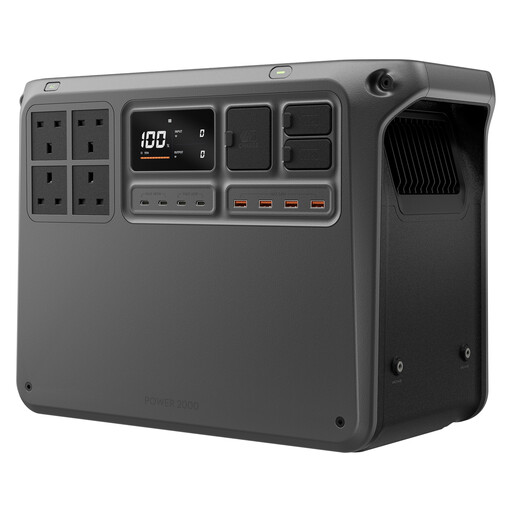
Why it suits this profile: With 2048 Wh capacity, 3000 W output and 15 ports, this model is designed for motorhomes, DIY projects and more extensive backup power needs.
The high capacity and stated 10 ms UPS switchover time are clearly listed. Be sure to allow for the unit’s weight, the space it takes up and the cost of buying a cable separately.
LiFePO4 battery, expandable to 22.5 kWh with additional batteries according to the supplier, and solar input of up to 600 W.
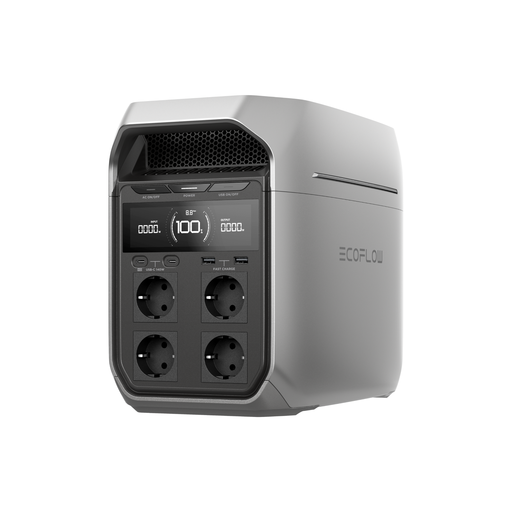
Why it suits this profile: This model combines 1800 W output, 1024 Wh capacity, app features and a UPS switchover time of under 10 ms.
Charging time, number of connections, power limits and expandability are listed separately in the technical details. This makes it easier to plan for a router, monitor, NAS or laptop.
LFP battery, up to 4000 cycles before reaching 80% capacity according to the product details, and expandable to 5 kWh with compatible additional batteries.
We’ve put together a complete, regularly updated list of products that meet these strict selection criteria and the applicable EU safety regulations.
Its lifespan depends on the battery technology, charge cycles, temperature and storage conditions. LiFePO4 models are often rated for several thousand charge cycles before reaching a specified remaining capacity. Store your power station in a dry, well-ventilated place, and follow the manufacturer’s guidance on charge levels and regular recharging.
That depends on the start-up current, continuous output and capacity. Before buying, compare the appliance’s power consumption with the power station’s maximum continuous output. A fridge may need considerably more power for a short time when it starts up. Heaters require a high capacity because they use a lot of energy continuously.
Solar charging can be useful for camping, travelling, gardening and longer stays without access to a mains socket. The actual charging time depends on the panel’s output, sunlight, positioning and the power station’s permitted input. If you’ll mainly be charging at home, also consider the AC charging time and the cost of a compatible solar panel.