Trainers in bright training rooms
You demonstrate tasks to a group while daylight streams through large windows onto the screen. Take account of the light, image size and how visible the picture will be from the back of the room.


Start by considering the light falling on the projection surface, the image size you need and whether the smallest details in your demo will be easy to read. Weight and extra features come next. If you have little control over light coming in through the windows, consider a model with a higher stated brightness rather than choosing solely for its compact size. Manufacturers’ lumen ratings do not guarantee readability in direct sunlight: BenQ notes that ambient light and projection size also affect how an image looks.
You demonstrate tasks to a group while daylight streams through large windows onto the screen. Take account of the light, image size and how visible the picture will be from the back of the room.
When showing software interfaces, circuit diagrams or small labels, the native resolution and brightness need to suit the image size you’re using.
When moving between training rooms, weight and a straightforward set-up matter. But don’t lose sight of whether the image will be readable with the available daylight.
First, check the light and image size at the intended location. Then consider whether your smallest content will be readable, followed by positioning, connections and portability.
| What matters | What to look for | Who will find this most important? |
|---|---|---|
| Readability with light from windows | Compare clearly stated brightness figures, and check the image size and the light falling on the projection surface. If possible, test your smallest demo details from the furthest seat. | When I’m presenting to a group in daylight, I want labels to remain readable at the back of the room. Around 36 % of consumers are likely to prioritise this. |
| Fine image details | Check the native resolution, not just the maximum supported input resolution. Compare a representative demo image at the planned size. | For small circuit diagrams or software elements, I need enough detail to be clearly visible. Around 29 % of consumers are likely to consider this their top priority. |
| Positioning and connections | Measure the projection distance and the image width you want, then compare both with the throw ratio of the specific model. Also check that the connections are compatible with your source devices. | If the projector has to stay in a fixed position or I need to connect several presentation devices, getting the positioning right matters. Around 21 % of consumers are likely to prioritise this. |
| Moving between rooms | Check the stated weight of the device and factor in the power cable and any accessories needed for set-up. Check the lighting conditions at each location, too. | If you move between rooms frequently, you’ll want to take the device with you without carrying unnecessary weight. Around 14 % of consumers are likely to place the greatest importance on easy portability. |
A compact design doesn’t mean that small training details will be easy to read in daylight. CHIP ranks the mini projectors it tested below larger projectors for light output.
Start by checking the image size you need and the light coming in through the windows. Only consider a mini projector if you can control the lighting sufficiently.
If you then need blackout measures or an additional presentation device, you’ll also have more to do when preparing and equipping the room.
Acer states that the X1328WH has a native resolution of 1,280 × 800 pixels. Its maximum supported input resolution of 1,920 × 1,200 pixels is not the projector’s native resolution.
For small labels, compare the native resolution and check a typical demo image from the intended viewing distance.
BenQ notes that ambient light and the size of the projection surface affect how an image looks. A lumen rating alone can’t tell you whether your presentation will be readable in a particular room.
Plan around the intended image size, the position of the windows and the seating layout. If possible, test the picture in the room.
BenQ quotes 6,000 hours in Normal mode and 15,000 hours in LampSave mode for the BenQ MH560. The manufacturer also notes that actual lamp life depends on usage and the environment.
Compare lamp life only when the operating modes are the same, and check the terms for the light source and replacement parts.
If the lamp needs replacing, you’ll also need to plan for spare parts and possible downtime.
According to BenQ, the MH560 combines a stated brightness with native Full HD resolution, making it suitable for detailed presentations.
The X1328WH is aimed at buyers who prioritise a high stated brightness over maximum native detail resolution.
Epson describes the EB-1795F as an ultra-mobile Full HD projector for use in different locations.
According to the manufacturer, brightness and connectivity are key features of the PA700W training projector.
The Joybuy models below have different strengths when it comes to portability, resolution and positioning. For presentations in rooms with window light, check the brightness rating and readability in the room where you plan to use the projector. Portability alone doesn’t prove that a model is suitable.
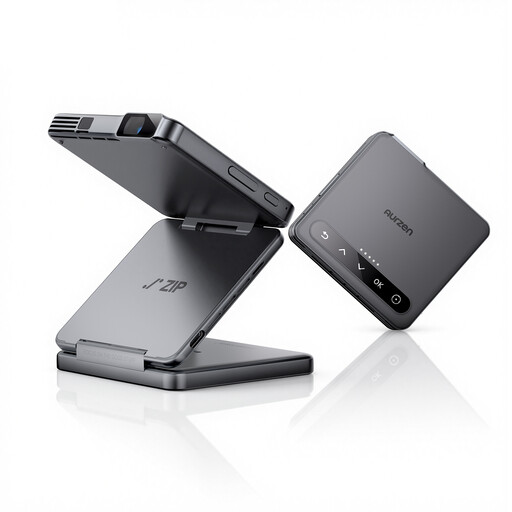 No image available
The portable design with an integrated folding stand can be useful if you move between rooms frequently. Check that the stated battery life suits the length of your presentation.
5000mAh battery; stated battery life of 1.5 hours; 4K support; ToF autofocus; Bluetooth, Wi-Fi and USB-C.
 No image available
The native 1080P resolution is useful for presentations with fine image details. Also check whether the brightness is sufficient for your image size and room lighting.
1.000 ANSI lumens; native 1.920 × 1.080 pixels; 4K support; HDMI, USB and Wi-Fi 6.
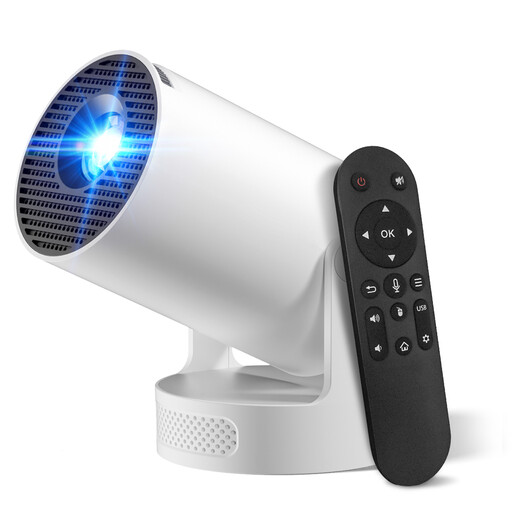 No image available
The rotating design can be handy if you need to change the projector’s position. Before you buy, check that the connection options will work with your source devices.
Stated image size of 50–200″; 50–100 % digital zoom; Wi-Fi 6 and Bluetooth; HDMI compatibility.
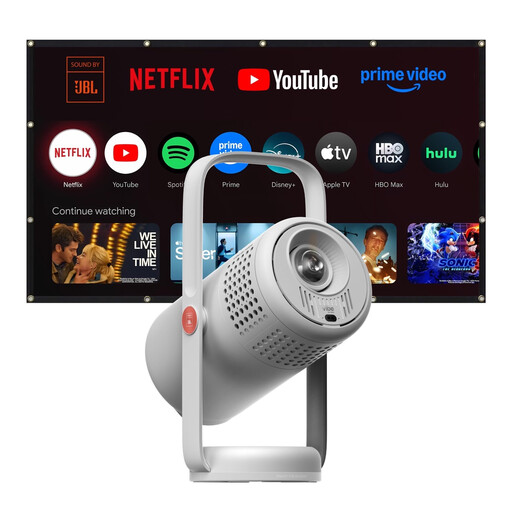 No image available
The built-in stand and portable design are made for flexible positioning. Check that the stated brightness is suitable for the lighting conditions in your training room.
1080p image specification; 250 ISO lumens; built-in 160° stand; autofocus and keystone correction.
 No image available
The adjustable stand can make it easier to position the projector in different locations. Check that the brightness rating is suitable for your planned image size and the available daylight.
1080P; 1.600 ISO lumens; RGB triple laser; autofocus; folding design.
No. The light falling on the projection surface and the image size also affect readability. Check the planned image under the actual lighting conditions. A stated brightness doesn’t guarantee readability in direct sunlight.
Measure the distance to the projection surface and the image width you need, then compare both with the throw ratio of the specific model. BenQ quotes a throw ratio of 1,49–1,64 for the BenQ MH560. Also check that the output from your presentation device is compatible with the projector’s input.
Compare lamp life in the same operating mode, as well as replacement lamp and warranty terms. BenQ quotes 6.000 hours in Normal mode and 15.000 hours in LampSave mode for the BenQ MH560; the light source has a shorter warranty than the projector itself. These are figures for a specific model and mode, not a guarantee of actual service life.
No. Verbraucherzentrale distinguishes between statutory rights against the seller and a voluntary warranty, each of which has its own terms. The rights that apply in an individual case also depend on the purchase contract, particularly if an organisation rather than a private individual makes the purchase.
No. The German Environment Agency explains that electrical and electronic waste must be collected separately from unsorted household waste. Check local collection points or whether a retailer offers a take-back scheme. If the projector is being purchased for business use, the organisation should check which disposal route is appropriate.