For museum films viewed from the back of a large auditorium, first work out the image height needed for the furthest seats. Then check whether the specific projector’s throw ratio can deliver that image size from the available position. If there’s ambient light and mains power is available, a bright, portable mains-powered projector may be the better choice. For changing rooms without a socket, a battery-powered model could work, provided its brightness and battery life are sufficient in the mode you’ll actually use.
Who is this selection for?
Museum teams with deep auditoriums
If you want the picture to reach the furthest seats, start by planning the image height and viewing distance, then match the projector position to the screen size. Epson Europe explains that image size and viewing distance are linked, and that the possible projection distance depends on the model.
Museum teams with ambient light
If you can’t fully darken the room during a screening, consider the lighting conditions alongside the intended screen size. Manufacturers’ brightness and projection-area specifications can help you narrow down your options, but they don’t, on their own, prove that an image will be clear in a particular room.
Mobile screening teams
If you move between rooms, consider the weight, set-up and power supply. For use without a socket, you’ll also need to check the film’s running time against the brightness available in the battery mode you’ll actually use. BenQ Germany and Nebula EU, among others, provide model-specific details.
What should you consider when buying?
First decide what the furthest guests need to be able to see on screen. Then compare the projector position, ambient light, power supply and the signal path for both film and sound.
| Consideration |
What to check when buying |
Who is most affected? |
| Image size and viewing distance |
Note the seating distance, required image height and aspect ratio. Check the specific model’s throw ratio to see whether it can achieve the desired image width from the available position. |
If I want guests in the back row to be able to see the film and subtitles, choosing the right screen size comes first. Around 33% of consumers are likely to rank image size and viewing distance as their main buying concern. |
| Picture in ambient light |
Consider the room lighting during the screening and the stated brightness measurement; test a film on the intended screen size. |
If I can’t darken the room sufficiently, I’ll pay attention to how the picture looks in the actual lighting conditions. Around 27% of consumers are likely to prioritise ambient light as a concern. |
| Portability and power supply |
Factor in the weight and a secure position. For battery-powered use, compare the battery life in the required picture mode with the film’s running time. |
If I often change rooms or there’s no socket where the projector needs to go, the key question for me is how long the screening will last in the right mode. Around 20% of consumers are likely to prioritise portability and power supply. |
| Playback and film sound |
Test the film file and playback device in advance; check the required connections and whether the sound can be heard from the back row. |
If I want the film to start reliably and the dialogue to be clear at the back, I’ll check the entire signal path. Around 20% of consumers are likely to rank playback and sound as their main concern. |
Common planning pitfalls
-
Confusing projection distance with viewing distance
The distance between the audience and the screen helps determine the screen size they need. Whether the projector can produce that image from the available position, however, depends on the specific model.
Measure the distance from the audience to the screen separately from the possible distance between the projector and the screen. Then calculate the desired image width for the model you’re considering.
-
Taking a battery-life figure at face value without checking the brightness mode
Nebula’s stated maximum battery life for the Mars 3 applies to Eco mode at 300 ANSI lumens and under specified test conditions. It can’t necessarily be applied to other brightness modes.
Compare the film’s running time and required picture brightness with the figures for the mode you plan to use.
-
Comparing different lumen figures directly
The manufacturer specifications for the BenQ GV50 and XGIMI HORIZON S Max use different measurement standards. The figures alone therefore don’t provide a direct comparison of picture brightness.
Note the measurement standard and operating mode, then test the film at the planned image size and under the room’s expected lighting conditions.
-
Assuming that owning a film means you have screening rights
For a public screening of a film, Section 52(3) UrhG requires the consent of the rights holder. The Federal Ministry of Justice lists this provision on its Gesetze im Internet portal.
For an event open to the public, check who holds the screening rights for the specific film before announcing it.
Brands to consider
Epson
The EB-FH54 is an example of a Full HD projector that the manufacturer describes as portable and mains-powered. It may be worth considering for rooms with ambient light and larger screen sizes.
- Epson Germany lists 4,100 lumens, 3LCD technology and a built-in speaker for the EB-FH54.
- These manufacturer specifications don’t prove that it will be bright enough for every museum room or that the sound will be clear from the back row.
BenQ
The portable GV50 is worth considering if battery power and flexible positioning matter, and if you can control the room lighting sufficiently for the intended screen size.
- BenQ Germany lists a native resolution of 1,920 × 1,080 pixels, 500 ANSI lumens, a throw ratio of 1.2 and an HDMI input for the GV50.
- You’ll need to check whether its brightness and throw ratio work for your planned museum screen size and projector position.
Nebula
The Mars 3 is a portable film projector with a battery and built-in handle, making it an option when you need to set up without mains power.
- Nebula lists a maximum battery life of up to five hours for the Mars 3 in Eco mode at 300 ANSI lumens and under specified test conditions.
- This battery-life figure applies to that mode; it doesn’t provide a like-for-like estimate for normal use at the otherwise advertised brightness.
XGIMI
The HORIZON S Max is a home projector that can be moved between positions for film screenings using mains power, provided you can accommodate its higher weight.
- XGIMI Germany lists 3,100 ISO lumens and a built-in stand for this model. A manufacturer comparison dated 14 April 2026 gives its weight as 4.81 kg.
- These manufacturer specifications are not independent measurements and don’t guarantee a particular picture quality in a room with ambient light.
Joybuy projectors for film screenings
The Joybuy projectors below include specifications for film playback or flexible positioning. Before choosing one, check that the image size, power supply and connections suit your room and playback device.
 No image available
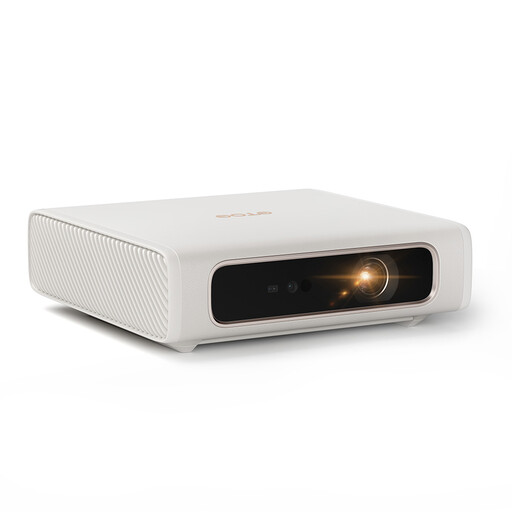
ETOE Dolphin 2 projector
The built-in battery may be useful for screenings without a socket; compare the stated battery life with the planned film length.
1080P FHD; 800 ANSI lumens; battery life of up to 2 hours; HDMI 2.1 and USB-C.
View at Joybuy
 No image available
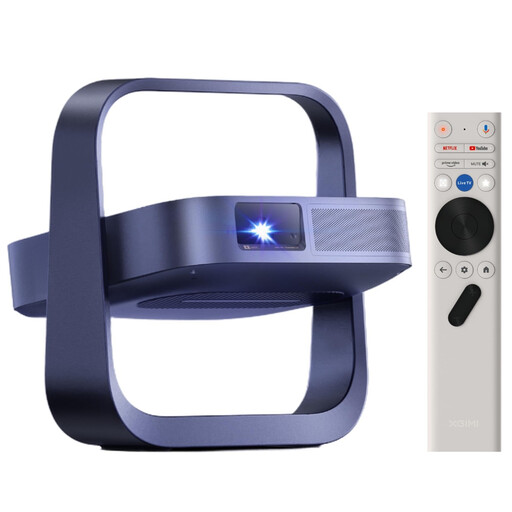
XGIMI Elfin Flip
Its portable size and foldable design may be useful when you need to change the projector’s position; check the image size and brightness in the screening room.
Native 1080P resolution; 1,600 ISO lumens; foldable design.
View at Joybuy
 No image available
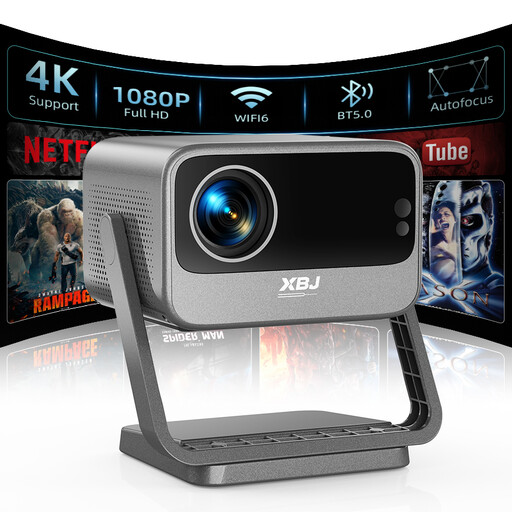
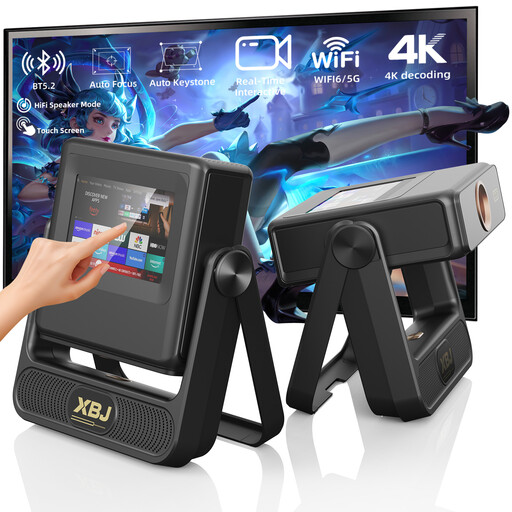
XBJ A5Pro projector
The rotating stand may be useful for different projection angles; check that the projector can sit securely in the room and produce a stable image in the desired position.
Native 1080P resolution; 700 ANSI lumens; stand rotates by 280°.
View at Joybuy
 No image available
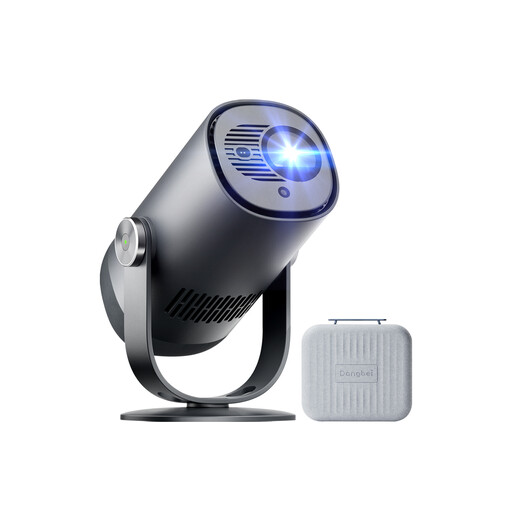
Dangbei Freedo
The built-in battery is useful for screenings without a socket; check that the stated battery life is long enough for the film in the mode you intend to use.
1080P resolution; 450 ISO lumens; battery life of up to 2.5 hours.
View at Joybuy
 No image available
XBJ A5Pro projector, grey
Autofocus and keystone correction are listed in the title; you should still check the picture alignment at the planned position and with the required image size.
Native 1080P resolution; 900 ANSI lumens; autofocus and keystone correction.
View at Joybuy
Frequently asked questions
Does a long viewing distance mean the projector has to be far from the screen?
No. Measure the distance from the audience to the screen separately from the distance between the projector and the screen. The specific model’s lens and the desired image size determine where the projector can go; the manufacturer’s distance calculator can help with an initial check.
How can I prepare for a museum film screening at the venue?
Plan the screen size and projector position for the specific model, then test the same film, including its subtitles and sound. Check the result from the furthest intended seat and under the lighting conditions you expect during the event.
Does the Nebula Mars 3’s five-hour battery life apply at full brightness?
The manufacturer’s specification doesn’t say so: the maximum battery life of up to five hours applies to Eco mode at 300 ANSI lumens, 25% volume and specified playback conditions.
What happens if a projector develops a fault after purchase?
For a consumer purchase from a business seller in the EU, European Commission information states that you have at least a two-year legal guarantee from the date you receive the goods; the seller is responsible. Whether this consumer protection applies to a specific purchase by a museum as an organisation depends on the contractual arrangements.
Can a museum film be screened publicly for free without permission?
Not for that reason alone. Under Section 52(3) UrhG, the rights holder’s consent is required for a public screening of a film. Before holding a public event, check who holds the screening rights for the specific film; whether an event is public depends on its actual audience.
What should I look out for when it comes to product safety?
The European Commission says that electrical and electronic equipment must carry the CE marking where required. Check the specific product’s marking and information; CE marking is neither an independent quality test nor proof that the product is suitable for use in a museum.


