Listen to weather updates in your loft
You want to tune in to a particular regional station from your usual listening spot. Before choosing a radio, find out which stations are available and how well they come through indoors.


First, choose a regional weather station and check whether you can receive it via DAB+ or FM where you plan to listen. The Digital Radio Office Germany’s indoor coverage forecast is a useful guide, but it cannot replace a reception test in your finished attic room. For use without a mains socket, check the power options on the specific radio, such as replaceable batteries, a charged battery or a hand crank. If you want the device to respond automatically to serious official warnings, also check its ASA certification, set-up and power supply – DAB+ alone does not prove that it has this function.
You want to tune in to a particular regional station from your usual listening spot. Before choosing a radio, find out which stations are available and how well they come through indoors.
You want to keep up with information from the authorities even when there’s no mains power, so check whether batteries, a rechargeable battery or a hand crank will suit the way you plan to use the radio. The Federal Office of Civil Protection and Disaster Assistance recommends battery-powered or hand-crank radios for longer power cuts.
As well as listening to the radio, you want to check whether a device that is specifically ASA-certified and correctly set up can respond to serious official warnings.
First check whether you can receive your chosen station where you plan to listen. Then look at the power supply, and only after that consider extra features such as ASA.
| Buying priority | What to check | Who it matters most to |
|---|---|---|
| Reception where you plan to listen | Find out which station you want and how to receive it, check the DAB+ indoor coverage forecast for your postcode, and test reception in the places where you plan to position the radio. | If I can only use weather updates when my regional station comes through where I usually listen, I’ll check reception before choosing a radio. Around 36% of consumers put reception in their listening spot first. |
| Use without a mains socket | Check the power supply, which batteries or charging accessories are needed, and the conditions attached to any stated battery life. | If there’s a chance of a power cut, I want to be able to switch on the radio without mains power and have the right power source ready. Around 29% of consumers prioritise power that doesn’t rely on the mains. |
| Automatic warning function | Check that the exact model is ASA-certified, that it can be set up for your location, how to test the function and what power it needs. | If I want to receive a notification about serious official warnings as well as listening to the radio, I’ll check ASA separately. Around 21% of consumers put the automatic warning function first. |
| Clear sound and easy operation | Compare the speaker or headphone socket, display, and the actual station presets or direct-access buttons. | For short weather updates, I want to hear speech clearly and find the same station again quickly. Around 14% of consumers particularly value ease of use and quick access to stations. |
An indoor coverage forecast is a useful guide, but it can’t confirm reception at every specific listening spot.
With the aerial extended, test your chosen station in the places where you plan to position the radio. Check FM as well if needed.
ASA requires a suitably certified and configured device; a DAB+ tuner alone doesn’t prove that it has this function.
Check the ASA details for the exact model and carry out the recommended function test once it’s set up.
A USB port won’t help if there’s no power source available. A rechargeable battery needs to be charged, while battery-powered models need the right batteries.
Check which power source the specific device needs and whether it really works without mains power.
The features below apply to the specific models and variants mentioned, not to every product in each brand’s range.
Sharp offers portable DAB+/FM models with different power options.
The portable DIGITRADIO 1 combines DAB+/FM with station presets and a replaceable battery.
The Sony ICF-P27 is an analogue FM/MW radio with replaceable batteries.
The JBL Tuner 3 combines DAB+/FM with Bluetooth, a rechargeable battery and direct-access buttons.
The portable nuGo! ONE+ combines DAB+/FM with a stereo speaker and rechargeable battery, and may also appeal if you want to listen to music.
The Joybuy products below include portable DAB+/FM radios and AM/FM emergency radios. Before buying, check whether you can receive your chosen station where you plan to listen using the relevant reception method.
 No image available
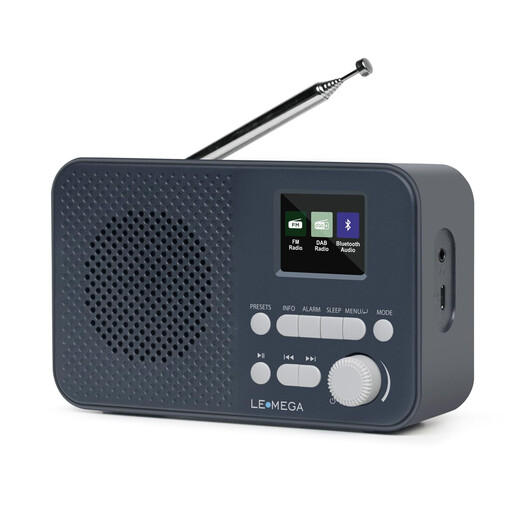
With DAB+ and FM, you can check whether your chosen station is available via either reception method where you plan to listen.
Bluetooth, LCD display, headphone socket, rechargeable 2200-mAh battery, USB-C charging and 40 station presets.
 No image available
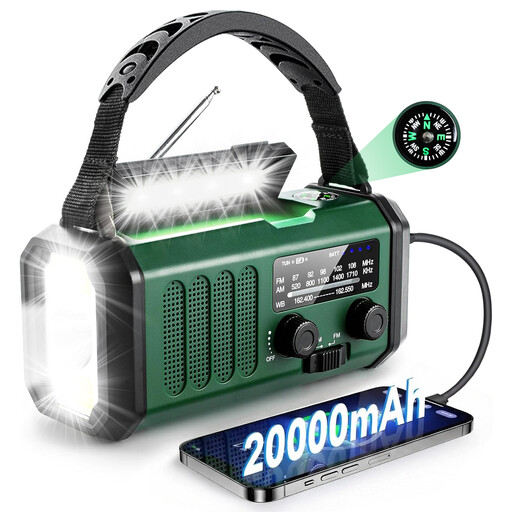
This AM/FM emergency radio is worth considering if you can receive a suitable station using either method and want to have alternative power sources available.
20,000-mAh battery, hand crank, solar charging, LED torch, reading light, SOS alarm and compass.
 No image available
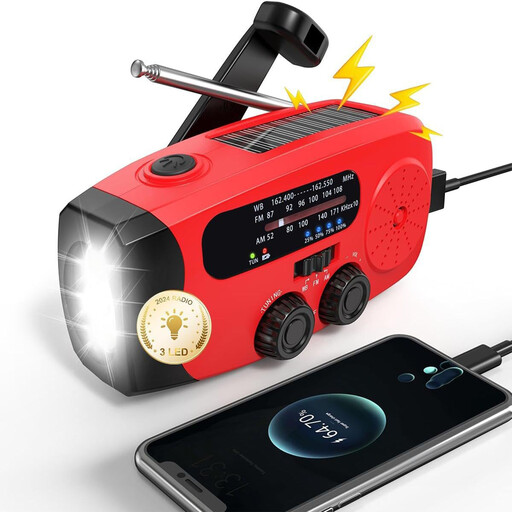
This AM/FM/WB radio may suit you if you can receive a suitable station where you plan to listen and its stated charging options meet your needs.
2,000-mAh battery, hand crank, solar charging, LED torch, power bank function and IPX-3.
 No image available
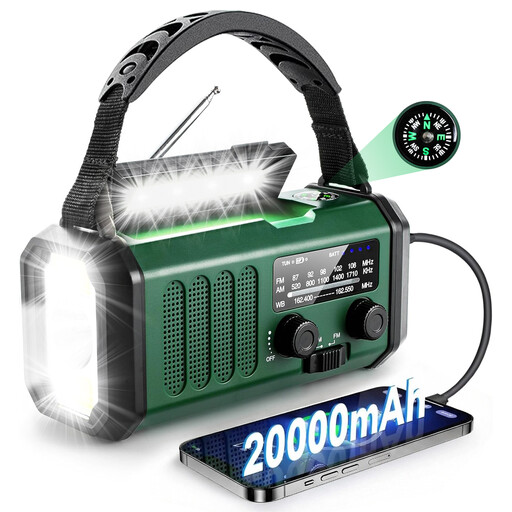
This AM/FM radio may be suitable if you can receive your chosen station using either method where you plan to listen and want to use alternative charging options.
20,000 mAh, hand crank, solar charging, LED torch, reading light, SOS alarm and compass.
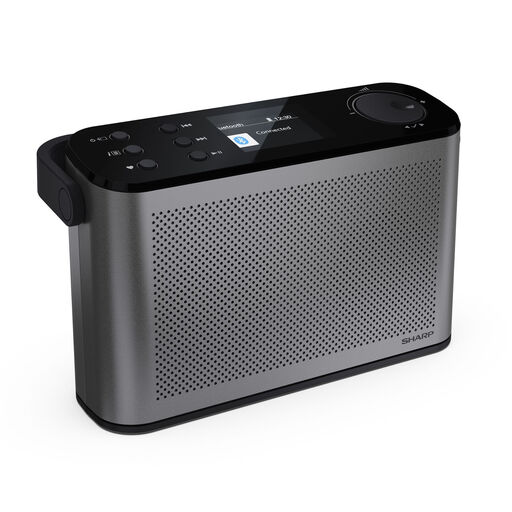 No image available
With DAB+ and FM, you can check whether your chosen station is available via either reception method where you plan to listen.
Bluetooth 5.3, USB-C charging port, 120 station presets and 2.4-inch colour display.
First, find out which station you want and how to receive it. The Digital Radio Office Germany’s DAB+ indoor coverage forecast gives you an indication for your postcode. Then test the radio with its aerial in the places where you plan to position it, as the forecast doesn’t guarantee reception at every point in the room.
What matters is whether you can receive your chosen regional station where you plan to listen, and by which method. DAB+ or FM alone can’t tell you whether the station will come through in your attic flat. Check which stations are available and test reception before committing to one method.
The Federal Office of Civil Protection and Disaster Assistance recommends a battery-powered or hand-crank radio, so you can keep up with announcements during a prolonged power cut. Keep the batteries your specific device needs to hand, or charge its battery regularly, and check that the radio really does work without mains power.
No. A DAB+ tuner alone doesn’t prove that a radio has an automatic warning function. ASA is for certified, configured devices and the highest-level official safety alerts. For official weather warnings for your area, you can also use the DWD and BBK warning services when you have a connection.
A radio doesn’t replace every type of warning service. The Federal Office of Civil Protection and Disaster Assistance recommends warning apps as well as radio, and notes that sirens and mobile phones may also be used to warn people about particular dangers. Services that rely on the internet or mobile networks may be affected if those networks go down.