Listening together
If several people are listening in a communal space, the priorities are a station you can receive, clear speech and easy controls.


For live audio dramas, a portable radio with FM or DAB+ is a good choice, provided the station you want is available where you plan to listen. If you want to choose episodes yourself, you’ll also need an on-demand service and a suitable way to play its content. When listening together, clear speech and easy controls matter. If you don’t want to disturb others, check that the specific model has a headphone socket.
If several people are listening in a communal space, the priorities are a station you can receive, clear speech and easy controls.
If you share the room but want to listen on your own, check that the specific model has a headphone socket.
If you don’t want to wait for a broadcast, you’ll need a suitable way to play on-demand content as well as a radio.
| What matters | What to check before buying | Who is this important to? |
|---|---|---|
| Receiving the audio drama you want | Find out which station broadcasts it and how; for DAB+, check the indoor reception forecast and reception at the intended listening spot. | If I want to listen to a particular live programme, that exact station needs to be available where I’ll be listening. For around 33% of consumers, receiving their preferred programme is the top priority. |
| Following the dialogue together | Check the speaker and, if available, the speech equaliser on the specific model. If possible, listen to spoken audio from the usual seating positions. | If several people are listening, I want everyone to be able to follow the dialogue from their usual seats. For around 27% of consumers, speech clarity is the main priority. |
| Listening quietly on your own | Check whether the model has a headphone socket and whether it’s compatible with your headphones. Bluetooth input does not mean the radio can send audio to Bluetooth headphones. | If others in the room want to do something else, I want to be able to listen on headphones rather than play audio aloud. For around 20% of consumers, listening without disturbing others comes first. |
| Choosing where to listen and which episode to play | Check the power supply and accessories included with the exact variant, as well as the connection you need for playback. On-demand episodes require a suitable source. | If I want to change where I listen or choose an episode independently of the broadcast schedule, I look at the power supply and playback options. For around 20% of consumers, this flexibility is the main priority. |
Having a DAB+ receiver doesn’t, by itself, mean that the programme you want will be available where you plan to listen.
Check the station and how it broadcasts. The DAB+ reception forecast can help you assess the location, but you should also test reception at the intended listening spot.
Bluetooth can be used to send audio from your phone to a radio. That doesn’t mean the radio can send audio to Bluetooth headphones.
If you want to listen on your own, check the audio outputs on the specific model and make sure they’re compatible with your headphones.
Portable models can use different power sources. The Sony ICF-P27 takes two AA batteries, while the Panasonic RF-D10 needs four C batteries for portable use.
Before you decide, check the power supply and what’s included with the exact variant.
The ICF-P27 is a straightforward FM/MW option for listening spots where the station you want is available on either band.
The RF-D10 combines DAB+/FM reception with mains or battery power and a headphone socket.
According to the manufacturer, the Tuner 2 combines DAB/FM radio with Bluetooth playback from your phone.
According to Nubert, the nuGo! ONE+ combines DAB+/FM reception with Bluetooth playback and a carrying handle.
This selection includes portable radios for live broadcasts, as well as models with additional options for playing audio content from an external source or storage medium.
 No image available
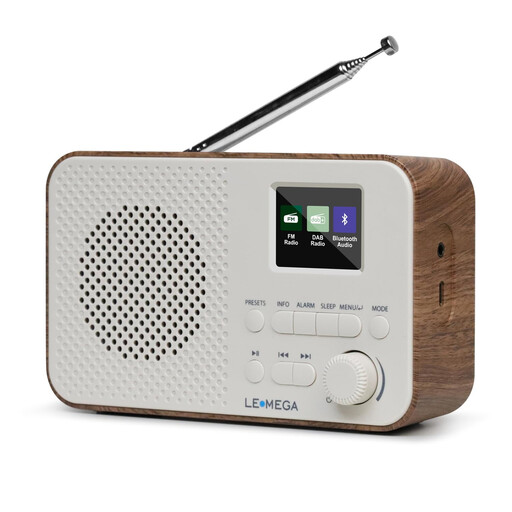
For listening to the radio together, DAB+/FM reception and a built-in speaker are listed; Bluetooth is available for on-demand content.
Rechargeable 2200mAh battery, USB-C charging, headphone socket, 40 station presets and Speech EQ.
The DAB+ station you want needs to be available where you plan to listen.
 No image available
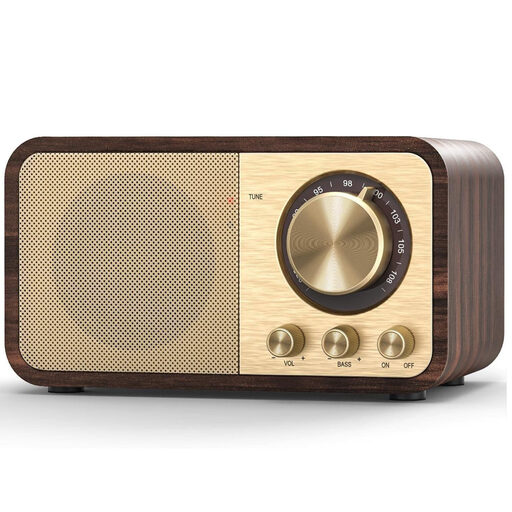
If you want to play audio from external sources as well as listen to FM radio, several playback options are listed.
5 W speaker with bass control; Bluetooth, USB, TF card and AUX. USB-C is also listed.
To play content other than FM broadcasts, you’ll need a suitable external source or storage medium.
 No image available
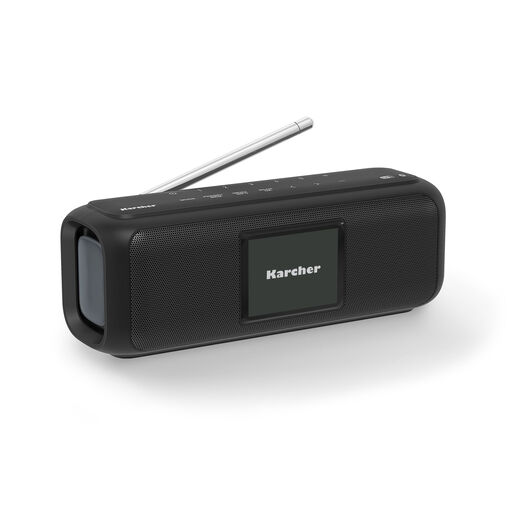
For live radio and additional playback options, DAB+/FM reception, Bluetooth and AUX are listed.
Stereo speakers, 2.4" colour display, USB-C and up to 8 hours of playback.
The DAB+ station you want needs to be available where you plan to listen.
 No image available
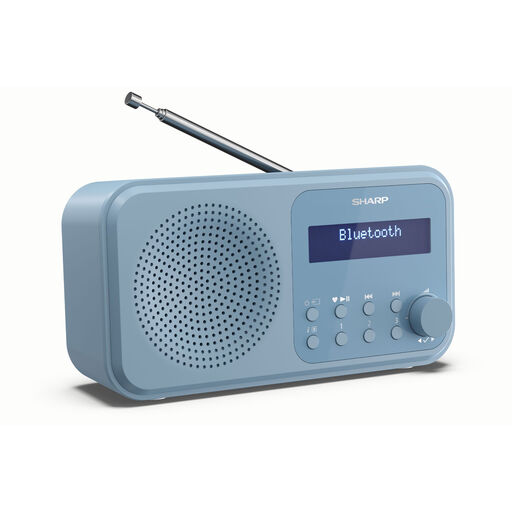
For listening to live radio together or on your own, DAB+/FM reception, a speaker and a headphone socket are listed.
Bluetooth 5.3, 40 station presets, RDS, dual alarm, and USB or AA battery power.
Check that the DAB+ station you want is available where you plan to listen.
 No image available
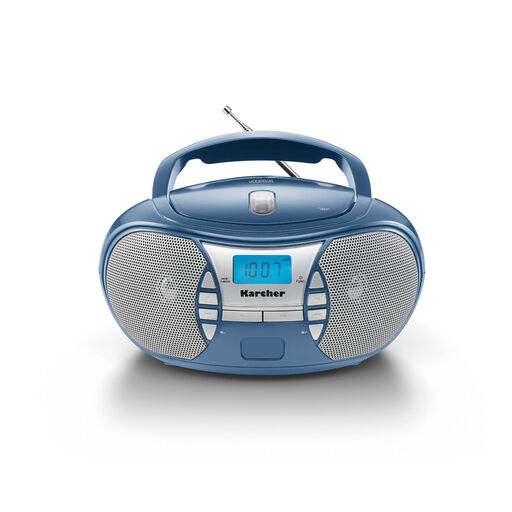
If you also want to play audio from CDs, a CD player and AUX input are listed.
FM radio, two speakers, headphone socket, and mains or battery power.
Portable use requires six UM-2/C batteries, which are not included according to the description.
No. First, check whether the programme you want is broadcast live on a station you can receive at your location. To listen to episodes whenever you choose, you’ll need a suitable on-demand service and a way to play its content. For example, the Deutschlandfunk app offers audio dramas and offline downloads.
Check the indoor reception forecast for the location, run a station scan according to the device instructions, then test reception and antenna positioning where you’ll actually be listening. The forecast is no substitute for testing in the room itself.
For a battery-powered model, check the battery type and what’s included. For example, the Panasonic RF-D10 needs four C batteries for portable use. According to the consumer advice centre, online consumer purchases generally come with a 14-day right to cancel; check the terms of your specific purchase.
For a private home or shared household, the general rule is one fee per home, not per radio or person living there. This private-home rule does not automatically apply to a communal space in an institution or business premises; the broadcasting fee service distinguishes between homes and business premises.
It depends on whether it’s a private gathering or a space open to the public or run by an institution. Under § 15 UrhG, whether a broadcast counts as a public performance depends, among other things, on the audience and their personal relationships. For example, GEMA treats background radio played in communal areas of senior care facilities as a use that must be registered. Without more information, this does not provide a definitive answer for a particular space or audio drama.