Quiet listeners
If you want to follow a longer spoken programme at a low volume, check how clear it sounds where you’ll actually be listening, rather than focusing only on the wattage.


If your history programme is broadcast live on a station you can receive where you listen, a portable DAB+/FM radio could be a good fit. Check how clear speech sounds and whether the volume settings suit your usual listening level. If you’re sharing a room, a confirmed headphone output matters more than high speaker power. Podcasts need a supported way to play them, and a documentary available only on TV can’t be received on DAB+/FM alone.
If you want to follow a longer spoken programme at a low volume, check how clear it sounds where you’ll actually be listening, rather than focusing only on the wattage.
If you have a specific history programme in mind, first check how and when it’s broadcast, and whether you can receive it where you are.
If you listen in the evening or share a room, a confirmed headphone socket can be important, so the speaker doesn’t disturb anyone else.
| Criterion | What to check when buying | Who is it important for? |
|---|---|---|
| Clear speech at low volume | Test the speaker and volume settings with spoken content from your usual listening position and distance. | If I listen to longer programmes quietly, I want to understand voices at my usual setting; around 36% of consumers are likely to put speech clarity first. |
| Reception of the programme you want | Check whether the programme is broadcast live on DAB+ or FM, or offered as a podcast that needs a separate way to play it. Check reception where you’ll be listening. | I want to hear the programme I’m looking for at the right time, so I’ll check how it’s broadcast first; around 29% of consumers are likely to prioritise station or episode availability. |
| Listening privately | Check whether there’s a headphone output and whether you can set a suitable volume with your headphones. Bluetooth reception doesn’t automatically mean Bluetooth audio output. | If I listen in a shared room, I don’t want to disturb others with the speaker; around 21% of consumers are likely to prioritise private listening. |
| Power when you’re out and about | Compare mains power, a replaceable battery or disposable batteries for the specific model, and check what’s included. Don’t treat manufacturers’ battery-life claims as directly comparable test results. | I want to move between listening spots without always needing a power socket; around 14% of consumers are likely to put flexible power options first. |
A radio designed for live broadcasts won’t play a podcast episode on demand just because it has a DAB+ tuner.
Before choosing a radio, decide whether you want to listen live or catch up later, and check which playback options the specific model supports.
Receiving Bluetooth audio from a smartphone isn’t the same as transmitting radio audio to Bluetooth headphones.
Roberts says its Bluetooth radios need a separate transmitter to send audio to Bluetooth headphones. For the model you’re considering, check specifically for a transmit function or a suitable headphone socket.
You may need an additional Bluetooth transmitter to use Bluetooth headphones.
A reception prediction distinguishes between indoor and mobile reception. It doesn’t guarantee a signal at every listening spot.
Check your chosen station where you plan to listen, and take the aerial and radio’s position into account.
Quoted battery life isn’t based on a standard test using the same volume and reception type.
Compare the power options and specifications for the specific model. Treat ‘up to’ figures as manufacturers’ claims, not as guaranteed battery life for your listening habits.
Sony lists DAB+/FM, a headphone output, an auto power-off function and mains or AA battery power for its portable XDR-S41D.
The DIGITRADIO 1 is a compact DAB+/FM radio with a telescopic aerial, 3.5 mm headphone socket and replaceable battery.
Nubert describes the nuGo! ONE+ as a portable stereo speaker with DAB+/FM, Bluetooth, a jack input and a battery.
Roberts describes its Revival Petite 2 range as small, portable DAB+/FM radios with Bluetooth and a battery.
These portable DAB+/FM radios are designed for live reception and, depending on the model, private listening or playing audio from another device.
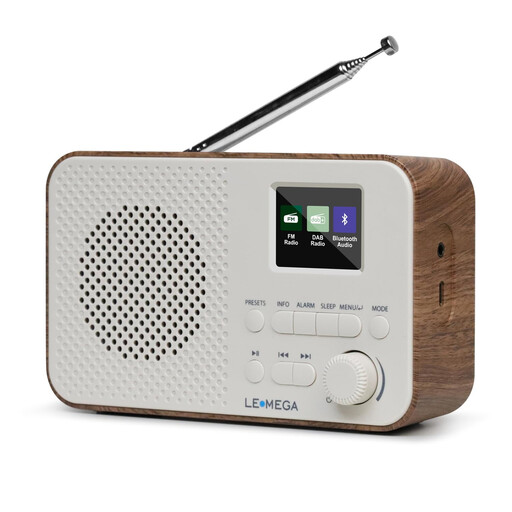 No image available
Suitable for live broadcasts on DAB+/FM and private listening via the specified headphone socket.
DAB+/FM, Bluetooth, rechargeable 2200-mAh battery, USB-C charging, headphone socket and 40 station presets.
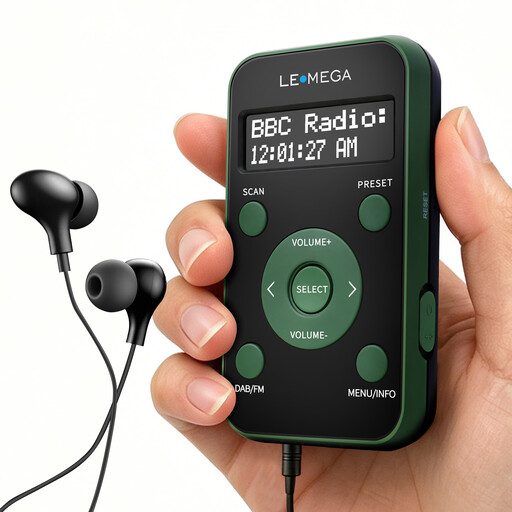 No image available
A compact option for live radio and private listening with the supplied earphones.
DAB/DAB+/FM, rechargeable battery, 20 station presets, LCD display and earphones.
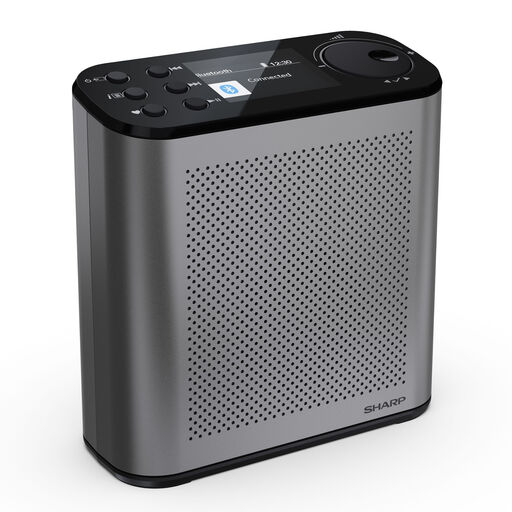 No image available
For terrestrial live broadcasts; Bluetooth is listed as a way to play audio from your smartphone.
DAB+/FM, Bluetooth 5.3, 120 station presets, USB-C charging, quoted battery life of 15 hours and a 2.4-inch colour display.
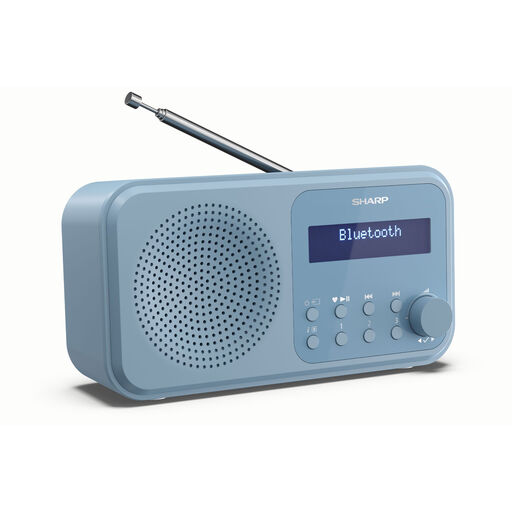 No image available
For live radio and private listening via the specified headphone socket.
DAB+/FM, Bluetooth 5.3, RDS, 40 station presets, dual alarm, headphone socket, and USB or battery power.
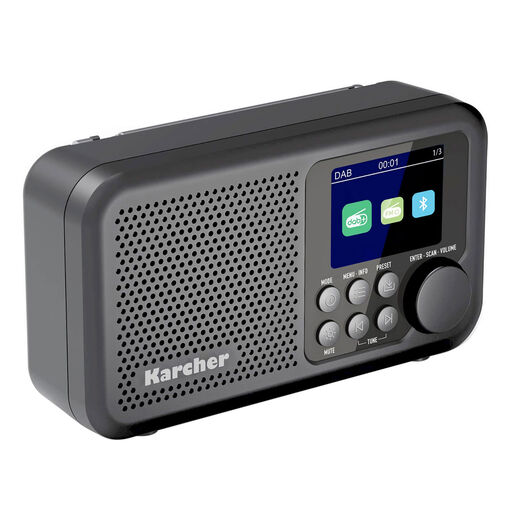 No image available
For live DAB+ reception and private listening via the specified headphone socket.
DAB+/FM, Bluetooth, colour display, speaker, headphone socket and alarm function; described as a battery-powered radio with an integrated rechargeable battery.
No. First check whether it’s broadcast live on a radio station you can receive where you listen, or offered as a podcast. DAB+/FM reception alone isn’t an on-demand service. If the documentary is available only on TV, you’ll need another way to access its audio.
Check the indoor reception prediction for your location, run a station scan and, if the signal is weak, try moving the radio or adjusting the aerial. A prediction is no substitute for testing reception at your actual listening spot.
Not just because Bluetooth is listed. Roberts explains that its Bluetooth radios can receive Bluetooth audio from a smartphone, but a separate transmitter is needed to send audio to Bluetooth headphones. For the model you’re considering, check specifically for a transmit function, or use a confirmed headphone output.
The text of Section 75 of the German Telecommunications Act (TKG), published by the Federal Ministry of Justice and the Federal Office of Justice, covers certain consumer radio receivers placed on the market for the first time. These include devices designed primarily to receive audio broadcasts and capable of displaying programme names; the exception in subsection 3 should also be noted. This doesn’t mean that older radios or those without a display are covered in every case, nor does it confirm that a specific model complies.