Listeners who have a particular local station in mind
If you mainly want to listen to your usual programmes while cooking or eating, check how the station is broadcast and whether you can get reception where you plan to use the radio.


First, check whether your chosen local station is available via DAB+ or FM where you plan to use the radio. The DAB+ coverage forecast from DAB+ Mehr Radio / MEDIA BROADCAST can help you assess reception at your location. Then consider how well you’ll be able to hear it in the dining area, the most suitable power supply and whether the controls are easy to reach while you’re cooking.
If you mainly want to listen to your usual programmes while cooking or eating, check how the station is broadcast and whether you can get reception where you plan to use the radio.
If you want to listen from the dining table too, look for a built-in speaker, a suitable position for the radio and controls that are easy to reach. Manufacturer specifications are no substitute for listening from your own spot.
If you move the radio between the worktop and dining table, compare rechargeable batteries, replaceable batteries and mains power, along with the accessories you’ll need.
Start by checking the station and reception at your location, then consider how well you’ll hear it in the room, the power supply and how easy it is to use.
A good choice if: you want to consider local stations on both types of reception and move the radio around without Wi-Fi. Check which stations are available and whether you can get reception where you’ll use it.
Things to consider: Two tuners don’t guarantee reception of your station, good sound throughout the room or a suitable power supply.
A good choice if: you can receive your chosen station on FM where you’ll use the radio, and FM is all you need.
Things to consider: An FM-only model won’t receive stations broadcast exclusively on DAB+.
A good choice if: your chosen programme has a live stream and you have an internet connection where you’ll be listening.
Things to consider: Internet radio needs an internet connection; Bluetooth alone doesn’t provide internet radio.
| Priority | What to look for when buying | Who it matters most to |
|---|---|---|
| Reception of your local station | Find out which station you want and how it is broadcast. Check the DAB+ coverage forecast from DAB+ Mehr Radio / MEDIA BROADCAST for your location, then test reception where you’ll actually use the radio. | If I mainly want to listen to my usual programmes, I need to be able to receive them in the kitchen or dining area. Around 36 % of consumers prioritise reception of their local station. |
| Sound throughout the kitchen and dining area | Check for a built-in speaker, available space and whether you can operate the radio from your usual listening spot. Wattage figures aren’t an independent comparison of sound quality. | If I want to listen from the dining table too, I look for a suitable position and sound that carries throughout the room. Around 29 % of consumers put this first. |
| Power when moving the radio around | Check the exact model’s power options: rechargeable battery, replaceable batteries or mains power. Compare the charging connection and what’s included. Manufacturer battery-life figures aren’t necessarily comparable. | If I often move the radio between the worktop and dining table, a suitable power supply that doesn’t rely on a socket is essential. Around 21 % of consumers prioritise this flexibility. |
| Quick and easy to use while cooking | Check for station presets, direct-access buttons and a display. Make sure the controls are easy to reach and read where you plan to use the radio. | If I want to switch on or change stations quickly while cooking, the key functions should be easy to access. Around 14 % of consumers particularly value ease of everyday use. |
The DAB+ coverage forecast distinguishes between locations and indoor reception. It doesn’t confirm that you’ll get reception in every part of a room.
Check how your chosen programme is broadcast and test the radio where you plan to use it.
Bluetooth lets you play audio from another device, but it doesn’t replace the right DAB+, FM or internet radio reception option.
Check that the exact model has the tuner or internet radio function you need for your station.
Portable models can use different power sources, including AA batteries, built-in rechargeable batteries and mains power.
Compare the power options, connections and what’s included with the exact model. Depending on the version, you may need to buy batteries or suitable charging accessories separately.
The Sony XDR-S41D is a portable DAB+/FM radio for listeners who prefer AA batteries and a built-in mono speaker.
The TAR2506/12 and TAR5600/00 offer different reception and power options within the range of portable radios covered here.
The Classic Mini combines DAB+/FM, Bluetooth and a rechargeable battery in a portable radio.
The nuGo! ONE+ combines a portable DAB+/FM radio with a speaker designed for music playback.
The DIGITRADIO 1 is an example of a compact portable DAB+/FM radio with a rechargeable battery.
The Joybuy products below include portable DAB+/FM radios, a model with internet radio and an FM pocket radio, offering different options for listening spots and types of reception.
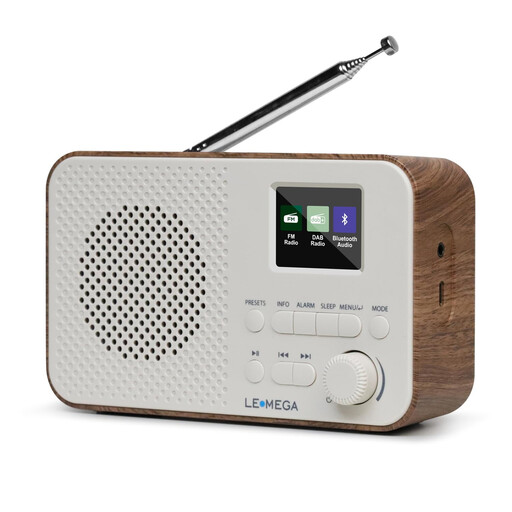 Image unavailable
For moving between the kitchen and dining area, the product details list DAB+, FM and a rechargeable battery.
2200-mAh battery; USB-C charging; 40 presets; headphone socket; mains adaptor.
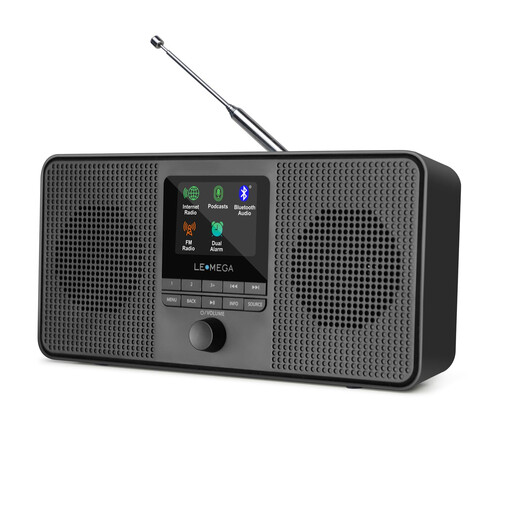 Image unavailable
If your programme is available over the air or as an internet stream, this model brings together several reception and playback options.
DAB and FM; internet radio; podcasts; Bluetooth; stereo. Internet radio requires an internet connection.
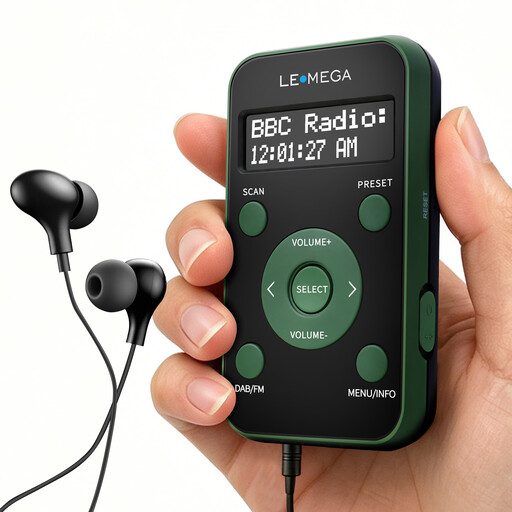 Image unavailable
This pocket radio is an option if you want to move between listening spots and hear terrestrial stations via DAB+ or FM.
Rechargeable battery; 20 station presets; LCD display; earphones; green/black colour option.
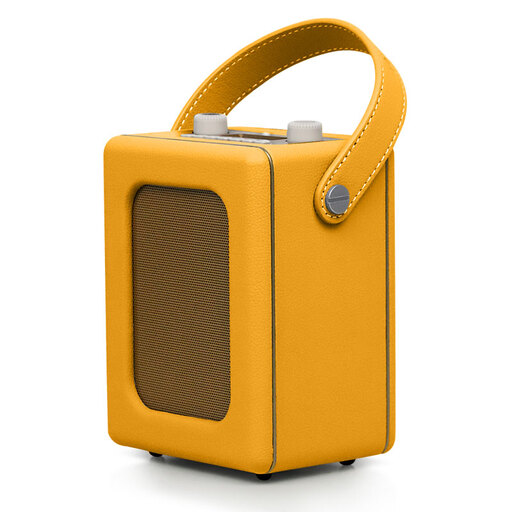 Image unavailable
For the kitchen or bedside table, this model can be assessed by looking at the radio and additional features listed in its product name.
DAB+; Bluetooth; stated 20-hour battery; 60 station presets; two alarm times; headphone socket; golden yellow.
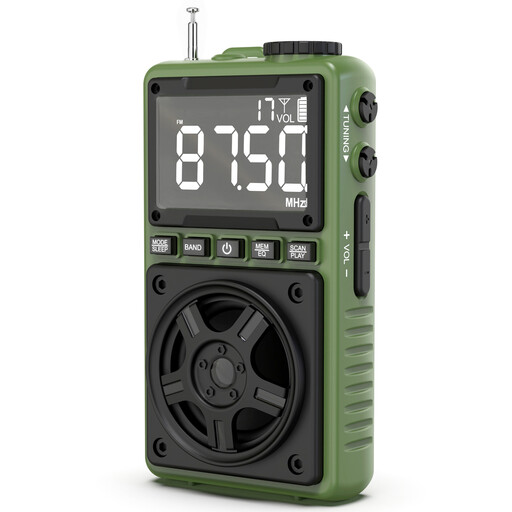 Image unavailable
If your station broadcasts on FM, this portable radio is a compact option to consider. Bluetooth provides an additional way to play audio, but doesn’t replace radio reception.
Rechargeable battery; USB-C charging; TF card playback; LED light.
No. DAB+ receives terrestrial radio signals without an internet connection, as explained by Bayerischer Rundfunk. Internet radio is a different way of receiving broadcasts and requires an internet connection.
First, check how the station is broadcast and consult the DAB+ coverage forecast from DAB+ Mehr Radio / MEDIA BROADCAST for your location. Test the radio where you plan to use it and adjust the aerial according to the device instructions. FM may help if the station is also broadcast on FM in your area.
No. According to the Verbraucherzentrale, you don’t need to replace a working FM radio solely because of DAB+. Requirements for digital reception apply to certain new devices; when buying a new radio, check which requirements apply to that specific type of device.
The Bundesnetzagentur lists checks including correct CE marking, identifiable product and manufacturer details, German-language instructions with any required warnings, and a declaration of conformity. Check the device and its documentation; a CE mark alone isn’t an independent quality mark.
For your statutory warranty rights, the seller is generally your first point of contact. These rights are separate from a manufacturer’s voluntary guarantee. Check your receipt and the specific offer to see who the seller is and what additional guarantee terms apply.