Listeners who want local traffic updates
You want to hear updates about your route before setting off. The key question is whether you can receive the right local station at home and where you plan to listen.


First, check whether you can receive a station broadcasting traffic updates for your area where you plan to use the radio. Then consider whether the controls, sound at a distance and power supply suit your routine. DAB+ alone does not guarantee reception everywhere in your home.
You want to hear updates about your route before setting off. The key question is whether you can receive the right local station at home and where you plan to listen.
If you listen from a distance, look for sound that’s clear enough for you to understand, easy-to-reach controls and a suitable place to position the radio.
If you move the radio between rooms or want to listen away from a socket, check the power supply of the specific model you’re considering.
Start by finding out which local station covers your route and whether you can receive it where you plan to listen. DAB+ More Radio offers a programme guide and a location-based reception forecast; the ARD notes that local stations also broadcast additional digital programmes.
| Buying priority | What to check | Who it matters to |
|---|---|---|
| Receiving a local station | Find out which station you want and how to receive it; check the DAB+ indoor reception forecast for your location. | If I want to hear updates about my route before setting off, I need to be able to receive the right station where I plan to listen. Around 36% of consumers would put local reception first. |
| Hearing updates from a distance | Check the sound and positioning at your usual listening spot. When comparing similar radios, also consider their size and any guidance on speaker orientation. | If the radio isn’t right beside me, I want to understand the updates from where I usually sit. Around 29% of consumers would prioritise being able to understand updates from a distance. |
| Finding a station quickly | Check whether you can save the station you want, and how to use the tuning and preset controls. | If I want to tune in to the same station just before setting off, I want to find it without a lengthy search. Around 21% of consumers would prioritise quick access to their station. |
| Choosing the right power supply | Check whether each model uses mains power, batteries or a built-in rechargeable battery, and what you need to charge it. | If I want to move the radio between rooms or use it away from a socket, its power supply needs to suit the way I’ll use it. Around 14% of consumers would put flexible power options first. |
Indoor coverage and the programmes available vary by location. So having a DAB+ tuner alone doesn’t tell you whether your local traffic station will work where you plan to listen.
Check the station, the available ways to receive it and your planned radio position separately. FM is only an option if a suitable station is available there.
Some models are designed for mains and battery power, while others have a built-in rechargeable battery. Not every radio offers additional charging options.
Check the power supply for the specific model variant and whether you’ll need batteries or a suitable way to charge it.
A comparison that also rates emergency and outdoor features may have different priorities from someone listening to short traffic updates at home.
Assess reception where you plan to listen, access to your chosen station and how easy the radio is to use in your daily routine.
The RF-D10 is a portable DAB+/FM radio that can run on mains power or batteries.
The XDR-V20D combines DAB+/FM reception with a built-in rechargeable battery and stereo speakers.
The Tuner 2 and larger Tuner XL are portable DAB+/FM radios with Bluetooth.
The nuGo! ONE+ combines portable DAB+/FM reception with a radio-speaker design.
The DR 112 is a DAB+/FM radio with additional ways to use it without mains power.
The range includes portable radios with DAB+/FM, as well as a model whose product name lists AM, FM and shortwave. For your local station, check that the reception method is suitable, along with the controls and power supply of the variant you’re considering.
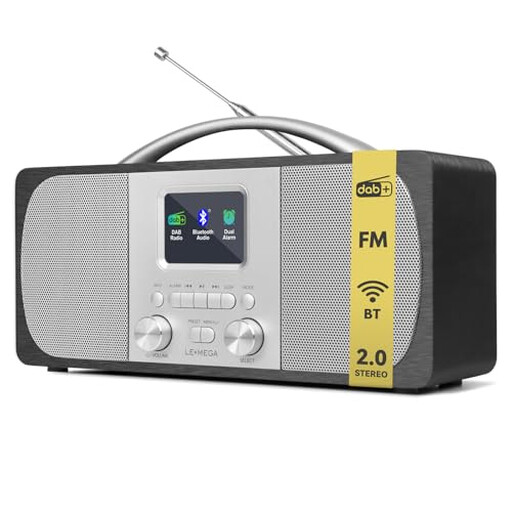 No image available
A good fit if you want DAB+/FM reception and the option to power the radio from the mains or batteries, depending on where you use it.
Features listed include 40 station presets, two speakers and Bluetooth.
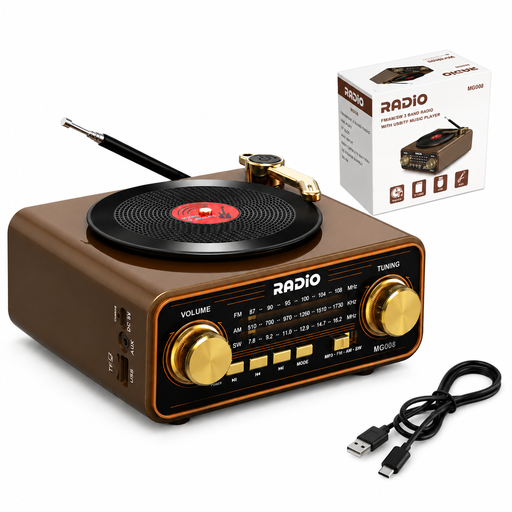 No image available
Worth considering if you can receive a suitable FM station where you plan to listen and want a portable radio.
The product name lists AM, FM and shortwave, as well as USB-C, TF card and AUX. If you want DAB+ updates, make sure the version on offer specifically states that it supports DAB+.
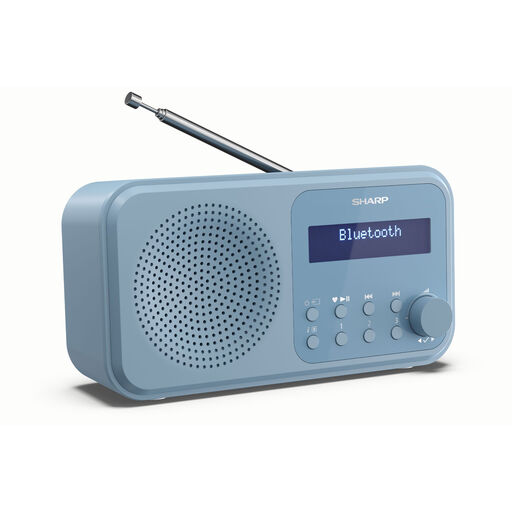 No image available
An option if you want to listen to DAB+/FM and quickly select a saved station.
Features listed include 40 station presets, Bluetooth 5.3 and USB or four AA battery power.
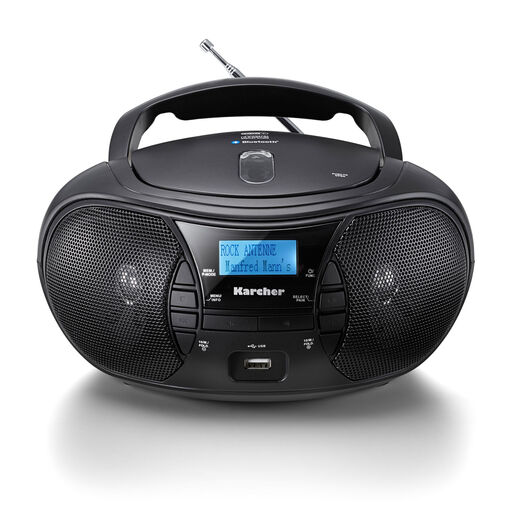 No image available
A good fit if you’re considering a portable radio with DAB+/FM and extra playback features.
Features listed include 30 presets for each reception type, stereo speakers, a CD player, and mains and battery power.
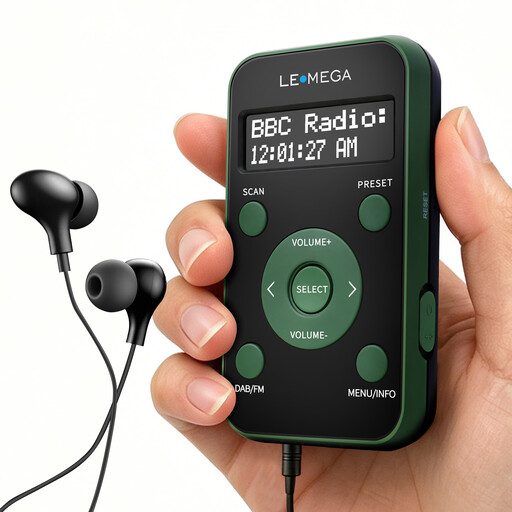 No image available
The pocket-sized design and rechargeable battery make this a good choice if you want to take your radio with you.
Features listed include 20 station presets and USB-C charging. The product description recommends using headphones, which also act as the aerial. Check that this suits the way you want to listen in an open-plan living space.
First check which programmes are available in your area, then test reception where you plan to position the radio. The DAB+ programme map shows local programmes, while the location-based reception forecast helps you assess DAB+ indoor reception. Neither guarantees reception everywhere in your home.
Try moving the radio and, if it has one, adjusting the aerial. If the programme line-up has changed, you may need to retune the radio. Bayerischer Rundfunk notes that you might also need to reset your presets after a change.
Check how it sounds from your usual listening spot, not just from right beside the radio. Also consider whether you can easily reach the controls from where you’ll be, and whether the positioning and aerial direction suit the room.
That depends on whether the radio will usually stay near a socket or move between rooms. Models vary: some use mains power and batteries, while others have a built-in rechargeable battery. Check the power supply for the specific variant, and whether you’ll need to charge it or replace its batteries.