Listeners who want local travel updates
If you want to tune in to a station that broadcasts updates for your region before setting off, choosing the right station and being able to receive it where you listen matter more than extra audio features.


First, choose a station that broadcasts updates for your region, then check whether you can receive it at your chosen listening spot in the loft. A portable DAB+/FM radio gives you both reception options; an FM radio is enough if you can actually receive your chosen station on FM. For delays or platform changes affecting a specific train, you should also check Deutsche Bahn’s travel information.
If you want to tune in to a station that broadcasts updates for your region before setting off, choosing the right station and being able to receive it where you listen matter more than extra audio features.
If you have a regular listening spot in mind, perhaps away from a window, check whether you can receive your chosen station there.
If you take the radio between your living and working areas, you’ll need a suitable power supply and reception that works in both places.
First, check that your chosen station uses the right reception method and is available where you plan to listen. The coverage checker from Digitalradio Deutschland e. V. can help you check reception at your location; for specific train journeys, Deutsche Bahn provides its own travel information.
| What you need | What to check before buying | Who it matters most to |
|---|---|---|
| The right station | Identify the station and whether it broadcasts on DAB+ or FM. | If I need updates for my region before setting off, having a station that’s actually available comes first. Around 36% of consumers put choosing the right station at the top of their list. |
| Reception where you listen | Test reception at your chosen spot; adjust the aerial and radio position if needed. | If my listening spot is away from a window, I need to be able to receive my chosen station there. Around 29% of consumers prioritise reception in the spot where they actually listen in their loft. |
| Portability and power | Check the battery type or size, charging socket and what’s included. | If I take the radio between different areas, I need a power supply that suits moving it around. Around 21% of consumers prioritise portability and power. |
| Clear speech | Consider the speaker and volume control for spoken updates; check for a headphone socket if needed. | I want to be able to understand short updates clearly from my usual listening spot. Around 14% of consumers focus on how easy spoken updates are to understand. |
A forecast for your location doesn’t confirm that you’ll receive the station in every part of your home.
Check your chosen station where you plan to listen. If reception is poor, adjust the aerial or radio position, or try somewhere closer to a window.
According to Sony, an analogue FM/MW radio such as the Sony ICF-506 doesn’t have a DAB+ tuner.
Before you decide, make sure the radio’s tuner supports the way your chosen station is broadcast.
General updates aren’t a substitute for information about changes to a specific train journey.
Use the radio for general travel news, and check your specific journey with Deutsche Bahn before setting off.
The DIGITRADIO 1 is a compact example of a DAB+/FM radio with station presets and a replaceable battery.
The DPR-76BT combines DAB+/FM with station presets and several power options.
According to the manufacturer, the Rambler Mini is a compact DAB+/FM radio for moving between rooms.
The ICF-506 is a simple analogue FM/MW option if your chosen station is available on FM.
The nuGo! ONE+ is a portable DAB+/FM option with additional stereo and Bluetooth features.
These product options are designed for portable radio listening and receiving updates on the go. For each model, check that your chosen station is available at your planned listening spot using the right reception method.
 No image available
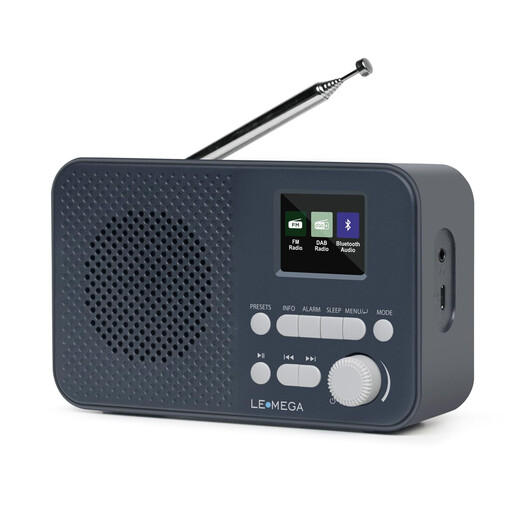
An option if you’re looking for DAB+/FM, battery power and a headphone socket in a portable radio.
The title lists a 2200 mAh battery, USB-C charging and 40 station presets. The product description also mentions a speech EQ mode.
 No image available
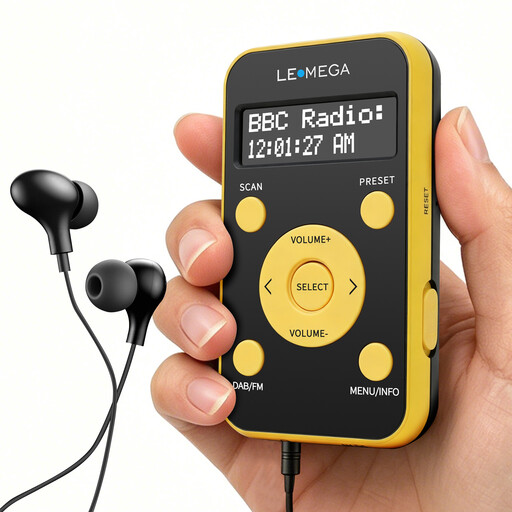
The pocket-sized design suits changing listening spots if you want to use the reception options listed in the title.
The title lists DAB/DAB+, FM, a rechargeable battery, 20 station presets, an LCD display and earphones.
 No image available
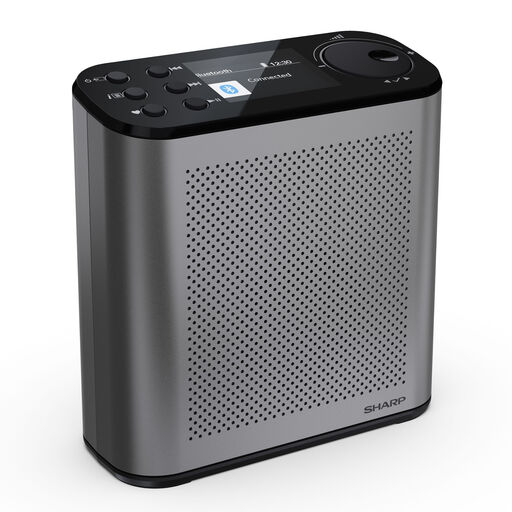
A portable DAB+/FM option if you’d also like Bluetooth and USB-C charging.
The title lists 120 station presets, Bluetooth 5.3, USB-C charging and a stated battery life of up to 15 hours.
 No image available
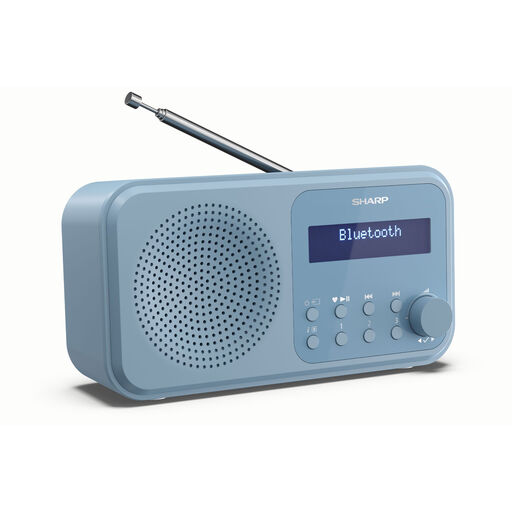
This model is worth considering if you want DAB+/FM with battery or USB power and a headphone socket.
The title lists Bluetooth 5.3, 40 station presets and a headphone socket.
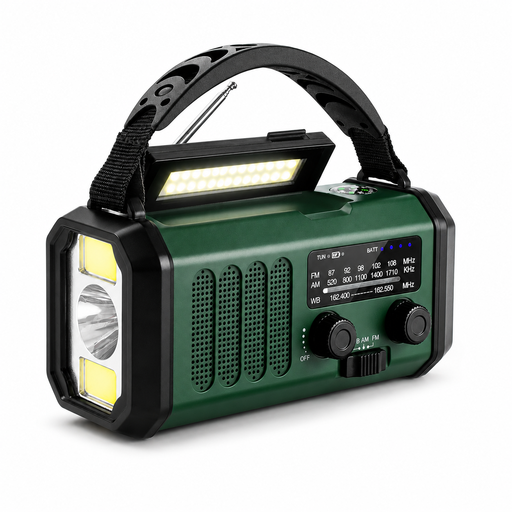 No image available
Its emergency features may suit you if you’re looking for a radio that also has a light and SOS function. Before buying, check that it supports the reception method used by your chosen station for travel updates.
The title lists a 10000 mAh power bank, an LED reading lamp with 48 LEDs and SOS.
First, identify your region and check which station provides the updates you need. Digitalradio Deutschland e. V.’s programme guide can help you find regional DAB+ stations; for changes to a specific train journey, Deutsche Bahn provides up-to-date travel information.
Check the coverage forecast for your location, fully extend the aerial when scanning for stations, and try the radio somewhere closer to a window. The forecast doesn’t replace a reception test at the spot where you actually listen.
DAB+ receives broadcasts terrestrially, so it doesn’t need an internet connection. For private individuals, the broadcasting fee is generally charged per home, not per radio; exemptions may apply depending on your living situation.
Section 75(4) of the German Telecommunications Act (TKG) covers certain consumer radios being placed on the market for the first time that are primarily used to receive broadcasts and can display programme names, and provides for exceptions. This doesn’t amount to a blanket ban on every analogue radio without a programme-name display; whether the requirement applies to a particular device depends on these conditions.
For qualifying distance purchases, you generally have a 14-day right to cancel, although exceptions may apply depending on the contract. If there’s a fault, your statutory rights against the seller are separate from any voluntary manufacturer’s guarantee. Check the terms of your specific purchase.