
Lieferung heute & morgen

Qualitätsgarantie

Willkommens-Angebote freischalten: KOSTENLOSE Lieferung | Bis zu 80 % RABATT | Kostenlose 30-Tage-JoyPlus-Testphase
App herunterladen
The independence to generate your own energy—whether for camping, in the garden, or as an emergency backup—is an increasingly important consideration for many households. A portable solar panel promises just that: clean power wherever the sun shines. However, the market is flooded with options whose technical specifications often create more confusion than clarity. Before you make a decision, it's crucial to understand the most common pitfalls that can lead to a bad purchase.
The 3 Most Common Mistakes When Buying a Portable Solar Panel:
To make an informed decision, focus on the following objective criteria. These determine whether a portable solar panel will meet your needs in the real world.
The rated power, specified in watts (W), describes the maximum amount of electricity a panel can generate under ideal conditions. For charging smaller devices like smartphones or a compact power station, a 100W solar panel may be sufficient. For larger consumers, such as those needed with a camping solar panel for an RV or to supply a high-capacity power station, models with 200W or more are a more sensible choice.
Even more important than the raw wattage is the efficiency rating. It indicates what percentage of solar energy is actually converted into electrical current. A panel with a higher efficiency rating (e.g., 23% instead of 19%) generates more power from the same surface area. This means faster charging times and better performance in diffuse light.
A portable solar panel must be easy to transport. Pay attention to the weight and the packed size when folded. A foldable solar panel is the most common and practical design. Models designed as a solar briefcase often offer additional protection for the cells during transport. Integrated kickstands are also an important feature, as they allow for quick and stable alignment with the sun without needing extra mounting hardware.
Carefully check the available connectors before purchasing. Most panels for power stations use standardized MC4 or XT60 connectors. Many models also offer direct outputs like USB-A and USB-C (with PD - Power Delivery) to charge smartphones, tablets, or laptops directly, bypassing a power station. Ensure that the connectors and electrical specifications (voltage and amperage) are compatible with your existing equipment, especially your solar for power station setup.
Instead of making a one-size-fits-all recommendation, we have identified products tailored to specific use cases.
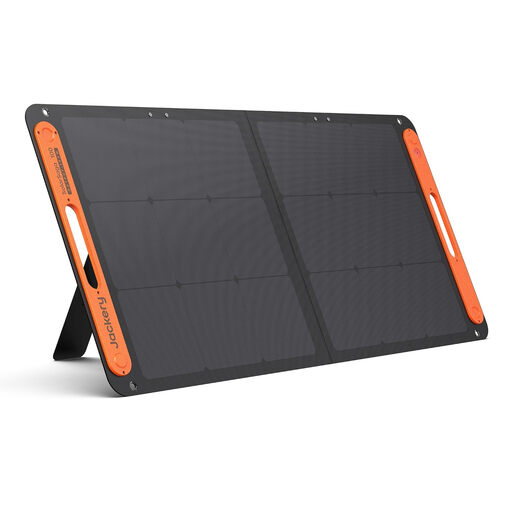
Why it's a good fit: Ideal for weekend trips, charging smartphones, or powering a smaller power station. Its low weight and compact, foldable design make it extremely portable.
Compatibility is clearly defined through its focus on Jackery Explorer power stations. The durable ETFE coating protects the cells and ensures long-term efficiency.
Integrated USB-A and USB-C outputs allow for direct charging of devices, increasing its versatility in the field.
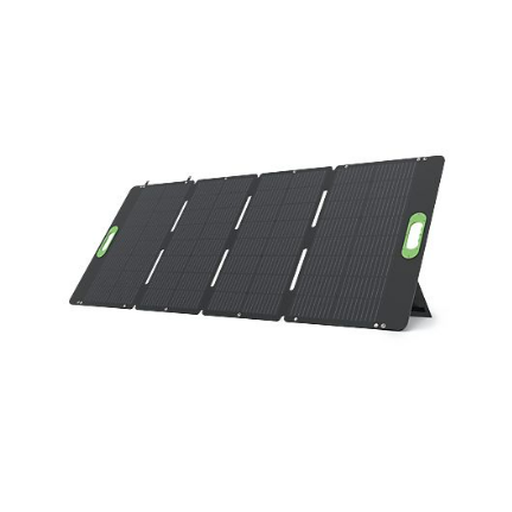
Why it's a good fit: With 200W of power, it's designed to supply larger power stations in an RV or during extended off-grid stays. It provides a solid energy supply for more demanding setups.
The high efficiency of 23% (according to the manufacturer) ensures reliable performance. The universal MC4 connectors guarantee broad compatibility with most power stations on the market.
The IP67 rating makes the panel resistant to dust and temporary submersion, making it a robust choice for demanding outdoor use.
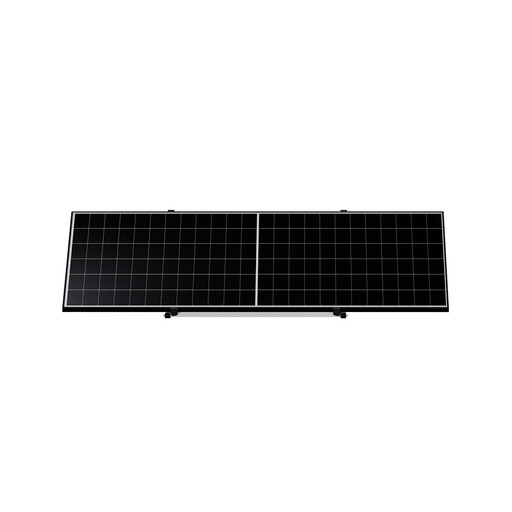
Why it's a good fit: This is a complete kit for stationary use in the garden or as an emergency power solution. It is less focused on portability but offers high performance and an easy setup.
As a pre-assembled all-in-one system with a panel, microinverter, and stand, compatibility issues are eliminated from the start. Simply set it up, plug it in, and generate power.
The high output of 400W and the integrated inverter allow for direct feeding into the home grid (registration with the grid operator and market data register may be required).
We have compiled a complete, up-to-date list of products that fully meet these strict selection criteria and safety regulations.
For maximum output, the panel should be positioned as perpendicular to the sun as possible. In the Northern Hemisphere, this means facing south. The tilt angle should be shallower in the summer (approx. 30 degrees) and steeper in the winter (approx. 60 degrees). Most foldable panels have adjustable kickstands to easily adapt the angle. Be sure to avoid any shading from trees, buildings, or other objects.
The lifespan depends heavily on the quality of the materials and how it's used. Models with a robust ETFE coating are more resistant to weathering, UV radiation, and mechanical stress than those with a PET coating. With proper handling and storage, a high-quality panel can provide reliable performance for many years. Many manufacturers offer a performance warranty for a specific period, which can serve as a guideline.
Yes, many modern portable solar panels have integrated USB-A or USB-C ports. This allows you to charge smartphones, tablets, or cameras directly without needing a power station in between. However, note that the charging power depends directly on the current solar irradiation. With intermittent cloud cover, the charging process can be interrupted, which is why charging via a power station as a buffer is often the more stable solution.