Guardians of irreplaceable family photos
You want to avoid losing restored versions because of a fault, accidental deletion or damage where they’re stored.


For a local archive of restored family photos, choose a portable SSD that suits the size of your archive and the ports on your devices; the advertised maximum speed alone says nothing about data security. The Federal Office for Information Security recommends disconnecting backup media from your computer when you’re not backing up. So plan to keep another copy somewhere separate: the lifespan of a storage device can’t be predicted precisely.
You want to avoid losing restored versions because of a fault, accidental deletion or damage where they’re stored.
You regularly add scans and restored files, so you need to allow space for your existing collection and future backups.
You want to open photos locally on different computers, so you’ll need to consider the connections and file system.
First, decide where you’ll keep another copy separately. Then check the capacity and device compatibility; access protection is particularly important if other people could access the drive.
| What you need | What to look for | Who it matters most to |
|---|---|---|
| Separate backup | Plan to keep another copy in a different location and, after copying, check a sample of files to make sure they open again. | If I don’t want to lose restored photos, I’ll plan a second copy and store it separately. Around 36% of consumers prioritise having a recoverable backup in another location. |
| Space for your archive | Check the size of the folders you want to keep and allow for planned additions before choosing a capacity. | If I want to keep both original scans and restored versions, I’ll need room for both as well as future additions. Around 29% of consumers pay particular attention to capacity for a growing archive. |
| Access from multiple devices | Check the ports, cables and file system. Formatting deletes existing files. Apple Support describes ExFAT as an option for drives over 32 GB that will be used with both Macs and Windows PCs. | If I want to open photos on different family computers, I’ll check that the ports and file system are compatible. Around 21% of consumers prioritise access from the devices they already own. |
| Private access | Check whether the version you choose offers password protection or whether encryption software is compatible with your devices. Then test unlocking the drive and opening files again. | If other people might be able to access the drive, I’ll want to protect the photos from unauthorised viewing. Around 14% of consumers pay particular attention to private access protection. |
A portable drive can fail, be accidentally wiped or be damaged along with your computer. A single copy won’t protect you from losing your files.
Keep another copy in a different location and check that you can open the files again.
A model’s speed rating doesn’t tell you how securely your photos are archived. The speed you can achieve also depends on your computer’s port.
Check capacity, backup copies and connections first; compare speed ratings afterwards.
Formatting a drive deletes any files already on it, as Apple Support explains.
Save all the photos you need to another storage device before changing the file system.
The portable SSD T7 Shield and T9 are designed for different needs: frequent travel and high transfer speeds with a compatible port, respectively.
The XS1000 and XS2000 have different stated USB speed ratings, while the Dual Portable SSD has USB-A and USB-C connectors built into the drive.
SanDisk offers portable SSD models with stated protection and encryption features.
These models are suitable as portable SSDs for storing restored family photos locally. They differ in capacity and, among other things, in the USB standards stated in their product names.
 No image available
Worth considering if you’ve worked out the size of your archive and are looking for a portable 2 TB SSD.
 No image available
An option if you’re looking for a portable 1 TB SSD for local storage and access from several devices.
Check that your computer’s port supports the standard relevant to this specification.
 No image available
A strong contender if you’re looking for a 2 TB SSD for a local photo archive.
 No image available
This could suit you if 1 TB is enough for your collection and your computer supports USB 3.2 Gen 2x2.
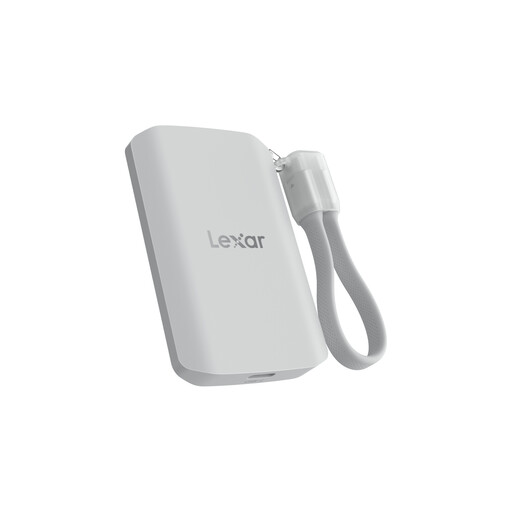 No image available
An option if you’re looking for a portable 1 TB SSD with IP65 protection stated in the product name.
According to the product description, the stated IP65 protection doesn’t cover submersion or prolonged exposure to a high-pressure water jet.
No. If you want to avoid losing irreplaceable photos, you should keep another copy somewhere else. The Federal Office for Information Security recommends disconnecting backup media from your computer when you’re not backing up. This is a security measure, not a legal minimum number of drives.
First, check whether there are already photos on the drive, as formatting deletes existing files. Apple Support describes ExFAT as a format option for drives over 32 GB that will be used with both Macs and Windows PCs. Also check that the connections and any unlocking software you need are compatible.
No. The Federal Office for Information Security recommends disconnecting backup media from your device when you’re not backing up, and only connecting it to a computer that isn’t infected. Even so, plan regular backups and check that you can open the files again.
A device warranty isn’t a substitute for backup copies. Check the terms for the specific version you’ve bought and, regardless, keep a second copy that you can open. The lifespan of a storage device can’t be predicted precisely.
Section 10 of the Electrical and Electronic Equipment Act (ElektroG) requires old devices to be collected separately from unsorted household waste. The Federal Environment Agency lists recycling centres and suitable return points, and recommends deleting personal data before handing in a device. Separate collection is a legal requirement; deleting personal data is an official recommendation.