Which type is right for you?

Pre-cooking stock in one pan

If you usually make stock in one pan and aren’t planning a permanent installation, a portable single-zone hob could suit you. Make sure your pan is induction-compatible and meets the appliance’s requirements for diameter and weight capacity.

Preparing several lunchbox items at once

If you want to cook stock and another item on the hob at the same time, you’ll need several genuinely usable cooking zones. A portable double hob doesn’t require a fixed hob cut-out, while a built-in hob needs to fit your kitchen dimensions and have a suitable connection.

Replacing or adding a hob

For a permanent installation, check the cut-out and connection requirements for the specific model. Review the installation details before deciding which type to choose.

What should you consider when choosing?

Portable single-zone hob

A good fit if: you mainly use one stock pot at a time and aren’t planning a permanent installation.

The trade-off: While the stock simmers, the only zone is occupied, so you can’t use it for other dishes.

Portable double hob

A good fit if: you want to cook stock and another item at the same time without installing a permanent hob.

The trade-off: You’ll need more worktop space than you would for a single-zone hob.

Built-in hob

A good fit if: you regularly cook several dishes at once and the model suits your kitchen and connection.

The trade-off: The cut-out and electrical connection must be suitable for the specific hob.

What matters What to check when buying Who should consider it?
Pan and simmering Check that the pan has a flat, induction-compatible base. The CASO Touch 2000 takes pans with a diameter of 12–24 cm and a maximum weight of 6 kg. If I want to keep using my stock pot, its base, size and filled weight need to suit the hob and cooking zone. Around 40% of consumers prioritise finding a zone that suits their pan and simmering needs.
Cooking at the same time Compare the number of usable zones with the space available for your pans. If you’re preparing other lunchbox items as well as stock, you’ll need zones that can be used at the same time. Around 30% of consumers prioritise cooking several things at once.
Type and connection For built-in appliances, check the cut-out dimensions and connection type for the specific model. If I’m adding or replacing a built-in hob, it needs to suit my existing kitchen and electricity supply. Around 20% of consumers prioritise this.
Timer and controls Check whether the timer simply sounds an alert or switches off the cooking zone. If you regularly pre-cook stock, you’ll want to choose a timing function that suits your routine and understand what it does. Around 10% of consumers prioritise the timer and controls.

Common mistakes when choosing

  • Checking only the diameter of an empty pan

    For the CASO Touch 2000, the manufacturer specifies a pan diameter of 12–24 cm and a maximum weight capacity of 6 kg. Water and vegetables add to the weight of a full pan.

    Compare the pan’s induction-compatible base, diameter and filled weight with the specifications for the appliance you’re considering.

    If your current pan doesn’t meet the diameter or weight requirements, you may need to use a different one.

  • Choosing a built-in hob based only on its overall width

    Overall width, cut-out size and connection are different specifications. The Bosch PIE61RBB5E is 592 mm wide, but requires a cut-out of 560 × 490–500 mm and is supplied without a plug.

    Check the installation dimensions for the exact model against your kitchen, and find out whether any electrical work is needed before buying.

  • Assuming a minute minder switches the hob off

    AEG lists a minute minder for the GI644FFX, while Bosch specifically describes the PIE61RBB5E as having a timer that switches off the selected cooking zone.

    Check the manual to see what happens when the set time is up, and keep an appropriate eye on the cooking.

  • Assuming an oven’s energy label applies to its hob

    According to the Verbraucherzentrale, the EU energy label for a cooker combination applies to the oven, not the hob.

    So don’t use the label as an indication of electricity use when cooking stock. Instead, compare suitable cooking zones and the specific features of each appliance.

Brands and models to consider

CASO Design

Portable single-zone induction hobs; the Touch 2000 is one example for making stock in a single pan.

  • CASO Design lists ten power levels and a 1–180-minute timer for the Touch 2000.
  • This model takes pans with a diameter of 12–24 cm and has a maximum weight capacity of 6 kg.

SEVERIN

Portable double induction hobs; the DK 1031 offers two cooking zones without the need for a permanent installation.

  • SEVERIN lists two glass ceramic cooking zones and a Schuko plug for the DK 1031.
  • Two zones take up more worktop space than a single portable hob.

Bosch

Built-in induction hobs; the PIE61RBB5E is a model with four round cooking zones.

  • Bosch lists a timer with switch-off function and a child lock for this model.
  • The hob is supplied without a plug, and the cut-out and connection need to suit your kitchen.

AEG

Built-in induction hobs; the GI644FFX links two zones using its Bridge function, for larger compatible cookware.

  • AEG lists four zones and a Bridge function for this model.
  • Don’t assume the minute minder switches off the cooking zone without checking. The appliance is supplied without a mains plug.

Siemens

Larger, flexible built-in hobs; the EX975LXC1E is a 90-cm option for using several pans.

  • Siemens lists five zones and three flexible areas for this model.
  • The required 880 × 490–500 mm cut-out and connection without a plug need to suit your kitchen.

Joybuy products

This selection includes portable double hobs and built-in induction hobs for making stock and preparing other lunchbox items.

Bosch PIE61RBB5E Series 4 built-in induction hob

Bosch PIE61RBB5E Series 4 built-in induction hob

For cooking stock and other dishes when you have space for a built-in hob.

Four cooking zones; timer with switch-off function; cut-out 560 × 490–500 mm; supplied without a plug.

Joybuy

Portable induction hob with two cooking zones and five temperature settings

Portable induction hob with two cooking zones

For cooking stock and another item when you’re looking for a portable double hob.

Two independently controlled cooking zones; five temperature settings; simmer and keep-warm modes.

Joybuy
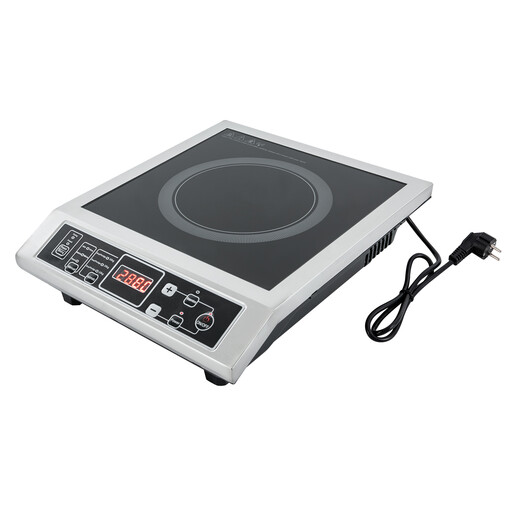
3500W countertop induction hob with eight power levels

3500W countertop induction hob with 8 power levels

A portable cooking option if its power levels and timer suit the way you cook.

3500W; eight power levels; timer and preset function; EU plug; IPX4.

Joybuy
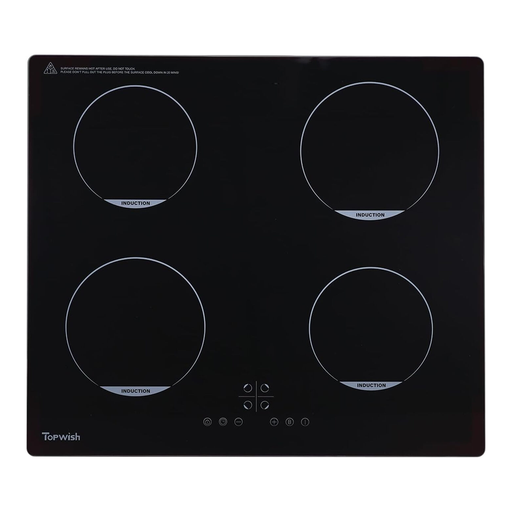
TOPWISH 4-zone built-in induction hob, 60cm

TOPWISH 4-zone built-in induction hob, 60cm

For cooking several dishes at once, provided the cut-out and connection suit your kitchen.

Four zones; nine power levels; timer up to 99 minutes; cut-out 565 × 495 mm; wired connection rather than a plug.

Joybuy
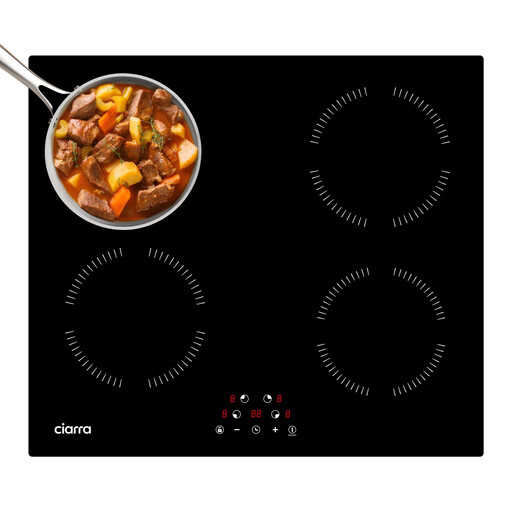
CIARRA CABBIH4-A built-in induction hob with four zones

CIARRA CABBIH4-A built-in induction hob

For cooking stock and other dishes on a built-in hob.

Four cooking zones; nine power levels; individual timers; cut-out 560 × 490 mm; description specifies a 32-A fuse.

Joybuy

Frequently asked questions

Will my current stock pot work on an induction hob?

Only if its material and base are suitable for induction and its size is right for the cooking zone and the appliance’s specifications. The Bundesamt für Strahlenschutz recommends flat, suitable cookware in an appropriate size. For the CASO Touch 2000, the manufacturer specifies a diameter of 12–24 cm and a maximum weight capacity of 6 kg.

Who can connect a built-in induction hob to the electricity supply?

It depends on the connection and the work required. Under § 13 of the Niederspannungsanschlussverordnung, work on the electrical installation covered by the regulation may generally only be carried out by the network operator or an installation company listed in its register of installers. Bosch describes the PIE61RBB5E as an appliance supplied without a plug and requiring connection by a qualified electrician. This is different from a portable appliance with a plug.

Can cooked vegetable stock be left at room temperature until lunch the next day?

The Bundeszentrum für Ernährung recommends keeping cooked food in the fridge, too. So make sure you cool and store it hygienically after cooking; a hob timer won’t do this for you.

Is induction safe to use with a pacemaker without seeking advice?

You can’t assume that it’s suitable for everyone. The Bundesamt für Strahlenschutz advises people with active implanted devices, such as pacemakers, to ask a doctor whether household appliances could affect their implant.

Does every hob timer switch off the cooking zone automatically?

No, it depends on the model. Bosch lists a timer with a switch-off function for the selected cooking zone on the PIE61RBB5E, while AEG lists a minute minder for the GI644FFX. Check the manual to see whether the set time actually switches off the zone.