If you usually reduce one pan of sauce and don’t want a permanent installation, a portable single-zone hob with a suitable pan and easy-to-use low power settings is a sensible choice. If you regularly cook sauce and side dishes at the same time, a built-in hob with multiple zones may suit your routine better – check the cut-out dimensions and connection requirements first. A boost function or temperature setting alone doesn’t prove that a particular sauce won’t catch.
Who are the different types of hob suitable for?
If you reduce small amounts of sauce
If you mainly make sauce for the working days ahead, choosing a suitable pan and easy-to-understand controls matters more than having lots of cooking zones. The Federal Office for Radiation Protection highlights the importance of using a suitable pan with a flat base and the right dimensions.
If you have limited kitchen space
A portable single-zone hob can give you an extra cooking spot without the need to install a built-in hob. Check that you have enough space to position it and that the connection suits the specific appliance.
For households cooking several things at once
If you want to cook sauce and side dishes on the hob at the same time, multiple cooking zones can make things easier. For a built-in appliance, your kitchen and electrical connection must be suitable for the model you choose.
What should you look for when buying?
For lunchbox sauces, the key considerations are controllable heat, a suitable pan and whether you need one cooking spot or several.
| What you need |
What to check before buying |
Who is this important for? |
| Reduce sauce with control |
Ease of use at low power settings; timer or pan sensor on the specific model |
If I want to turn the heat down gradually after bringing the sauce to the boil, I look for settings that are easy to reach. Around 33% of consumers prioritise controllability. |
| Extra cooking spot without alterations |
Appliance dimensions and a suitable surface to place it on; connection details |
If I only need an extra cooking spot and don’t plan on a permanent installation, I check the space and connection first. Around 27% of consumers prioritise space and installation requirements. |
| Cook several dishes at once |
Number and layout of cooking zones; space for your pans |
If I want to finish the sauce and other lunch components at the same time, I may need more than one cooking zone. Around 20% of consumers prioritise batch-cooking several dishes at once. |
| Keep using a pan you already own |
Magnetic, flat pan base; hob’s compatible diameter range |
If I want to keep using my sauce pan, I compare its base with the hob’s specifications. Around 20% of consumers prioritise pan compatibility. |
Common assumptions to avoid when buying
-
Assuming boost gives you precise low heat for reducing sauce
Bosch’s claim about faster heating refers to the highest standard power setting. It doesn’t tell you how well a particular sauce can then be reduced over a low heat.
Compare the low power settings and how easy the controls are to use. Think of boost as a way to bring something to the boil, not as proof that food won’t catch.
-
Checking only that your pan is magnetic
A magnetic pan base must also be flat and suitable for the specified cooking zone or pan size. Rommelsbacher gives a zone diameter of 145–220 mm and says the CTS 2000/IN can take pans up to 230 mm; CASO specifies a pan size of 12–24 cm for the S-Line 2100.
Measure the flat base of your pan and compare it with the specifications for the specific model.
-
Assuming built-in and portable appliances take the same effort to install
A portable appliance and a built-in hob have different space and connection requirements. NEFF lists the T56STF1L0 without a plug and specifies a built-in cut-out.
Check the cut-out dimensions and connection type before buying. If electrical work is needed, follow the requirements in § 13 NAV, which state that it must be carried out by the network operator or a registered electrical installation company.
-
Assuming reduced sauce is automatically safe to store at room temperature
Reducing the sauce doesn’t replace the need to chill prepared perishable food appropriately.
Plan to cool and refrigerate food promptly, separately from your choice of hob. The German Federal Institute for Risk Assessment recommends cooling hot food quickly to below 7 °C if it is to be stored for longer.
Brands and model ranges to consider
Rommelsbacher
The CTS 2000/IN is a portable single-zone hob that provides an extra cooking spot.
- Rommelsbacher specifies a 145–220 mm cooking zone and ten power settings.
- Claims about the sensor and protection against food catching are made by the manufacturer; they aren’t the result of an independent test with this sauce. A single-zone hob has only one cooking zone.
CASO Design
The S-Line 2100 is a portable single-zone hob that provides an extra cooking spot.
- CASO specifies twelve power settings, a pan size of 12–24 cm and a timer of up to 180 minutes.
- The temperature setting is an appliance feature; it doesn’t measure the temperature of a particular sauce.
Bosch
The PIE61RBB5E is a 60 cm built-in hob with multiple zones.
- Bosch specifies four cooking zones, TouchSelect and Power Boost.
- The manufacturer’s claim about faster heating relates to the highest standard power setting, not slow reduction. Check the cut-out and connection details.
NEFF
The T56STF1L0 is a built-in hob with multiple zones, including for households that cook several things at once.
- NEFF specifies four cooking zones and an extended cooking zone for roasting pans on this model.
- The T56STF1L0 is listed without a plug. A frying sensor described for other NEFF models isn’t a sauce-cooking function and shouldn’t be attributed to this model.
Joybuy options for preparing lunchboxes
The Joybuy products below include portable single-zone induction hobs and one model with two cooking zones.
 No image available
Portable induction hob, 5 power settings, 1,000 W
A portable single cooking spot for making sauce, if five power settings suit the way you like to cook.
- One cooking zone
- Five power settings
- 1,000 W
View at Joybuy
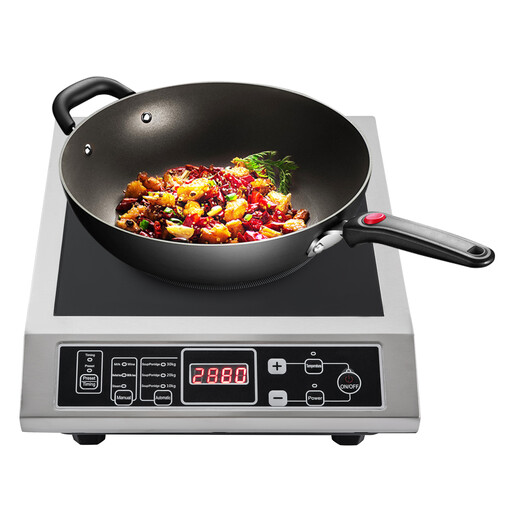 No image available
Portable induction hob, 3,500 W, 8 temperature settings
A portable cooking spot with adjustable temperature settings; the appliance setting doesn’t guarantee a particular temperature in your sauce.
- 3,500 W
- Eight temperature settings
View at Joybuy
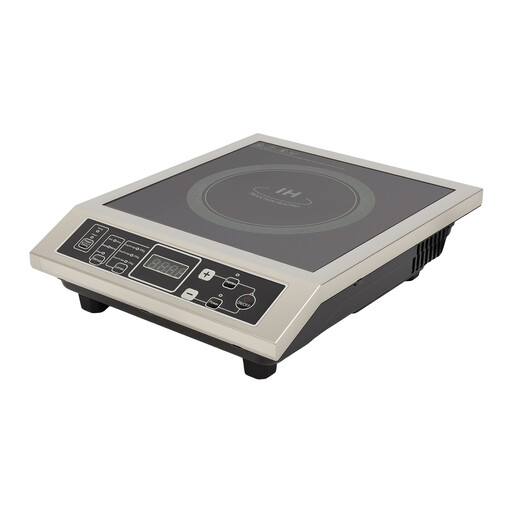 No image available
Tabletop induction hob, 3,500 W, 10 power settings
A portable single cooking spot for gentle heating, if you want to adjust the power across several settings.
- 3,500 W
- Ten power settings
- Timer
- EU plug
View at Joybuy
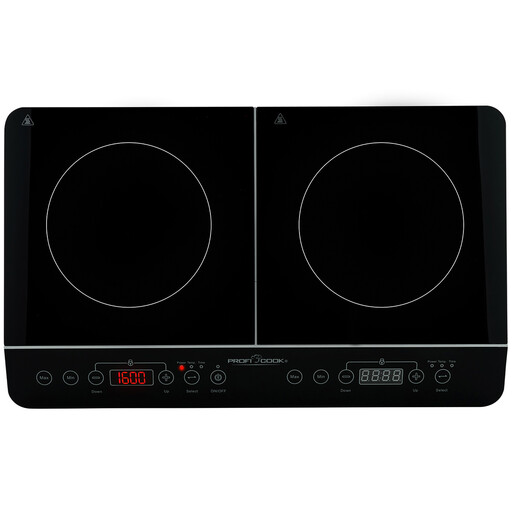 No image available
ProfiCook PC DKI 1067 double induction hob
Two portable cooking zones may suit you if you want to prepare sauce and another dish at the same time.
View at Joybuy
 No image available
Ochama portable induction hob, 2,000 W
A portable single cooking spot for making sauce, if an appliance with several power settings suits your routine.
- 2,000 W
- Ten power settings
- Suitable for magnetic cookware only
View at Joybuy
Frequently asked questions
How can I tell if my sauce pan is suitable for induction?
The pan should have a magnetic, flat base with a diameter that falls within the hob’s specified range. Suitable material alone isn’t enough; you also need to check the size.
Does a timer make it safe to reduce sauce unattended?
No. Timers and temperature settings are appliance features; they don’t guarantee that every sauce will reach a particular consistency or temperature automatically. Keep an eye on the sauce and stir as appropriate for your pan and recipe.
Can I connect a portable hob myself, and who should connect a built-in hob?
For the portable CASO S-Line 2100, the manufacturer specifies 230 V; follow the positioning and safety instructions for the specific appliance. The built-in NEFF T56STF1L0 is listed without a plug. Where electrical work is required, § 13 NAV generally states that it must be carried out by the network operator or an electrical installation company listed in its register of installers. This is different from plugging in a portable appliance designed for that purpose.
How should I cool prepared sauce before storing it?
The German Federal Institute for Risk Assessment recommends cooling hot food quickly to below 7 °C if it is to be stored for longer. Plan for chilling and refrigerated transport independently of your choice of hob.
Is the boost function enough to stop sauce catching as it reduces?
No. Bosch’s boost claim relates to heating more quickly on the highest standard power setting. It doesn’t prove that a particular sauce won’t catch as it reduces afterwards. Look for low settings that are easy to use and keep an eye on the sauce.


