
Lieferung heute & morgen

Qualitätsgarantie

Willkommens-Angebote freischalten: KOSTENLOSE Lieferung | Bis zu 80 % RABATT | Kostenlose 30-Tage-JoyPlus-Testphase
App herunterladen
You've decided on an electric car, but choosing the optimal charging solution for home and on the go often remains a challenge. While public charging stations are an option, many drivers are looking for a more flexible, cost-effective, and reliable method. A portable wallbox, also known as a portable EV charging station, offers a practical alternative to a permanently installed wallbox.
This article serves as your guide. We'll explain the crucial criteria for selecting a portable charging station and present a selection of models that cover various needs—from simple use with a domestic socket to a powerful 11 kW solution for your garage.
The right charger depends on your vehicle, your living situation, and your usage habits. You should consider three main factors in your decision.
The charging power determines how quickly your vehicle's battery charges. It is directly linked to the type of plug used.
All solutions mentioned here use the standard Type 2 charging cable on the vehicle side in Europe.
Safety is the top priority when dealing with high currents. Look for integrated protection mechanisms that ensure safe operation. Important features include:
A modern EV charger with an app offers much more than just charging. Via a Wi-Fi or Bluetooth connection, you can conveniently control numerous functions from your smartphone:
Based on the criteria mentioned, we have compiled a selection of chargers that cover various use cases.

Why it stands out: This model combines a high charging power of 11 kW with the flexibility of a portable solution and smart app features.
Advantages:
Who is it for? Ideal for homeowners with a three-phase power connection who are looking for a powerful yet portable charging solution. The app control makes it perfect for cost-conscious users who want to take advantage of cheaper electricity tariffs.
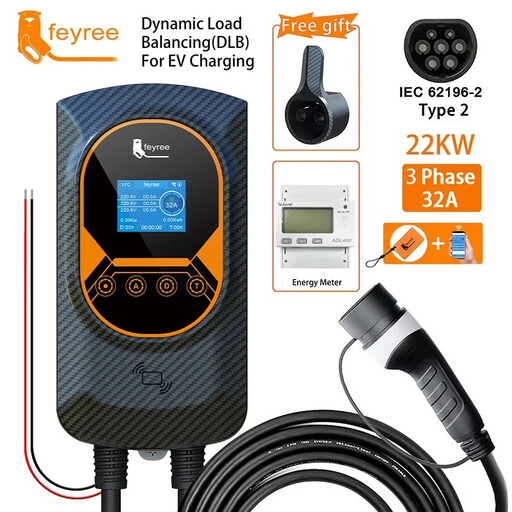
Why it stands out: This wallbox not only offers very high charging power but also an intelligent dynamic load balancing (DLB) feature that prevents overloading your home's electrical system.
Advantages:
Who is it for? Perfect for homeowners with high energy demands, multiple electric vehicles, or a photovoltaic system. The dynamic load balancing ensures efficient and safe energy management throughout the entire household.
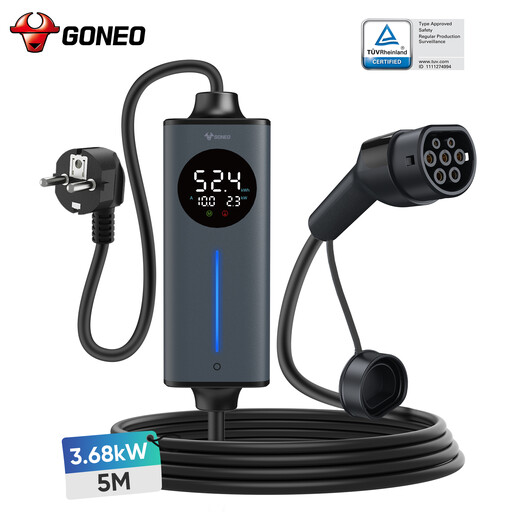
Why it stands out: This charger is designed for maximum compatibility and safety when used with a standard domestic (Schuko) socket.
Advantages:
Who is it for? The optimal choice for renters, drivers of plug-in hybrids, or as a secondary and emergency charger for on the go. It provides a safe and straightforward charging option wherever a standard socket is available.
The models presented cover common use cases. However, if you are looking for special configurations, adapters, or different charging capacities, it's worth taking a look at our broader range.
In our EV Charging Adapters category, you will find a diverse selection of charging solutions tailored to different needs and vehicles.
A portable wallbox, technically an In-Cable Control and Protection Device (IC-CPD), contains more advanced control electronics. Unlike simple emergency charging cables (which are usually limited to 10 A), portable wallboxes allow for higher charging powers (e.g., 11 kW), adjustment of the charging current, scheduled charging, and often app connectivity.
That depends on the charger's plug. Models with a Schuko plug are suitable for standard domestic sockets, but their power is limited to about 3.7 kW. For higher powers of 11 kW or 22 kW, you need a corresponding red CEE industrial socket (three-phase power), which must be installed by a qualified electrician.
When used correctly, high-quality portable wallboxes are very safe. Look for CE marking and important integrated safety features like a Residual Current Device (RCD), overheating protection, and an adequate IP rating for the intended location. Also, ensure that the socket you use is in perfect condition and correctly installed.