
Lieferung heute & morgen

Qualitätsgarantie

Willkommens-Angebote freischalten: KOSTENLOSE Lieferung | Bis zu 80 % RABATT | Kostenlose 30-Tage-JoyPlus-Testphase
App herunterladen
A portable air conditioner can cool rented flats, bedrooms, home offices and living rooms without requiring permanent wall installation. However, not every unit will deliver the right results in everyday use. Cooling power, room size and energy consumption are often misunderstood. And a window kit supplied with the unit won’t necessarily fit every German window.
This buying guide explains which technical details matter, which marketing claims to treat with caution, and which portable air conditioner may suit different needs.
The BTU/h rating describes cooling capacity, but on its own it doesn’t tell you how well a unit will work in a particular room. Loft rooms, strong sunlight, lots of electrical equipment and poor insulation all increase cooling needs. A 9,000 BTU portable air conditioner may be enough for a smaller room, while a 12,000 BTU model may be a better choice for a larger or particularly warm space.
The room size quoted by the supplier should therefore be treated as a guide. Also take the ceiling height, window area and heat gain into account.
An energy efficiency rating shows how a unit performs under specific test conditions. Running costs also depend on its power consumption, the temperature setting, how long you use it and your electricity tariff. So compare power consumption in watts, the EER rating and the energy class together.
An energy-efficient portable air conditioner won’t necessarily be economical to run if it’s too small for the room and has to operate continuously at a high setting.
A portable air conditioner with an exhaust hose needs to vent warm air outside. If the window is left wide open around the hose, warm air will flow back into the room. This reduces cooling performance and can increase electricity use.
Check whether the air conditioner comes with a window kit and whether it fits a vertical or horizontal sliding window. Casement or tilt-and-turn windows may need an additional fabric window seal. Keep the exhaust hose as short and straight as possible, without any kinks.
As a rough guide:
Don’t look at the capacity in isolation. A 12,000 BTU unit may be larger and heavier, and may make more noise when running, than a more compact model.
Portable air conditioners make noise from their compressor and fan. The stated dB(A) rating lets you compare units, but it depends on the test conditions and operating setting. For a portable air conditioner for the bedroom, a sleep mode, timer and lower fan speed are also worth considering.
Check whether the stated noise level is the lowest or the maximum. A feature advertised as “quiet” shouldn’t be taken to mean silent operation.
Many units are designed as 3-in-1 air conditioners, combining cooling, fan and dehumidifying modes. In dehumidifying mode, the water tank may fill more quickly depending on the humidity. An air conditioner with a dehumidifier should therefore have an easily accessible drain outlet.
Useful features include:
Many units use R290 refrigerant. It has a low global warming potential, but is flammable. Do not damage the refrigerant circuit. Follow the instructions in the user manual, leave enough space between the unit and walls, and use an earthed socket. Avoid extension leads and multi-socket adaptors in line with the manufacturer’s instructions.
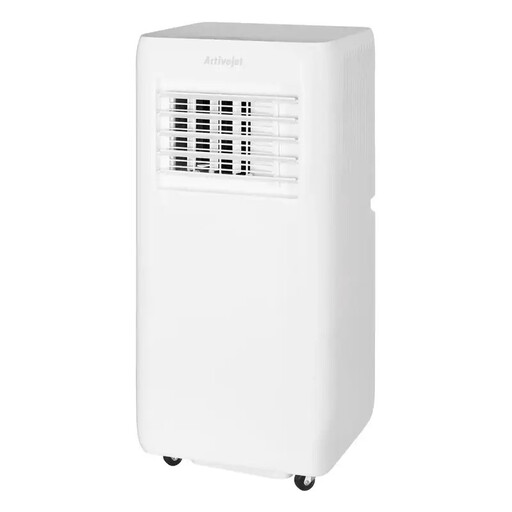
Why this product suits this profile: According to the product details, this 7,000 BTU unit is designed for rooms up to 25 m² and combines cooling, dehumidifying and fan modes with app control.
The stated room size, EER rating of 2.6 and power consumption of 750 W in cooling mode give you specific details to compare, rather than relying on the BTU claim alone.
A-rated energy class, Wi-Fi compatibility with Tuya Smart, remote control, 24-hour timer and washable filter.
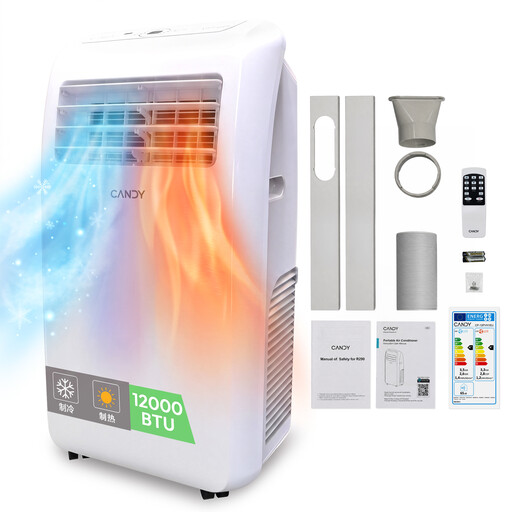
Why this product suits this profile: According to the product details, this unit can cool rooms up to 35 m² and also offers heating, drying and fan modes.
The product details include cooling and heating capacity, EER and COP ratings, dimensions, weight and recommended room size. This makes it easier to check whether it’s right for you before buying.
4-in-1 operation, A+ energy class according to the product details, 400 m³/h air circulation and a window kit for horizontal and vertical sliding windows.
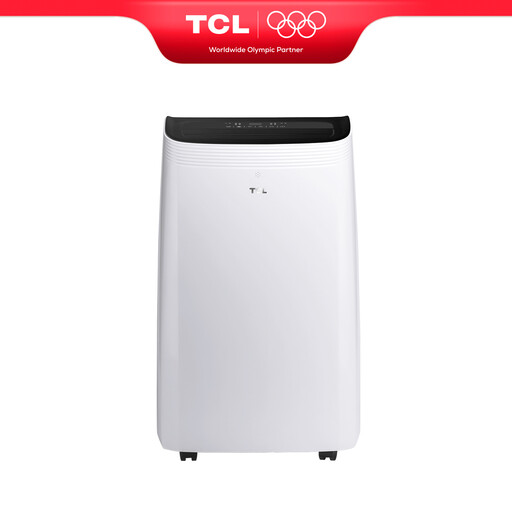
Why this product suits this profile: With 12,000 BTU and cooling, fan and dehumidifying modes, this unit can adapt to changing needs in larger living or working spaces.
The adjustable window kit and exhaust hose help direct warm air outside, as required. Castors make it easier to move the unit between locations for seasonal use.
Auto-swing function, Smart mode, 24-hour timer, sleep mode and washable dust filter.
We’ve put together a complete, regularly updated list of products that meet these strict selection criteria and the safety requirements in force across the EU.
Place the unit on a flat, stable surface and leave the clearance from walls and furniture specified by the manufacturer. Connect the exhaust hose to the window kit and avoid tight bends. All warm air must be vented fully outside. If the unit was transported on its side, leave it to stand before first use, following the instructions in the user manual.
There’s no single answer. The cost is calculated as power consumption in kW × hours of use × electricity price. A 750 W unit running for five hours uses 3.75 kWh in theory. Actual figures may vary due to thermostat cycles, room temperature and operating mode.
Its lifespan depends on how often it’s used, filter care, transport and storage. Clean the washable filter regularly, keep the air inlets and outlets clear, and store the unit somewhere dry and sheltered. If you notice unusual noises or smells, or damaged cables, stop using it and contact the seller or manufacturer.