
Lieferung heute & morgen

Qualitätsgarantie

Willkommens-Angebote freischalten: KOSTENLOSE Lieferung | Bis zu 80 % RABATT | Kostenlose 30-Tage-JoyPlus-Testphase
App herunterladen
A portable blender is designed to prepare smoothies, shakes and juices quickly in the office, at the gym, while travelling or in a compact kitchen. In practice, however, models vary considerably in battery performance, capacity, cleaning requirements and the ingredients they can handle. A low price or high wattage alone therefore says little about whether a mini blender is genuinely suited to your daily routine.
With a battery-powered blender, motor output is often prominently advertised. A high wattage rating does not automatically mean that the appliance can process hard or frozen ingredients continuously. Other decisive factors include battery voltage, blade design, operating time per cycle and overheating protection.
A USB-C blender with a smaller battery may be sufficient for soft fruit and protein shakes, while an ice-crushing blender requires a more robust blade mount and explicit manufacturer approval for ice cubes. Always check whether the model you are considering is actually designed for frozen fruit, ice or dry ingredients.
A blender with a drinking cup is only practical for everyday use if the lid closes securely and the container remains stable during transport. Look for:
An insulated stainless-steel cup can keep drinks cool for longer, but it is generally heavier than a plastic container. For commuters, weight may be more important than insulation.
Residue tends to accumulate around the blade mount, seal and lid thread in particular. A smoothie maker with a dishwasher-safe cup can significantly reduce the effort involved. With battery-powered models, however, the motor unit must never be submerged in water.
Automatic cleaning programmes are convenient, but they do not always replace manual rinsing. When preparing milk, nut butter or plant-based drinks, clean all removable parts as soon as possible after use.
A battery-powered blender works independently of a power outlet, but it still needs to be charged regularly. Claims such as “more than 14 cycles” generally refer to short blending programmes defined by the manufacturer. Actual runtime depends on the ingredients, their temperature and how full the container is.
A USB-C port makes charging easier in the office, car or with a power bank. Use only the approved cable and follow the instructions in the manual. For longer periods of use without a charging break, models with a higher battery voltage—or a conventional countertop blender with a mains connection—are the more practical choice.
A capacity of around 300 to 600 millilitres is typical for a single serving. A 300 ml mini blender is suitable for small drinks or individual portions. A 590 or 600 ml container offers more flexibility for a post-workout smoothie or a drink for the commute.
The shape also affects how the ingredients circulate. Cut solid foods into small pieces and add liquid. Never exceed the maximum fill mark. A personal blender with several cups can be useful if multiple people share the appliance or if one cup is intended to serve directly as a drinking vessel.
Not every portable blender is suitable for hot liquids. Heat can create pressure inside sealed containers. Always observe the temperature limit specified by the manufacturer.
For ice, frozen fruit and nuts, the product should explicitly state that these ingredients are supported. A nut-milk maker with a heating function works on a different principle from a conventional smoothie-to-go blender. The Plodon model, for example, combines heating and blending, but requires fixed breaks between cycles and must not be cleaned by exposing its exterior directly to water.
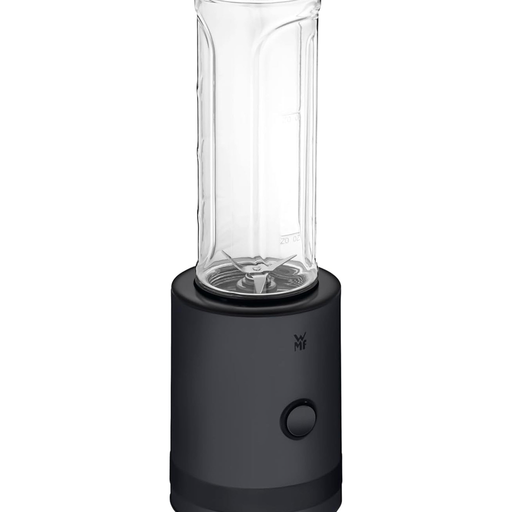
Why This Fits Their Persona: Ideal for students, commuters and compact kitchens where mains operation and two drinking containers are preferred.
The two 0.6-litre containers feature screw-top lids for transport. The specified maximum operating time of one minute per cycle should be observed.
300-watt motor, 23,000 revolutions per minute according to the product specifications, four stainless-steel blades and dishwasher-safe containers.
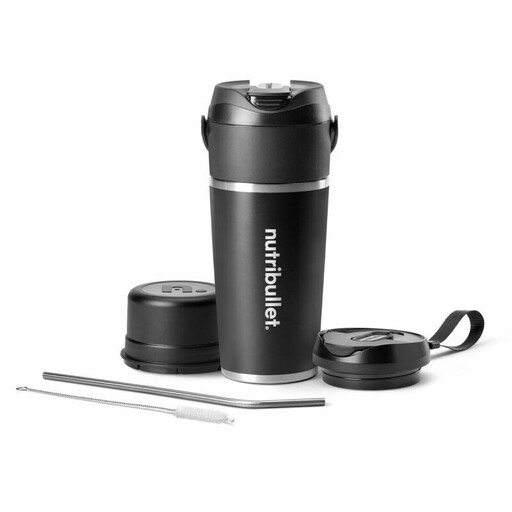
Why This Fits Their Persona: Designed for travellers and professionals who want an insulated container and USB-C charging for mobile use.
The appliance combines a 590 ml cup with the blender unit. According to the product specifications, no more than three to four ice cubes should be used per cycle.
11.1-volt battery, USB-C port, double-walled stainless-steel cup and more than 14 blending cycles per charge according to the manufacturer.
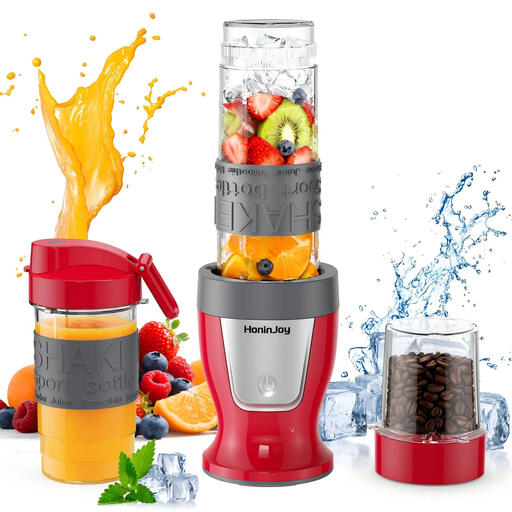
Why This Fits Their Persona: An option for athletes and households that want to process dry ingredients such as coffee or spices as well as make smoothies.
The locking mechanism prevents operation unless the container is correctly fitted. Overheating protection can switch off the motor if it is overloaded.
650-watt peak output according to the product description, pulse function, two BPA-free sports cups and a separate grinding cup.
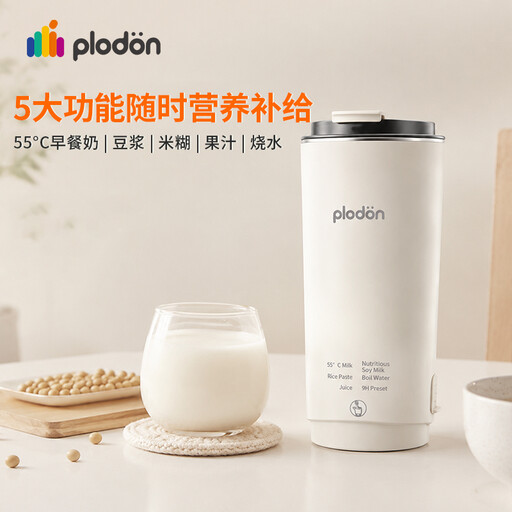
Why This Fits Their Persona: Ideal for users who want to prepare small quantities of soy drink, nut milk or hot beverages at home or in the office.
The 300 ml capacity clearly defines the appliance’s intended use. According to the product instructions, a break of at least 30 minutes is required between cycles.
Five preset functions, 300-watt heating output, 75-watt blending output, a 9-hour preset and automatic cleaning according to the product specifications.
A portable blender is particularly well suited to single servings, short preparation times and drinking directly from the cup. A conventional countertop blender generally offers larger containers and is more practical for preparing several portions in succession. In return, it requires a power outlet and more counter space.
A shaker mixer without blades is sufficient for powders and liquids, but cannot process fruit, ice or nuts. An immersion blender is more versatile for soups and sauces, but does not automatically become a blender for use on the go. Start by deciding which ingredients and portion sizes you regularly prepare.
Our regularly updated selection includes models organised by container size, material, battery operation and intended use.
This depends on the battery capacity, ingredients and blending time. Manufacturer claims such as 14 or 15 cycles generally refer to short standard programmes. For regular use on the go, choose a model with a USB-C port and a clear battery indicator.
Only if this is expressly stated in the product description or instructions. If necessary, cut frozen ingredients into smaller pieces and add liquid. Overfilling, hard objects and too many ice cubes can put excessive strain on the blades and motor.
Clean the container immediately after use, observe the prescribed breaks and do not overload the appliance. The motor unit, charging port and cable must not come into contact with water. Before buying, also check the availability of replacement parts, warranty terms and a suitable charger.