
Lieferung heute & morgen

Qualitätsgarantie

Willkommens-Angebote freischalten: KOSTENLOSE Lieferung | Bis zu 80 % RABATT | Kostenlose 30-Tage-JoyPlus-Testphase
App herunterladen
A portable espresso machine should work reliably when you are out and about – in the car, at the office, while camping or in a hotel. In practice, however, models vary considerably in terms of their heating system, power supply, capsule compatibility and cleaning requirements. If you focus only on a high bar rating or particularly short preparation time, you may end up buying a machine that does not suit the way you intend to use it day to day.
This buying guide explains which details really matter and how to avoid common marketing traps.
Figures such as 15, 20 or 22 bar stand out on many machines. However, pump pressure is just one technical parameter. Water temperature, flow rate, grind size, dosage and filter quality also affect the brewing process. A 20-bar espresso machine may therefore be an interesting option, but it should not be judged on this figure alone.
A battery-powered espresso machine may either heat cold water itself or simply force already hot water through the coffee grounds under pressure. With machines without an integrated heater, you will need a flask or kettle when you are out and about. These models are often lighter and use less energy, but they are not suitable for every situation.
‘Suitable for capsules’ does not mean that every capsule will fit. Some machines support only Nespresso Original capsules, while others also work with Dolce Gusto-compatible capsules or only with ground coffee. Before buying, check the exact system designation. The availability of compatible capsules at your destination may also be important.
With a self-heating espresso machine, the heating time is usually specified for a particular amount of water and starting temperature. A figure of around 150 to 200 seconds often refers to cold water. Using pre-heated water significantly reduces the time required.
You should therefore check:
An electric espresso machine for use on the go with self-heating requires more battery capacity than a manual travel espresso machine.
The number of espressos possible on a single charge depends on whether the machine has to heat the water. Product specifications should therefore distinguish between cold and pre-heated water. A model with a high battery capacity is useful for longer camping trips, while commuters in the office can often manage with just a few servings.
You should also consider:
A mini espresso machine should fit in a rucksack, car storage compartment or desk drawer. A low weight is convenient when travelling, but may mean a smaller water tank or less robust components. For everyday use, easy-to-remove filters, accessible seals and clear cleaning instructions are essential.
For machines intended for outdoor use, the protection rating may also be relevant. An indicated IP67 certification describes protection against dust and temporary immersion under the applicable test conditions. It does not replace the operating instructions: the entire machine should not automatically be submerged in water.
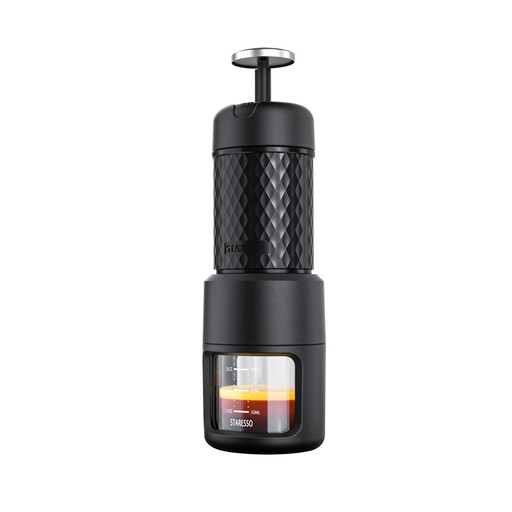
Why this product suits this profile: Its manual design requires neither a battery nor a power socket. It is suitable for the office, halls of residence, home, travel and camping, provided hot water is available.
The product details explicitly state that it can be used without electricity. This avoids creating unclear expectations about an integrated heater.
Supports ground coffee and capsules; 304 stainless steel inner liner and modular cleaning.
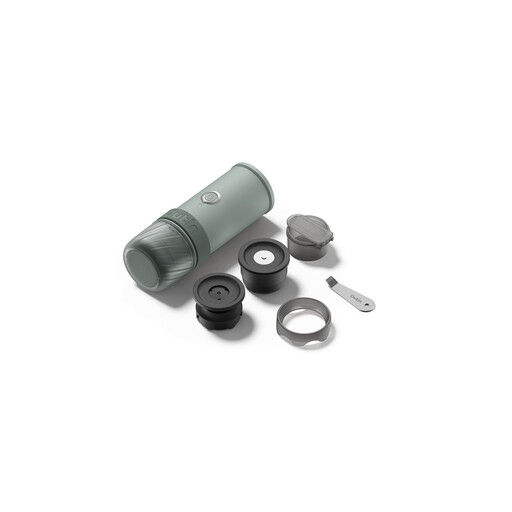
Why this product suits this profile: This electric espresso machine for use on the go combines self-heating, USB-C charging and a compact design. It is intended for commuters, office use and outdoor activities.
The specifications distinguish between use with cold and pre-heated water. They state, for example, that cold water reaches 93.3 °C in around 149 seconds.
Up to 22 bar according to the product details, up to six servings with cold water per charge and IP67 protection rating.
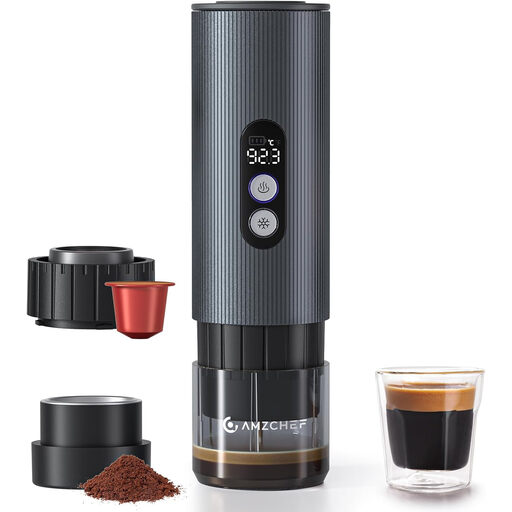
Why this product suits this profile: This model is aimed at users who want to switch between capsules and ground coffee on road trips, while camping or in the office.
The specification clearly lists the supported systems: NS capsules and up to 12 g of ground coffee, rather than making a vague claim about ‘all capsules’.
20-bar pump, 9000-mAh battery and, according to the product details, several hot servings per charge.
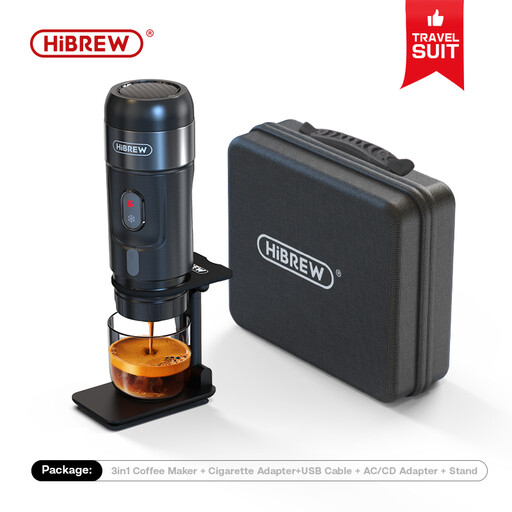
Why this product suits this profile: The 12-volt operation is useful for drivers and workplaces with a suitable power supply. The machine supports several capsule systems as well as ground coffee.
The technical specifications list 12 V, a 60 ml water tank, and NS, DG and ground coffee compatibility separately.
15-bar pump pressure according to the product details, heating function and selectable extraction times.
We have put together a complete, regularly updated list of products that fully meet these strict selection criteria and the safety regulations applicable in the EU.
A portable coffee machine generally requires water, charging power and time for cleaning in addition to coffee or capsules. Capsules are convenient when travelling, but involve ongoing per-serving costs and create additional waste. Ground coffee offers more choice when it comes to grind size, but requires a suitable filter and accurate dosing.
For maintenance, we recommend:
A USB-C espresso machine is particularly flexible if the charger, power bank or car connection can provide the required power. A standard USB connection is not automatically sufficient.
Only models with an integrated heater can heat cold water automatically. Manual machines and models without self-heating require hot water. The actual heating time depends on the amount of water, starting temperature and battery charge.
This varies by model. According to the available product details, the OutIn Mino can make up to six espressos with cold water, while the OutIn Nano states up to around five servings. Depending on the machine, using pre-heated water allows significantly more extractions because less energy is needed for heating.
This depends on the adapter used. Some models are designed for Nespresso Original capsules, while others also support Dolce Gusto-compatible systems. Before buying, check the exact capsule designation in the technical specifications rather than deciding based solely on the term ‘capsule machine’.