
Lieferung heute & morgen

Qualitätsgarantie

Willkommens-Angebote freischalten: KOSTENLOSE Lieferung | Bis zu 80 % RABATT | Kostenlose 30-Tage-JoyPlus-Testphase
App herunterladen
A portafilter coffee machine gives you more control over grind size, coffee quantity and milk froth than a capsule or bean-to-cup machine. At the same time, it requires a little more preparation and cleaning. Focusing solely on a high bar rating or an attractive stainless-steel housing can mean overlooking important details that make a real difference in everyday use.
Product pages often feature specifications such as 15-bar espresso machine, 19 bar or 20-bar espresso machine. This figure describes the maximum possible pump pressure, not necessarily the pressure applied to the coffee grounds during every extraction. Temperature control, portafilter size, grind size and even tamping are also important when choosing a machine.
A 20-bar rating is therefore not proof of quality on its own. Treat it as a technical specification and compare it with the machine’s other features.
An espresso machine with a steam wand allows you to froth milk manually. This gives you control, but it takes practice to get the positioning, temperature and air intake right. If you regularly make cappuccinos or latte macchiatos, check whether a steam wand is sufficient or whether an integrated milk container would be more practical.
An espresso machine with a milk frother can simplify the process. However, milk lines or containers must be rinsed thoroughly after every use.
A compact espresso machine can fit on smaller kitchen worktops. Before buying, however, check its width, depth and height, including the space needed to access the water tank. On some machines, the tank can only be removed from above. Tall latte macchiato glasses, a milk jug and the portafilter also need sufficient room to manoeuvre.
15 to 20 bar are typical manufacturer specifications for the machines listed. For everyday use, additional features such as pre-infusion, NTC or PID temperature control and clear single- or double-shot selection are more informative. A consistent water temperature makes repeatable results easier to achieve, but it does not replace the correct grind size and coffee quantity.
A manual steam wand is sufficient for occasional milk drinks. If you make several cappuccinos or latte macchiatos every day, an integrated milk container could be useful. A milk system with removable parts is easier to clean. Whichever option you choose, wipe the steam wand immediately after frothing and purge it briefly.
An espresso machine with an integrated grinder saves you from needing a separate appliance and lets you grind whole beans immediately before brewing. Important considerations include the number of grind settings, the size of the bean hopper and how accessible the grinder is.
Machines without a grinder use pre-ground coffee; some models also accept ESE pods. A removable water tank makes filling and descaling easier. For a household with several coffee drinkers, a 1.1- to 2.5-litre tank can mean less frequent refilling, but it will also take up more space.
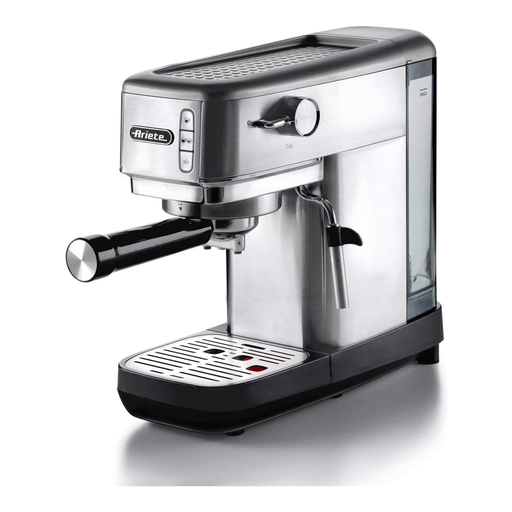
Why this product suits this profile: According to the product description, this machine uses ground coffee and ESE pods, makes one or two cups and features a cappuccino nozzle. This makes it suitable for beginners who want to start with flexibility.
The combination of a reusable filter and ESE-pod compatibility reduces reliance on a single consumables system. The 1.1-litre tank is removable.
1300 W power, hot-water dispensing, height-adjustable drip tray and automatic switch-off after 25 minutes, according to the product details.
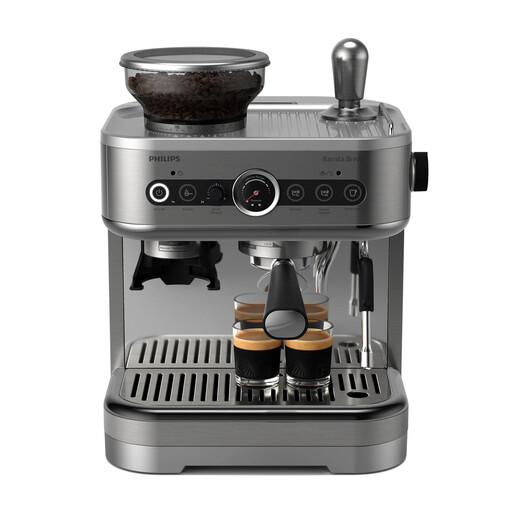
Why this product suits this profile: According to the product description, this semi-automatic espresso machine combines a metal conical burr grinder, five grind settings, PID temperature control and a 58-mm stainless-steel filter.
The features go beyond the bar rating: a pressure gauge, three temperature settings and PID control provide additional ways to fine-tune your coffee.
2.5-litre water tank, 250-g bean hopper, TFT display and removable parts that are dishwasher-safe according to the supplier.
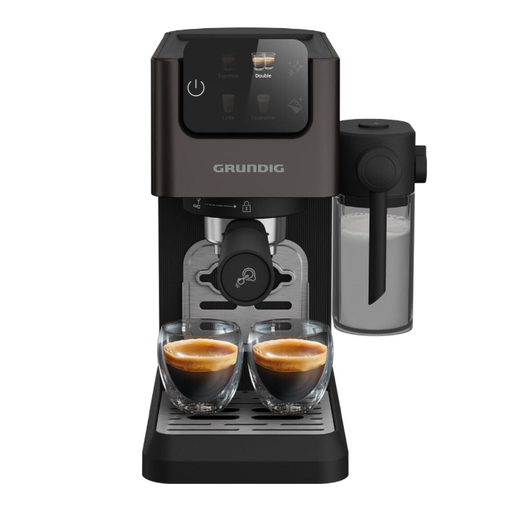
Why this product suits this profile: According to the product details, this model combines 20-bar pump pressure with an integrated milk container and touch controls. It is designed for users who regularly prepare espresso, cappuccino and latte macchiato.
The milk container takes care of some of the manual work. At the same time, the water tank and milk components can be removed for cleaning.
1.1-litre water tank, double spout, colour touchscreen and BrewSense and CreamyPro functions according to the supplier.
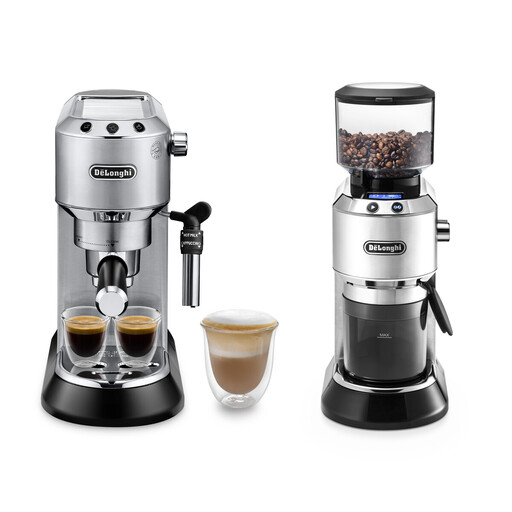
Why this product suits this profile: According to the product description, the set includes a portafilter coffee machine, a separate grinder and accessories such as a tamper, milk jug and knock box. It is designed for users who want to control several preparation steps themselves.
The grinder is not integrated into the machine housing. This means the machine and grinder can be positioned and cleaned independently.
15-bar pump, 18 grind settings and a slimline metal housing according to the product details.
We have put together a complete, regularly updated list of products that fully meet these strict selection criteria and the safety regulations applicable in the EU.
Ongoing costs include coffee beans or ground coffee, water, descaler and, where necessary, cleaning products. An integrated grinder does not automatically save money, but it can eliminate the need to buy a separate grinder. Milk systems require additional cleaning.
After every use, the portafilter, filters and drip tray should be rinsed. Wipe the steam wand immediately and purge it briefly. Descaling intervals depend on water hardness and frequency of use. The instructions in the relevant user manual are the most important guide. Before cleaning, allow the machine to cool down and disconnect it from the mains.
A model with a removable water tank, clear buttons and single- and double-shot options makes it easier to get started. If you would rather not buy a grinder straight away, choose a machine that works with ground coffee or ESE pods. For frequent milk drinks, an easily accessible steam wand or a milk system that is simple to clean is a sensible choice.
There is no reliable one-size-fits-all answer. Service life depends on frequency of use, water quality, descaling, cleaning and the availability of spare parts. Regular rinsing, correct descaling and careful handling of the portafilter and steam wand can help reduce wear.
The largest variable costs usually come from coffee and milk. You also need to factor in water, electricity, descaler and cleaning products. A larger tank reduces the need to refill it, but does not automatically use less energy. For a realistic estimate, households should consider how many cups they make each day and which type of coffee they prefer.