
Lieferung heute & morgen

Qualitätsgarantie

Willkommens-Angebote freischalten: KOSTENLOSE Lieferung | Bis zu 80 % RABATT | Kostenlose 30-Tage-JoyPlus-Testphase
App herunterladen
For many coffee lovers, switching to a portafilter espresso machine is a decisive step. The desire for café-quality espresso, full-bodied aroma, and a rich crema is a powerful motivator to leave capsule or filter coffee behind. However, the market is crowded and filled with marketing promises that often create more confusion than clarity. Before you make a decision, it's crucial to understand the most common pitfalls to avoid a poor investment.
As your Joybuy Product Recommendation Officer, I'm here to help you separate the wheat from the chaff. We'll focus on the facts and the technical features that truly matter.
Choosing the right machine is often complicated by exaggerated advertising claims and seemingly impressive technical specs. Here are three typical pitfalls you should be aware of:
To avoid these pitfalls, you should focus on the core functions that directly influence the quality of your coffee.
The brewing temperature is one of the most critical factors for a successful extraction. A constant water temperature between 90°C and 94°C (194°F and 201°F) is essential.
For most home users who make espresso and the occasional cappuccino, a semi-automatic espresso machine with a modern thermoblock is an efficient and perfectly adequate solution.
For many, preparing milk-based drinks is a key feature. There are two basic approaches here:
Your personal preference for convenience versus control should guide your decision here.
A good overall package can make getting started much easier. An included barista kit, consisting of a solid tamper, a tamping mat, and a milk pitcher, is a clear sign that the manufacturer has considered the user. Also, look for removable components like the water tank and drip tray to simplify daily cleaning.
Based on the criteria above, we have identified a few models that are particularly well-suited for different user profiles.
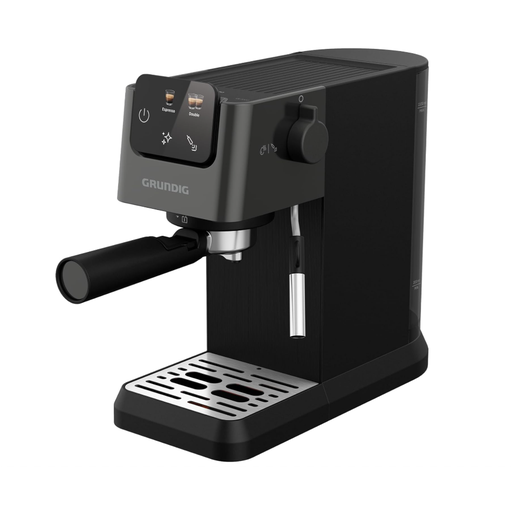
Why this model is a good fit: Ideal for anyone taking their first step into the world of portafilter machines. The touch display is intuitive, and the manual steam wand allows you to learn milk frothing step-by-step without being overwhelmed by too many features.
This model deliberately omits an integrated grinder, giving you the freedom to choose a separate grinder that fits your budget and quality standards. The cleaning effort is manageable thanks to the removable tank and simple steam wand.
15-bar pump pressure for a balanced extraction. The memory function saves your preferred coffee volume, simplifying daily use.
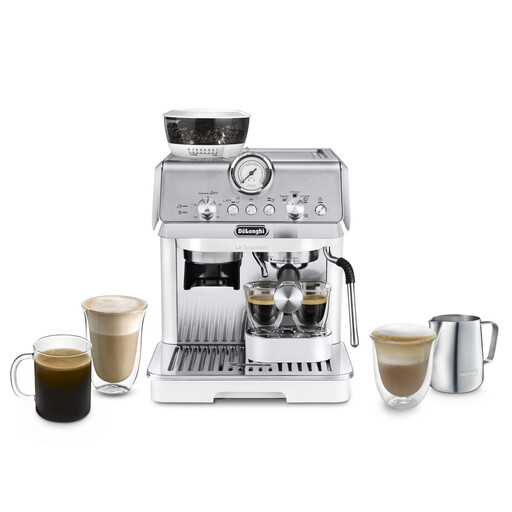
Why this model is a good fit: Perfect for aspiring home baristas who want a complete, coordinated system. The integrated grinder and included barista kit allow you to get started immediately without searching for additional accessories.
Unlike many cheap combo units, this model features a conical burr grinder with 8 grind settings. This gives the user solid control over the extraction and avoids the pitfall of a low-quality, non-adjustable grinder.
Complete barista kit included (tamper, tamping mat, milk pitcher). Three preset temperature levels provide adaptability for different types of beans.
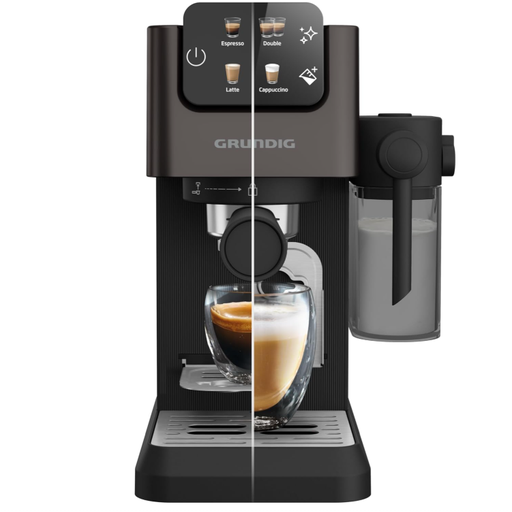
Why this model is a good fit: For those who love cappuccinos and lattes but want to avoid the effort of manual frothing. The integrated milk container and automatic programs deliver consistent results at the touch of a button.
This model solves the high-maintenance cleaning issue of many automatic systems with a removable milk container. It can be easily detached and cleaned, ensuring proper hygiene.
Automated preparation of cappuccino and latte via a colour touch display. According to the manufacturer, the CreamyPro technology ensures a uniform milk foam.
We have compiled a complete, up-to-date list of products that fully meet these strict selection criteria and all relevant safety regulations.
The frequency depends on the water hardness in your area and your usage. With average use and medium-hard water, descaling every two to three months is recommended. Many modern machines have a reminder function. Using filtered water can reduce the need for descaling.
Espresso requires a fine grind, roughly the consistency of fine table salt. If the grind is too coarse, the water will flow through too quickly, and the espresso will be watery (underextraction). If it's too fine, the water will flow through too slowly, and the espresso will taste bitter (overextraction). The exact setting depends on the beans, the machine, and the grinder, and requires a bit of experimentation.
Yes, that is generally possible. However, ground coffee loses its aroma very quickly. For the best taste experience, using freshly ground beans is strongly recommended. If you do use pre-ground coffee, make sure it is explicitly labeled for espresso machines. Many supermarket coffees are ground too coarsely.