
Lieferung heute & morgen

Qualitätsgarantie

Willkommens-Angebote freischalten: KOSTENLOSE Lieferung | Bis zu 80 % RABATT | Kostenlose 30-Tage-JoyPlus-Testphase
App herunterladen
For many coffee lovers, acquiring a portafilter espresso machine is the first step into the world of authentic espresso enjoyment at home. But the market is filled with tempting offers and technical specifications that confuse more than they clarify. As a Joybuy Product Recommendation Officer, I see daily which pitfalls lead to disappointment and unnecessary expense. This guide is designed to help you distinguish marketing hype from genuine performance features and make an informed decision.
Before we delve into the important features, let's clear up the most common misconceptions that often lead to a poor purchase.
To find a suitable portafilter machine for home use, focus on these three core aspects that directly influence performance and user-friendliness.
The Heating System: The method used to heat the water determines the heat-up time and temperature stability.
Milk Frothing Capabilities: If you plan to regularly prepare cappuccinos or lattes, a good coffee machine with a milk frother is essential. A manual stainless steel steam wand offers the most control over the milk foam's texture but requires some practice. Automatic systems are more convenient but often harder to clean and less flexible.
Controls and Accessories: Look for intuitive operation. Programmable buttons for cup size are practical. A solid portafilter (often 51mm or 58mm in diameter) and a matching tamper are important for even extraction. Check whether a usable tamper is included or needs to be purchased separately.
Here are some recommendations tailored to different user profiles and their requirements.
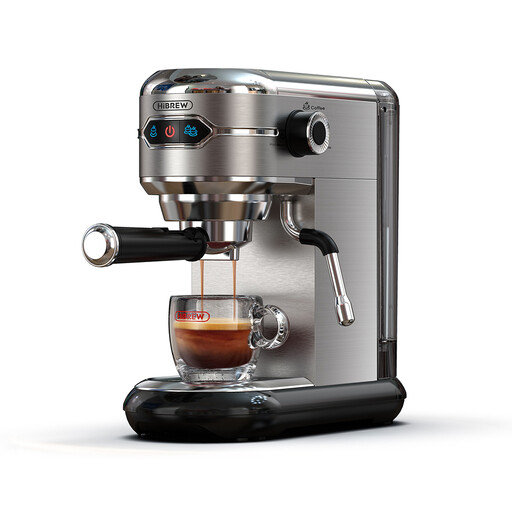
Why This Fits Their Persona: Ideal for entering the world of portafilter coffee without a large initial investment. The operation is streamlined to the essentials, allowing users to learn the fundamentals of grind size and tamping pressure.
This model focuses on the core function of espresso extraction, forgoing complex, failure-prone extra features. The stainless steel housing provides a solid foundation in this price range.
Very fast heat-up time of approx. 25 seconds thanks to the thermoblock. The compact design fits even in smaller kitchens. Compatible with ground coffee and ESE pods.
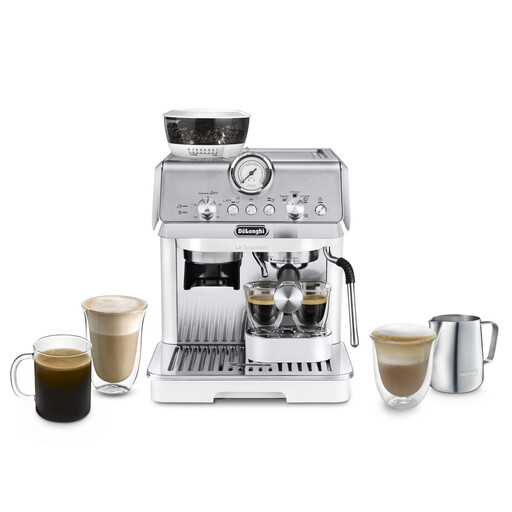
Why This Fits Their Persona: An all-in-one solution for those who want the full barista experience with an integrated grinder and accessories. Ideal for users who want to combine convenience and control in one device to have the perfect cappuccino machine.
It sidesteps the low-quality grinder trap by including a conical burr grinder with 8 settings. This offers significantly more control than simple combination units and allows for adjustment to different bean types.
Comprehensive barista kit (tamper, tamping mat, dosing funnel) included. Three temperature settings and preset recipes make it easier to achieve consistent results.
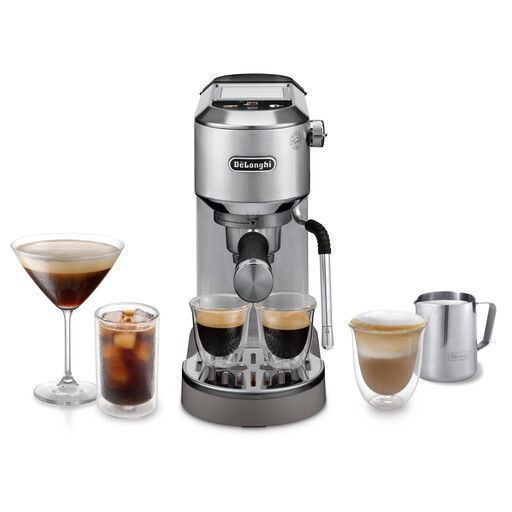
Why This Fits Their Persona: Combines a slim, high-quality metal design with advanced features. Perfect for modern kitchens where aesthetics and performance are equally important, and space is limited.
Avoids the trap of cheap plastic components by using a robust metal housing and a professional-grade steam wand. The build quality is designed for durability and a premium feel.
Extremely compact at only 15 cm wide. Offers a unique Cold Brew function that prepares cold coffee in under 5 minutes. Includes a professional tamper and milk jug.
We have compiled a complete, real-time list of products that fully satisfy these strict selection criteria and UK safety regulations.
1. How long does a portafilter machine for home use last? The lifespan heavily depends on the build quality and maintenance. Entry-level machines can last 3 to 5 years with regular use. Mid-range models with more robust stainless steel components and good maintenance, especially regular descaling, often achieve a lifespan of 5 to 10 years or more.
2. Is a 15-bar machine better than a 20-bar one? Not necessarily. As mentioned earlier, the maximum pump pressure is less critical than the regulated pressure delivered at the group head. Both a 15-bar and a 20-bar pump can produce the ideal 9-bar pressure, provided the machine has an Over-Pressure Valve (OPV) for regulation. Focus on pressure consistency and temperature stability rather than just the maximum specs.
3. Do I really need a separate coffee grinder? For optimal and consistent results, a separate coffee grinder is highly recommended. It typically offers finer and more precise adjustments for the grind size, which is crucial for espresso preparation. An espresso machine with a grinder is a convenient alternative, but advanced users usually prefer the control and quality of a dedicated grinder.