
Lieferung heute & morgen

Qualitätsgarantie

Willkommens-Angebote freischalten: KOSTENLOSE Lieferung | Bis zu 80 % RABATT | Kostenlose 30-Tage-JoyPlus-Testphase
App herunterladen
The aroma of freshly brewed espresso, the hiss of the steam wand, and the rich, hazelnut-brown crema in your cup—for many coffee lovers, the dream of owning a portafilter machine is the first step toward the ritual of being a home barista. But the market is overwhelming, filled with technical promises that don't always deliver.
Before you make a decision, it's crucial to understand the common pitfalls that often lead to disappointment and expensive buyer's remorse. We'll show you what really matters to find a machine that meets your standards.
Marketing claims often focus on impressive numbers and simple solutions. Three points, in particular, are frequently misleading and should be critically examined.
Many manufacturers advertise pump pressures of 15 bar, 20 bar, or even more, suggesting superior extraction power. In reality, the ideal brewing pressure at the coffee puck for a perfect espresso is around 9 bar. Extremely high pump pressure isn't a quality feature in itself and, without proper regulation inside the machine, can even lead to over-extraction and bitter coffee. What's crucial is the constant pressure applied at the group head, not the maximum output of the pump.
The right water temperature is critical for flavour extraction. Budget-friendly machines often use simple Thermoblock heating systems that, while quick to heat up, can't maintain a consistent temperature during the brewing process. Temperature fluctuations of just a few degrees lead to unpredictable results: water that's too cold over-extracts acids (sour espresso), while water that's too hot dissolves bitter compounds (bitter espresso).
A coffee machine with a milk frother promises creamy cappuccinos or latte macchiatos. However, many entry-level models are equipped with so-called "Panarello" wands. These draw in a lot of air and create a coarse, stiff foam that has little in common with the silky microfoam needed for latte art and a velvety mouthfeel. A true cappuccino machine for discerning enthusiasts should have a professional steam wand that allows for manual control over milk texturing.
To avoid the pitfalls mentioned above, you should focus on the following technical fundamentals. These are the key determinants of your coffee's quality and your machine's longevity.
As mentioned, the brewing pressure at the portafilter is more important than the maximum pump pressure. Higher-quality machines feature an Over-Pressure Valve (OPV) that regulates the pressure to the ideal value of about 9 bar. A pressure gauge on the front of the machine that displays the brewing pressure is a useful feature for monitoring and optimising the extraction process. It's what makes a 15 bar or 20 bar espresso machine truly controllable.
A stainless steel espresso machine is more than just a visual statement in the kitchen. The material is robust, easy to clean, and contributes to the thermal stability of the entire system. Machines with a high proportion of quality plastic can also deliver good results, but a solid metal housing is often an indicator of a more durable and premium construction.
Instead of making a one-size-fits-all recommendation, we've selected models that cater to different user profiles and needs.
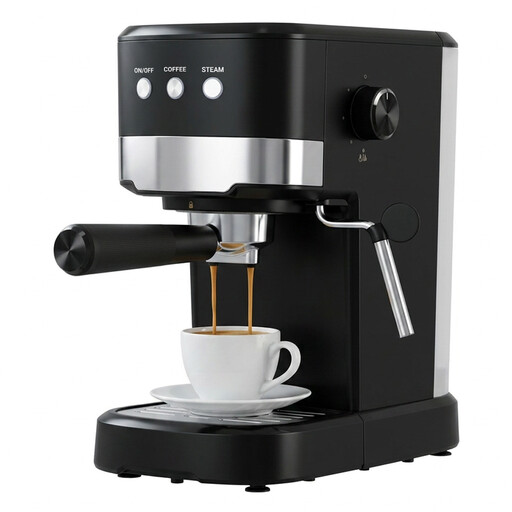
Why This Fits Their Persona: Ideal for anyone wanting to venture into the world of portafilter machines without a large initial investment. It offers the basic functions to learn the process of grinding, tamping, and extracting.
The machine advertises a solid 15 bars, which is standard for this class, without making exaggerated promises. The simple milk frother is functional for first attempts at milk foam, avoiding the disappointment of expecting professional latte art from an entry-level model.
Large 1.2-litre water tank and a cup warming function—practical features that aren't a given in this price range. The removable drip tray makes cleaning easier.
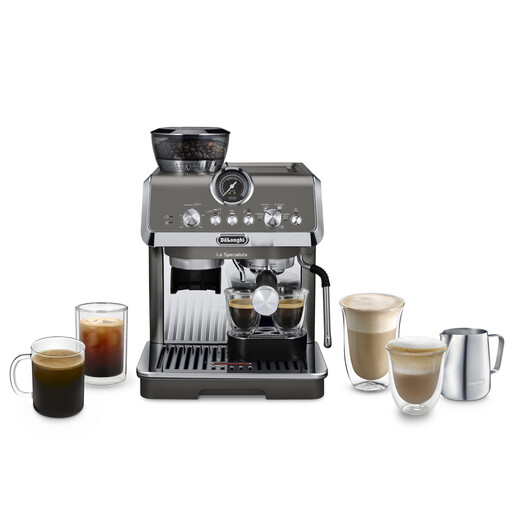
Why This Fits Their Persona: For users who value control, quality, and a complete experience. This machine offers an integrated grinder and a full barista kit to master the entire process from bean to cup.
The My LatteArt system is a professional steam wand that enables the creation of fine microfoam, thus avoiding the "Panarello trap". The integrated grinder with 8 settings ensures fresh coffee and consistent results, which counteracts temperature fluctuations caused by an incorrect grind size.
All-in-one package with a grinder, tamper, tamping mat, and milk jug. The solid stainless steel housing ensures durability and an attractive look. The Cold Extraction Technology also offers the option to prepare Cold Brew.
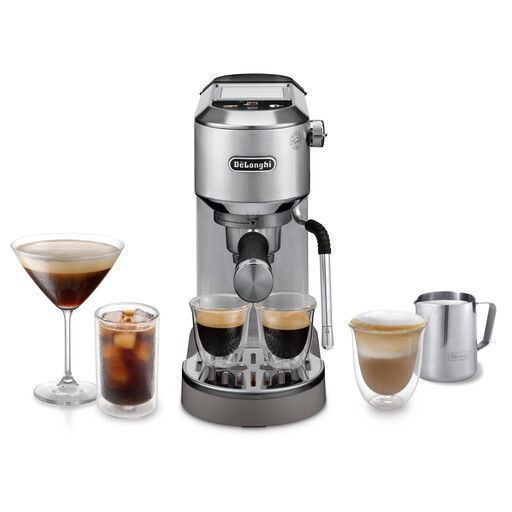
Why This Fits Their Persona: Perfect for kitchens with limited space. This machine proves that a powerful **espresso machine** doesn't have to take up much room. It combines a slim design with high-quality materials and features.
Despite its compact build (only 15 cm wide), it features a robust metal housing and the My LatteArt steam wand for high-quality milk foam. The fast Thermoblock system here is designed for performance, not just cost-saving, which reduces the risk of unstable temperatures.
Extremely space-saving design with high-quality metal construction. The machine is ready to use in just 40 seconds and comes with a professional tamper and milk jug, allowing for an immediate start.
We have compiled a complete, up-to-date list of products that fully meet these strict selection criteria and all relevant safety standards.
How often do I need to descale a portafilter machine? The frequency depends on the water hardness in your area and your usage. As a rule of thumb: with daily use and medium-hard water, about every two to three months. Many modern machines have an automatic descaling indicator to remind you. Regular descaling is crucial for the longevity and consistent performance of the heating system.
What grind size is required for a portafilter machine? A portafilter machine requires a fine grind size, reminiscent of powdered sugar or fine table salt. If the grind is too coarse, the water flows through too quickly, and the espresso becomes watery and sour (under-extraction). If it's too fine, the water gets backed up, and the espresso becomes bitter (over-extraction). Investing in a good coffee grinder with adjustable settings is essential for consistent results.
Is a portafilter machine with an integrated grinder worth it? A machine with an integrated grinder, like the De'Longhi La Specialista, offers several advantages: it saves counter space and ensures that the grinder and brew group are matched. This is particularly convenient for beginners. Advanced users often prefer a separate grinder, as it offers more flexibility in choice and allows for easier upgrades or repairs of individual components.