
Lieferung heute & morgen

Qualitätsgarantie

Willkommens-Angebote freischalten: KOSTENLOSE Lieferung | Bis zu 80 % RABATT | Kostenlose 30-Tage-JoyPlus-Testphase
App herunterladen
A portafilter espresso machine gives you more control over grind size, coffee dose and milk froth than a classic automatic espresso machine. At the same time, it demands a little more attention when it comes to dosing, cleaning and operation. If you only focus on a high bar pressure rating or a long list of programmes, you could end up buying a machine that doesn’t actually suit your needs.
The Joybuy product editorial team has broken down the key features and shows which portafilter machine is best suited to different usage scenarios.
Many machines are advertised as a 20-bar espresso machine. This figure primarily describes the pump’s potential output. What really matters for brewing, however, is the interplay between the coffee grounds, grind size, tamping pressure, brew temperature and the actual pressure at the coffee puck. A high maximum value is therefore not a reliable indicator of quality on its own.
An espresso machine with an integrated grinder can simplify your workflow. Even so, the number and type of grind settings, the dose control and the cleaning of the grinder are all important. If you regularly switch between espresso and filter coffee, you’ll need enough range. A separate electric coffee grinder can offer more flexibility in this case.
An espresso machine with a milk frother makes cappuccino and latte macchiato easier. However, the milk lines, container and steam wand must be cleaned after every use. Otherwise, residue can build up in hard-to-reach areas. So check whether the milk container, wand and drip tray are removable, and whether a cleaning programme is available.
With a machine rated at 15 to 20 bar pump pressure, this figure should be understood as the technical maximum. In practice, what matters more is a brew temperature that stays as consistent as possible and a suitable pre-infusion. A thermoblock heats up compactly and usually quickly. A dual boiler separates the brewing and steam generation, meaning that with suitable models, espresso making and milk frothing can be done at the same time.
Freshly ground beans allow you to tailor the grind to the roast and the drink. Look out for:
A stepless adjustment, like the one offered on certain electric coffee grinders, makes it easier to make small tweaks to taste and flow time.
For making several drinks in a row, a tank of around 1 to 2 litres is practical. What matters is not just the capacity, but also whether it can be removed. With hard water in the UK, a regular descaling schedule and an accessible brew unit are important.
Also check for:
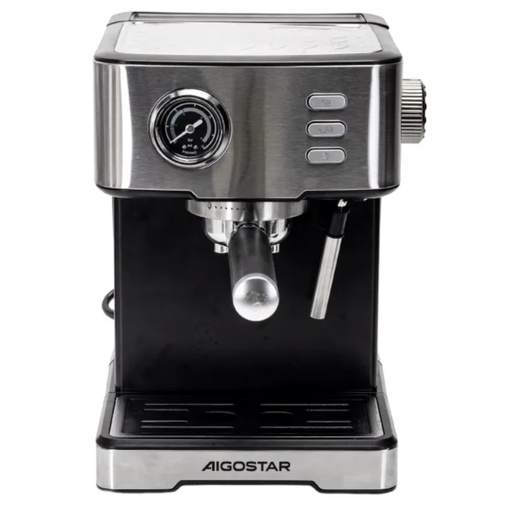
Why this product fits the profile: This machine works with ground coffee and compatible capsules. The 1.7-litre water tank and the choice between single and double shots make it suitable for getting started at home or in a small office.
Switching between coffee, steam and hot water is done via a control knob. The removable tank and detachable drip tray make basic cleaning easier.
1400 W power, 20-bar pump, 1.7-litre tank and support for both ground coffee and capsules.

Why this product fits the profile: The touchscreen, five pre-programmed recipes and up to eight storable settings appeal to users who want to combine convenience with customisable coffee parameters.
The integrated conical burr grinder offers dose control. Milk temperature and milk froth texture can be adjusted, and the milk wand has an automatic cleaning function.
2-litre water tank, 250 g bean hopper, integrated conical burr grinder and automatic microfoam.
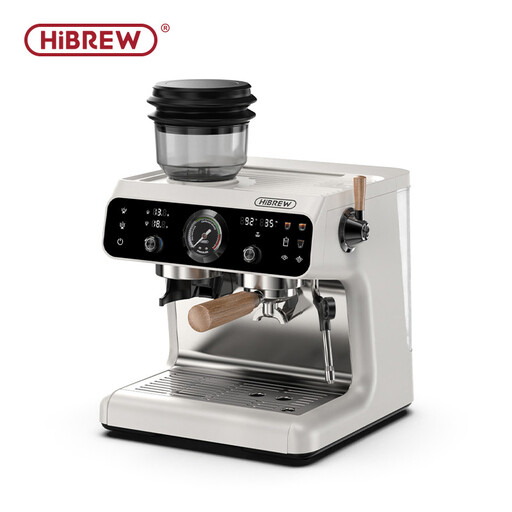
Why this product fits the profile: This model combines an integrated grinder, a dual boiler system and a large 2.8-litre water tank. That’s useful for households or small workspaces where multiple drinks are made.
The 30 grind settings and seven temperature levels offer more adjustability than simple entry-level machines. The removable tank and detachable drip tray help with maintenance.
Dual heating, 250 g bean hopper, 30 grind settings, 58 mm brew head and 20-bar pump rating.
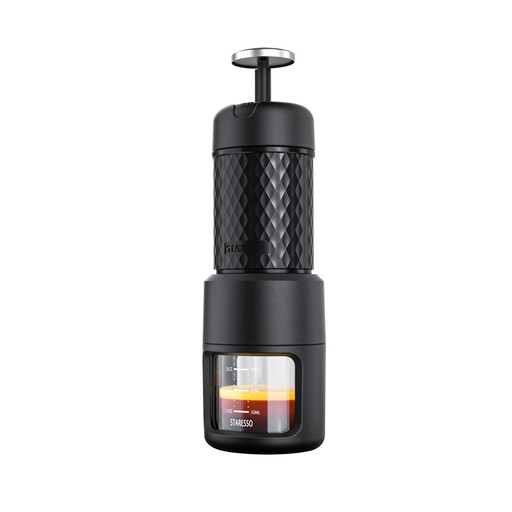
Why this product fits the profile: This portable espresso machine doesn’t need a power supply and is designed for the office, student halls, travel, camping or outdoor use.
The manual design prevents any false expectation of automatic programmes. Capsules and coffee grounds can both be used, and all modules can be disassembled for cleaning.
No power supply required, 304 stainless steel inner container, markings for 30, 60 and 90 ml.
We’ve put together a full, regularly updated list of products that fully meet these strict selection criteria and the safety regulations in force in the EU.
Ongoing costs include beans or capsules, water filters or descaling products, and possibly spare parts such as seals. A machine with an integrated grinder saves you from needing a separate device, but if it breaks down, it can be more complicated to service. With a separate coffee grinder, the espresso machine remains independent of the grinding unit.
After each shot, you should empty and rinse the portafilter. Milk systems need to be cleaned immediately. Depending on your water hardness and how often you use the machine, regular descaling as per the instruction manual will also be necessary. Do not use any liquid on the grinder unless the manufacturer explicitly says you can.
A model with straightforward controls, a removable water tank and a detachable drip tray makes getting started easier. If you don’t want to grind beans at first, you can choose a machine for ground coffee or capsules. An integrated grinder is a good idea if freshness and having fewer separate appliances matter more to you than maximum flexibility.
The costs depend mainly on your coffee consumption, the quality of the beans, how much milk you use and how often you descale or change the filter. Capsules can simplify dosing, but the cost per drink works out differently from beans or ground coffee. Electricity consumption is influenced by the heating power, warm-up time and standby behaviour.
It’s not possible to give a reliable fixed lifespan. It depends on the materials, how intensively you use it, your water quality and how well you look after it. Regular rinsing, descaling according to the instructions and careful handling of the portafilter, steam wand and seals can reduce wear and tear. Before you buy, check the availability of spare parts, the warranty terms and the accessibility of customer service.