
Lieferung heute & morgen

Qualitätsgarantie

Willkommens-Angebote freischalten: KOSTENLOSE Lieferung | Bis zu 80 % RABATT | Kostenlose 30-Tage-JoyPlus-Testphase
App herunterladen
The desire for authentic, café-quality espresso leads many coffee lovers to buy their own portafilter espresso machine. But the market is flooded with tempting offers and technical specs that confuse more than they help. As a Joybuy Product Recommendation Officer, I see every day which features truly matter and which marketing promises often lead to disappointment. Before you invest, you should know the three most common pitfalls that can lead to a purchase you'll regret.
Many machines look high-quality at first glance, but it's the internal components that count. Pay close attention to these three points to find a machine that will bring you joy for years to come.
To avoid these traps, focus on the technical features that directly impact coffee quality.
The heating system is the heart of every portafilter coffee machine. It determines how quickly the machine is ready for use and how stable the brew temperature remains.
As mentioned, 9 bars at the brew head is the target. A good machine achieves this pressure consistently. Some models offer pre-infusion, where the coffee grounds are moistened with low pressure before the actual extraction. This allows the coffee to swell and promotes a more even extraction, resulting in a fuller aroma.
A good espresso machine for home use should not only be technically impressive but also easy to handle. A solid portafilter (often 51mm or 58mm in diameter), a high-quality tamper for compressing the coffee grounds, and an effective espresso machine with a milk frother are essential for the full barista experience.
Here are some recommendations tailored to different user profiles that meet the quality criteria mentioned above.
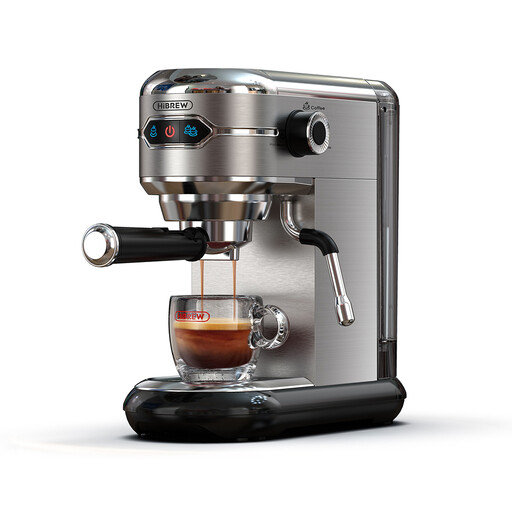
Why this model is a great fit: Perfect for those who want to enter the world of portafilter machines without a large initial investment. The operation is straightforward and stripped down to the essentials, which simplifies the learning process.
This model deliberately omits an integrated grinder, thus avoiding the trap of inferior combo solutions. Users can choose a separate grinder according to their budget and standards. The high 19-bar pump pressure provides reserves, while manual control prevents over-extraction.
The stainless steel heating element ensures a fast heat-up time and stable water temperature. The three-hole steam wand allows for rapid creation of milk foam.
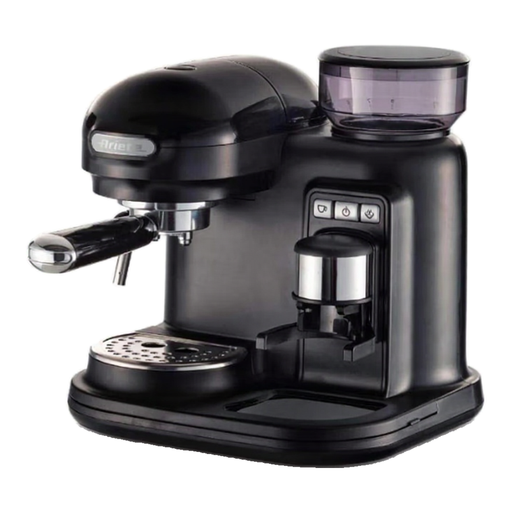
Why this model is a great fit: For users seeking an all-in-one solution with a striking design. This machine combines espresso preparation, a grinder, and a milk frother in one compact, stylish housing.
Although it has an integrated grinder, it's designed for users who prioritize convenience over maximum adjustability. The 15-bar pump pressure is a reasonable value that reduces the risk of over-extraction compared to 20-bar models.
The integrated grinder allows for grinding fresh beans right before brewing. The automatic shut-off function contributes to longevity and energy efficiency.
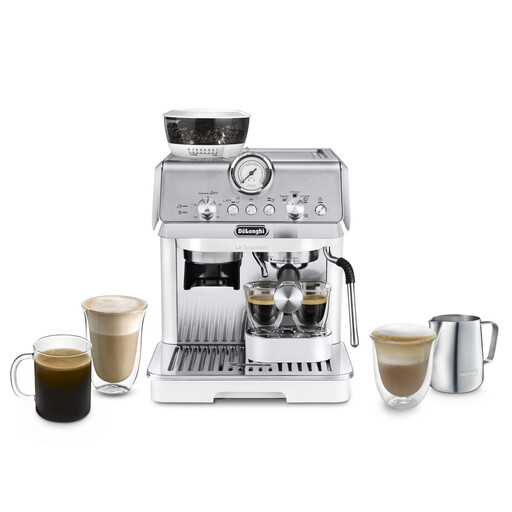
Why this model is a great fit: A comprehensive **barista coffee machine** for home use. It provides the control and tools needed to prepare café-quality coffee, including a complete barista kit.
This model directly addresses the typical weaknesses of combo units: the integrated grinder offers 8 grind settings, and the three selectable temperature levels provide the necessary stability often lacking in simple thermoblocks. The included accessories are high-quality and functional.
The complete barista kit (tamper, tamping mat, dosing funnel, milk pitcher) enables a professional workflow. The My LatteArt system creates fine microfoam for creative coffee creations.
We have compiled a complete, up-to-date list of products that fully meet these strict selection criteria and UK safety regulations.
How often do I need to descale a portafilter espresso machine? The frequency of descaling heavily depends on the water hardness in your area and how often you use it. As a general rule, descaling every two to three months is recommended. Many modern machines have an automatic descaling indicator to remind you. Regular descaling is crucial for the longevity of the device and consistent coffee quality.
Is a portafilter machine with an integrated grinder worth it? That depends on your priorities. If you value convenience, a tidy countertop, and a simple workflow, a portafilter machine with a grinder can be a great choice. However, if your focus is on maximum control over the brewing process and the ability to upgrade your system incrementally, a combination of a separate espresso machine and a high-quality coffee grinder is often the more flexible and higher-performing solution in the long run.
What pump pressure is really necessary for espresso? Even though many manufacturers advertise high numbers, the crucial factor is the pressure that arrives directly at the coffee grounds in the portafilter. A value of around 9 bars has been established as ideal for a balanced extraction. The pump itself must be able to generate higher pressure to overcome the system's resistance, but a good machine regulates this pressure down to the optimal value for the brewing process.