
Lieferung heute & morgen

Qualitätsgarantie

Willkommens-Angebote freischalten: KOSTENLOSE Lieferung | Bis zu 80 % RABATT | Kostenlose 30-Tage-JoyPlus-Testphase
App herunterladen
The desire to brew café-quality espresso at home leads many coffee lovers to invest in their own equipment. A portafilter espresso machine provides the control and quality necessary for an authentic espresso. However, the market is vast, and technical specifications can be overwhelming. This guide is designed to bring clarity and provide you with objective information to help you make an informed decision for your home.
Choosing the right machine depends on your personal preferences and desired level of convenience. Here are some key aspects to consider in your decision.
Pressure is crucial for coffee extraction and creating a stable crema. A pump pressure of 15 to 20 bars is standard on many home models. This high pressure ensures that the ideal extraction pressure of around 9 bars is achieved at the group head. The heating system is equally important. Thermoblock systems heat up quickly and are energy-efficient, while boiler machines often offer superior temperature stability for pulling multiple shots consecutively.
For lovers of cappuccino or latte macchiato, the milk system is a key factor. An espresso machine with a milk frother comes in two main types:
The machine alone doesn't make the perfect coffee. High-quality barista accessories are just as crucial for the final result in your cup. A precision tamper for compressing the coffee grounds, a coffee grinder for fresh beans, and a good stainless steel milk pitcher are fundamental tools. The milk pitcher, in particular, influences the quality of the milk foam and pouring control for latte art through its shape and material.
Based on functionality, material quality, and user-friendliness, we have curated a selection of products that cater to different needs.
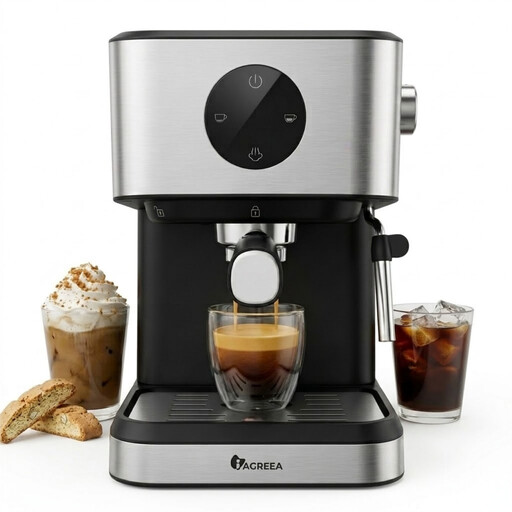
Why it stands out: The IAGREEA espresso machine combines a classic stainless steel design with a powerful 20-bar pump pressure. It is aimed at purists who want to control the entire brewing process themselves, from dosing the coffee grounds to manually frothing the milk.
Advantages:
Who is it for? This model is an excellent choice for beginners and coffee enthusiasts looking for a solid and reliable portafilter espresso machine for home use. It is ideal for anyone who appreciates and wants to learn the artisanal process of espresso making.
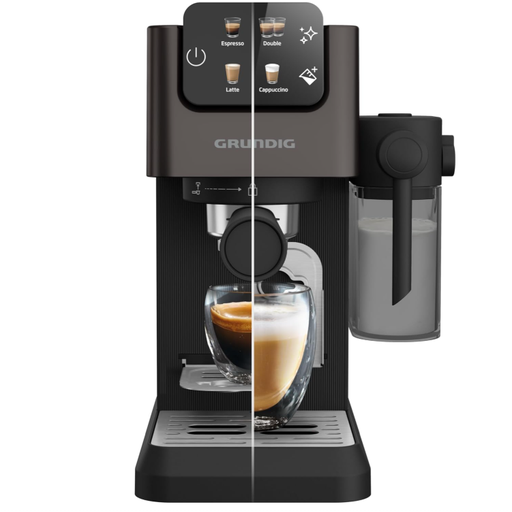
Why it stands out: The Grundig KSM 5330 bridges the gap between traditional portafilter technology and modern convenience. With its colour touch display and integrated milk container, it automates the preparation of milk-based drinks without sacrificing the benefits of a portafilter.
Advantages:
Who is it for? This semi-automatic machine is ideal for users who want the coffee quality of a portafilter machine but prefer the convenience of automated milk preparation. It's a practical coffee machine for espresso and cappuccino for a busy daily life.

Why it stands out: This milk pitcher is more than just a container. It is a precision tool designed specifically for the demands of latte art. Its patented spout design and high-quality 304 stainless steel construction set it apart from standard pitchers.
Advantages:
Who is it for? This latte art accessory is suitable for anyone working with a manual steam wand—from the beginner pouring their first patterns to the experienced home user looking to refine their technique. It is a valuable addition to any espresso machine with a milk frother.
Beyond the perfect coffee machine, other kitchen accessories also play a role in a complete gourmet experience. If you are looking for other high-quality stainless steel accessories, take a look at our selection of stainless steel steamers.
A pressure of around 9 bars at the group head is considered optimal for espresso extraction. Most home machines are equipped with pumps that generate 15 to 20 bars. This higher initial pressure ensures that the target pressure of 9 bars is reliably reached at the coffee puck, even with slight variations in grind size or coffee dose.
The main difference lies in the degree of automation and control. With a portafilter espresso machine, the grind size, coffee dose, and tamping (compressing) are controlled manually. This gives the user full control over the result. A fully automatic machine handles all these steps—from grinding the beans to dispensing the finished coffee—at the touch of a button. Portafilter machines offer more potential for quality and customisation but also require more practice.
The basic essentials include: