
Lieferung heute & morgen

Qualitätsgarantie

Willkommens-Angebote freischalten: KOSTENLOSE Lieferung | Bis zu 80 % RABATT | Kostenlose 30-Tage-JoyPlus-Testphase
App herunterladen
The desire for a café-quality espresso in the comfort of your own home leads many to purchase a portafilter machine. The ritual of preparation—from grinding the beans to creating the perfect milk foam—is a true pleasure for coffee lovers. However, the market is crowded and full of marketing promises that often confuse more than they help. Before you make a decision, it's crucial to understand the typical pitfalls to avoid a purchase you'll regret.
Two common misconceptions lead to disappointment:
This guide will help you interpret technical specifications correctly and find a machine that truly fits your needs.
Instead of being swayed by mere marketing figures, you should focus on three fundamental technical features. These are the primary determinants of your coffee's quality and the machine's longevity.
The brewing temperature has a direct impact on the espresso's aroma. It should remain constant between 90°C and 94°C (194°F and 201°F).
The portafilter itself is a critical component. Pay attention to the material and diameter. Professional machines often use portafilters with a 58 mm diameter made of solid, chrome-plated brass. These retain heat better and ensure a more even extraction. For home use, diameters from 51 mm to 54 mm are also widespread and deliver excellent results with proper handling. A heavy, solid portafilter is generally an indicator of higher-quality construction.
For lovers of cappuccino or latte macchiato, a good coffee machine with a milk frother is essential. There are two basic types:
The right machine depends on your habits, available space, and ambitions. Here are three models tailored to different user profiles.
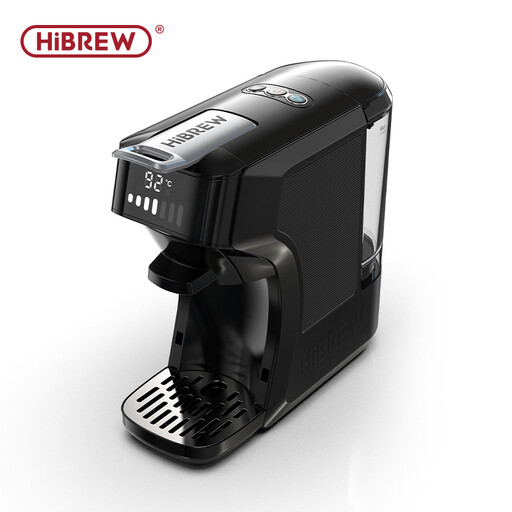
Why it's a great fit: Ideal for anyone looking to upgrade from a capsule-only machine without losing flexibility. This device bridges the gap between capsule convenience and using freshly ground coffee. Perfect for small kitchens or the office.
It solves the problem of system lock-in common with capsule machines, as it is compatible with various capsule types (NS Original, DG, ESE) and ground coffee powder. This provides full cost control and freedom to experiment.
The 6-in-1 compatibility offers maximum flexibility. Its compact design saves valuable counter space.
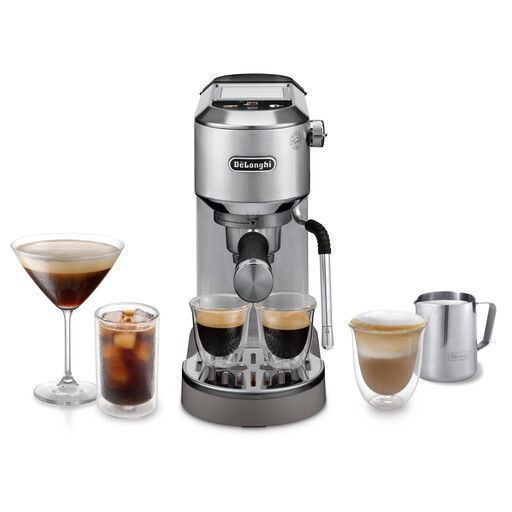
Why it's a great fit: At just 15 cm wide, this compact portafilter machine is ideal for kitchens with limited space. Its metal body and Italian design make it a stylish statement piece, while still offering the manual control that home baristas desire.
As a specialised device without an integrated grinder, it bypasses the compromise of low-quality all-in-one solutions. The user is free to choose a separate grinder that meets their own standards and budget.
The MyLatteArt steam wand enables the creation of fine microfoam. The Thermoblock heating system ensures it's ready to use in about 40 seconds.
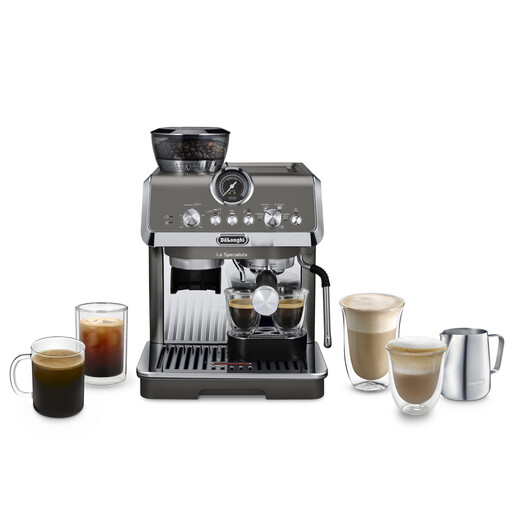
Why it's a great fit: This portafilter machine with a grinder offers a complete barista experience in a single unit. It is ideal for users who appreciate the convenience of an integrated solution but don't want to sacrifice control over grind size and temperature.
Unlike cheap combo units, this model features a high-quality, integrated conical burr grinder with 8 grind settings. This allows for precise adjustment to the coffee beans and avoids the typical compromise on grind quality.
A complete barista kit (tamper, tamping mat, dosing funnel) is included. Three preset temperature profiles allow for customisation to different roasts.
We have compiled a complete, up-to-date list of products that fully meet these strict selection criteria and German safety regulations.
1. How often should a portafilter machine be cleaned? A basic daily cleaning is recommended. This includes rinsing the portafilter and cleaning the steam wand after each use. Once a week, a more intensive cleaning with backflushing (if supported by the manufacturer) should be performed. Descaling depends on water hardness and usage frequency; most modern machines will signal when it's time, typically every 2-3 months.
2. What kind of coffee is suitable for a portafilter machine? In general, whole beans that are freshly ground work best. So-called "espresso roasts" are often roasted darker and have less acidity, which harmonises well with this preparation method. The grind size is crucial: it should be fine, but not powdery. You can find the right setting through experimentation—the espresso should extract in about 25-30 seconds.
3. Is a more expensive espresso machine always a better choice? Not necessarily. The price often correlates with material quality (e.g., stainless steel vs. plastic), temperature stability (boiler vs. thermoblock), and additional features (e.g., pressure gauge, PID control). For beginners, a solid mid-range machine can already deliver excellent results. More important than the price alone is that the machine fits your skills and expectations.