
Lieferung heute & morgen

Qualitätsgarantie

Willkommens-Angebote freischalten: KOSTENLOSE Lieferung | Bis zu 80 % RABATT | Kostenlose 30-Tage-JoyPlus-Testphase
App herunterladen
The desire for café-quality coffee in the comfort of your own home leads many to purchase a portafilter machine. For enthusiasts, the ritual of grinding beans, tamping the grounds, and extracting the perfect espresso is a key part of the experience. But the market is filled with tempting offers and technical specs that often confuse more than they clarify. As your Joybuy Product Recommendation Officer, I'm here to help you identify common marketing traps and make an informed decision.
Before you buy a portafilter machine, you should be aware of the three most common misconceptions that often lead to disappointment. Manufacturer specifications are not always a direct indicator of the quality of the coffee in your cup.
To find the right portafilter coffee machine, focus on the technical features that directly impact coffee quality.
The heating system determines how quickly and consistently the water reaches temperature—a critical factor for extraction.
The portafilter is more than just a handle. Its material and weight are crucial for temperature stability during the brewing process. Professional machines use heavy portafilters made of chrome-plated brass or stainless steel with a standard 58 mm diameter. Lighter versions made of aluminium or with plastic components, common in many entry-level models, cool down faster and can lead to uneven extraction.
A good semi-automatic coffee machine gives you control over the process but should also be convenient to use.
Instead of making a one-size-fits-all recommendation, we've selected models that cater to different user profiles and needs.
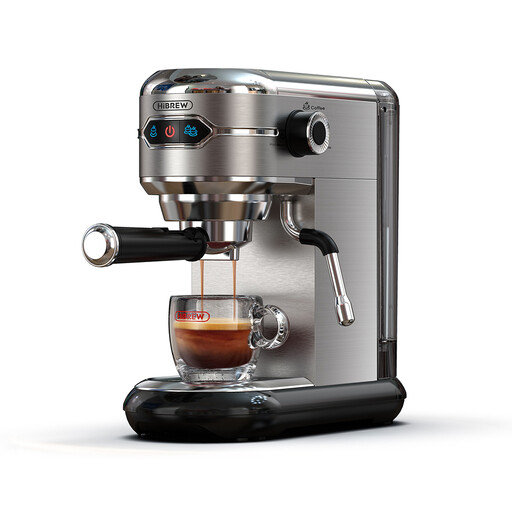
Why it's a good fit: Ideal for anyone looking to enter the world of portafilter machines without a large investment. It offers the fundamental manual controls necessary for learning the craft, all in a compact and user-friendly format.
Despite the 19-bar specification, the machine delivers adequate pressure for home use. More importantly, it provides a solid foundation for experimenting with grind size and tamping, rather than relying on an inflated marketing figure.
The stainless steel body and instant thermoblock provide a rapid heat-up time (approx. 25s) and a solid feel that isn't a given in this price range. The 3-hole steam wand allows you to practice frothing milk.
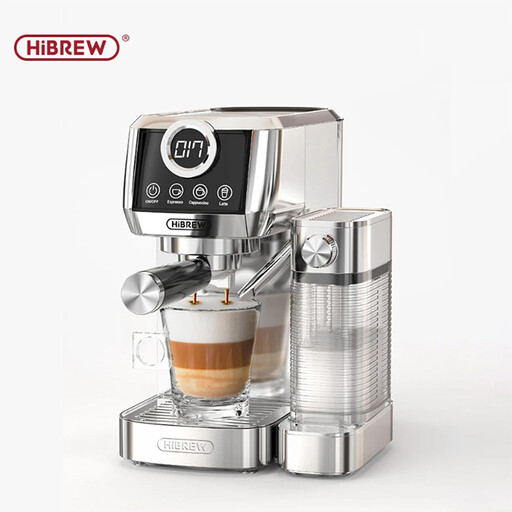
Why it's a good fit: For users who appreciate the taste of portafilter coffee but want the convenience of an automatic milk system. It offers more control than a fully automatic machine but significantly simplifies the preparation of milk-based drinks.
This model focuses on a genuine value-add: its dual boiler system. Instead of just advertising high pressure, it offers a technically superior solution for temperature stability that enables simultaneous brewing and steaming.
The dual boiler system and adjustable temperature levels deliver a high degree of consistency for this class. The automatic milk frother with its 700ml container is practical for quickly preparing cappuccinos and lattes.
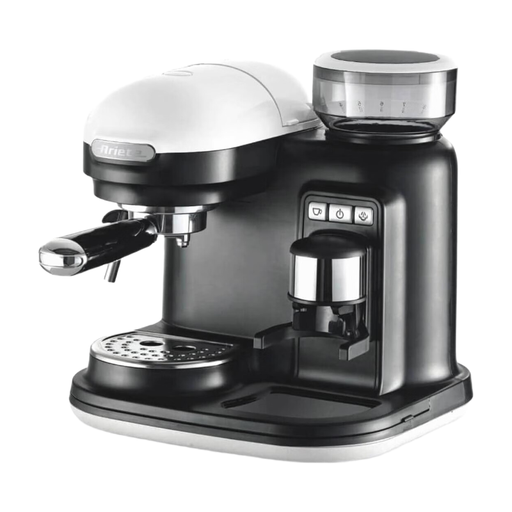
Why it's a good fit: Perfect for kitchens where design plays as big a role as functionality. This machine combines a striking retro design with the practical function of an integrated coffee grinder, making it a real statement piece.
It sidesteps the trap of purely functional promises by clearly focusing on the combination of aesthetics and all-in-one convenience. It's a deliberate choice for users looking for a space-saving and stylish solution for their portafilter machine for home.
The integrated conical burr grinder allows you to grind fresh beans right before extraction. The 15-bar pressure is well-suited for making espresso, and the machine includes filters for one or two cups.
We've compiled a complete, up-to-date list of products that fully meet these strict selection criteria and comply with European safety standards.
For extracting a balanced espresso, a constant pressure of around 9 bars directly at the brew group is ideal. The 15, 19, or 20 bars advertised by manufacturers refer to the pump's maximum output, not the actual brewing pressure. A machine that can maintain a stable pressure in the optimal range is preferable to one with a fluctuating but high maximum pressure.
That depends on your priorities. An integrated solution is very convenient, saves space, and is often cheaper than buying two separate devices. However, separate coffee grinders typically offer more grind settings, greater precision, and avoid the problem of heat transfer from the machine to the beans. For beginners and those who value convenience, a combination unit can be a great choice, while purists often prefer separate devices.
The frequency of descaling depends heavily on the water hardness in your area and how often you use it. As a general guideline, it's recommended to descale the machine every two to three months. With very hard water, a monthly cycle may be necessary. In addition to descaling, regular backflushing with a blind basket is important to remove coffee oils and residue from the brew group, ensuring consistent coffee flavour.