
Lieferung heute & morgen

Qualitätsgarantie

Willkommens-Angebote freischalten: KOSTENLOSE Lieferung | Bis zu 80 % RABATT | Kostenlose 30-Tage-JoyPlus-Testphase
App herunterladen
The desire for authentic, café-quality espresso leads many coffee lovers to purchase their own portafilter machine. But the market is overwhelming and filled with marketing promises that often obscure more than they clarify. Before you make a decision, it's crucial to understand the common pitfalls that can lead to disappointment and unnecessary expense.
As your Joybuy Product Recommendation Officer, I'm here to help you cut through the noise. We'll focus on the facts and features that truly matter, so you can make an informed choice for your at-home coffee machine.
The 2 Most Common Traps When Buying an Espresso Machine:
To make a good choice, you should focus on technical features that have a direct impact on coffee quality and the machine's durability.
The heating system determines how quickly the machine is ready to use and how consistently the water temperature is maintained—a critical factor for espresso extraction.
The quality of the materials used is an indicator of a machine's robustness and longevity. A body made of stainless steel is not just a matter of aesthetics. It is more resistant to scratches and corrosion, contributes to temperature stability, and conveys a more premium feel. Components like the portafilter itself, the steam wand, and the drip tray should also be made from high-quality materials to withstand daily use.
For lovers of cappuccino or latte macchiato, the quality of the milk frother is crucial. A good espresso machine with a milk frother should be able to produce fine, creamy microfoam.
Here are some recommendations tailored to different user profiles that meet the quality criteria mentioned above.
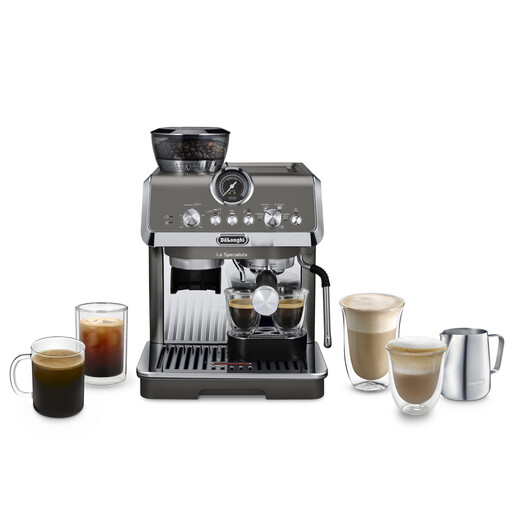
Why This Fits Their Persona: Ideal for those who want to learn the barista process from the ground up without immediately investing in separate devices. The all-in-one concept provides control where it counts and guides the user through coffee preparation.
The integrated grinder offers 8 grind settings, which provides sufficient adjustment for beginners and bypasses the trap of a useless grinder. The My LatteArt steam wand allows for manual frothing of microfoam.
A complete barista kit (tamper, milk jug, etc.) is included. The machine also features a cold extraction technology for Cold Brew.
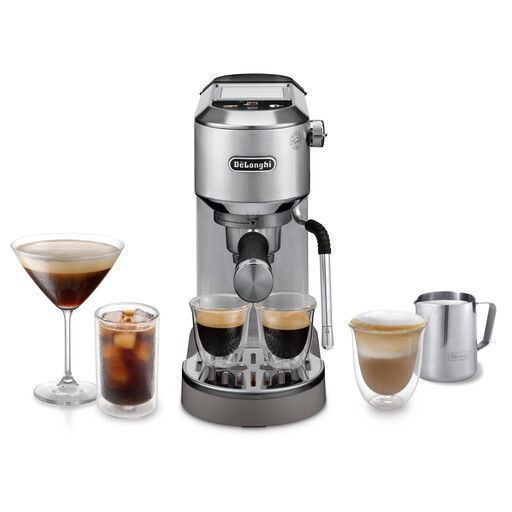
Why This Fits Their Persona: Perfect for coffee lovers who value a compact, high-quality design and prefer the flexibility of a separate coffee grinder. The device focuses on the essentials: excellent espresso and good milk foam.
By forgoing an integrated grinder, this machine avoids the pitfall of inferior combination units. The user has the freedom to choose a high-quality, separate grinder. The MyLatteArt steam wand is designed for manually creating microfoam.
Very compact design (only 15 cm wide) with a solid metal body. The Thermoblock heating system is ready in 40 seconds.

Why This Fits Their Persona: For users who want to combine the barista experience with modern convenience. The intuitive touchscreen operation and automated processes deliver consistent, café-quality results without a steep learning curve.
The integrated conical burr grinder is high-quality and precise. Its biggest advantage is the automatic milk frother, which independently adjusts temperature and texture to create perfect microfoam—a solution for anyone who struggles with manual wands.
The ThermoJet heating system reaches brewing temperature in just 3 seconds. The touchscreen allows for 5 pre-programmed recipes and saving up to 8 custom creations.
We've compiled a complete, up-to-date list of products that fully meet these strict selection criteria and all relevant safety regulations.
A portafilter machine with a grinder can be an excellent, space-saving solution, provided the grinder is of good quality. Look for models with a conical or flat burr grinder made of hardened steel and a sufficient number of grind settings (at least 8-10). For beginners, such a combination device can make it easier to get started. Advanced users often prefer a separate grinder for maximum control and flexibility.
The frequency of descaling depends heavily on the water hardness in your area and how often you use the machine. As a rule of thumb, with average water hardness and daily use, the machine should be descaled every 2 to 3 months. Many modern machines have an automatic descaling indicator to remind you. Using a water filter in the water tank can significantly reduce limescale buildup and extend the intervals between descaling.
While most machines are advertised with a pump pressure of 15 bars or more, the crucial value is the pressure that actually reaches the coffee grounds (the brew pressure). For a classic espresso, this is ideally a stable 9 bars. An over-pressure valve (OPV) in the machine ensures that the high pump pressure is reduced to this optimal value. A pressure gauge on the front of the machine can be helpful for monitoring the brew pressure.