
Lieferung heute & morgen

Qualitätsgarantie

Willkommens-Angebote freischalten: KOSTENLOSE Lieferung | Bis zu 80 % RABATT | Kostenlose 30-Tage-JoyPlus-Testphase
App herunterladen
In work environments defined by extensive documentation—be it legal files, scientific reports, or project plans—a structured organisational system is crucial for efficiency. The ability to quickly locate relevant information, prioritise tasks, and clearly mark sections can significantly optimise workflow. Post-it Index Tabs are an established tool for this purpose.
This article serves as a guide. It presents objective criteria for selecting the right tabs and showcases a selection of products tailored to specific organisational needs.
The choice of the right marking tool depends on its intended application. Three key properties should be considered.
The durability of an index marker is determined by its material. While simple paper markers can wrinkle or tear with frequent use, tabs made of polyester film offer significantly higher resilience. Another critical feature is the adhesive technology. High-quality repositionable adhesive strips adhere securely to paper but can be repositioned or removed completely as needed, without leaving residue or damaging the document surface. The quality of 3M adhesive strips is a well-known benchmark in this regard.
For customised organisation, it is essential that the tabs are writable. A matte surface on the coloured part of the marker typically allows for clean labelling with ballpoint pens or permanent markers. The format also plays a role. Wider models like the Post-it Flags wide offer more space for notes and better visibility on the edge of binders or books. The transparent part of the tab should not obscure the underlying text.
Using coloured page markers is more than just an aesthetic choice. Colours enable the establishment of an intuitive organisational system. For example, red can be used for urgent tasks, blue for reference material, and orange for content that needs review. A consistent colour system accelerates the visual scanning of priorities and categories in complex documents.
Based on the criteria mentioned, we have compiled a selection of Post-it Flags suitable for various professional and academic use cases.
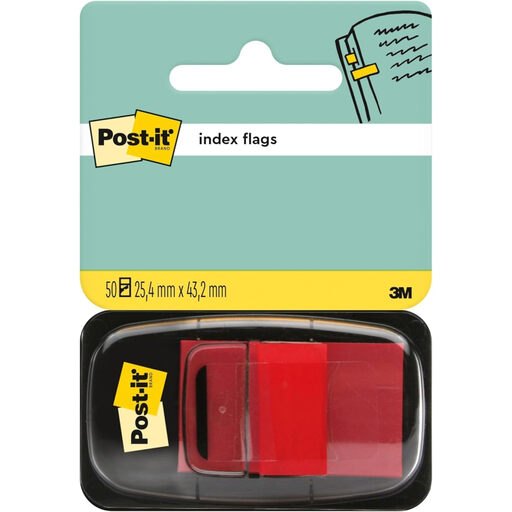
Why It Stands Out: The red colour of this self-adhesive index marker serves as an unmistakable signal for top priority. The concept of "critical urgency" is visually implemented here to draw immediate attention to required actions, signatures, or corrections.
Benefits:
Who It's For: This product is particularly useful for law firms, administrative departments, and project managers who need to flag documents for immediate action or approval.
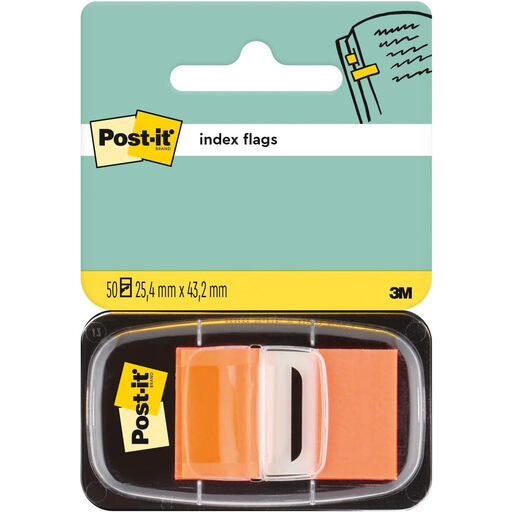
Why It Stands Out: The colour orange positions itself as a signal for tasks that require follow-up or a second review. It bridges the gap between pure information (blue) and immediate urgency (red), making it suitable for the "dynamic signalling" of work processes.
Benefits:
Who It's For: Ideal for students and academics revising drafts, as well as for professionals in multi-stage projects who need to track the status of documents.
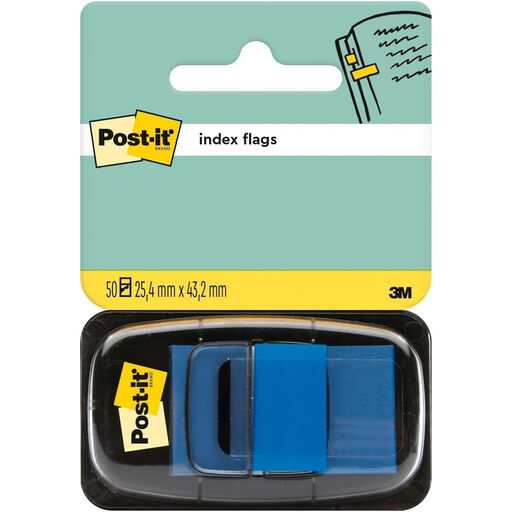
Why It Stands Out: Blue traditionally represents information and reference. This Post-it Flags 680 variant embodies the principle of "structured efficiency" and is perfectly suited for logically organising and long-term indexing of reference works or archival material.
Benefits:
Who It's For: A fitting solution for researchers, archivists, and anyone who needs to structure large collections of information and requires quick access to specific chapters or sections.
The products presented cover key use cases for document organisation. However, if you are looking for other formats, colours, or specific adhesive solutions, a wide range of alternatives is available.
Discover our entire range of adhesive labels and find the perfect solution for your individual needs.
1. Are Post-it Index Tabs reusable? Yes, most Post-it Flags are designed as repositionable adhesive strips. They can be removed and repositioned multiple times. According to the manufacturer, 3M, this is based on a special adhesive technology. However, with very frequent use on different surfaces, the adhesive strength may diminish over time.
2. Can you write on all Post-it Flags? The coloured, non-transparent parts of most Post-it Flags have a matte surface that allows for writing. For a clean and permanent script, ballpoint pens or fine-tipped permanent markers are recommended. Writing is not intended for the smooth, transparent adhesive part.
3. What is the difference between Post-it Flags and regular sticky notes? The main difference lies in the material and intended use. Post-it Flags are typically made of a thin but durable polyester film and are designed for marking, indexing, and signalling. Their adhesive strip is often transparent to avoid covering text. Classic sticky notes are made of paper, are fully opaque, and are used for leaving longer notes or messages.