Active people focused on protein
You fancy something savoury after a workout and want to know how much protein you’ll get from the amount you actually eat. The snack isn’t meant to replace a meal on its own.


For a post-workout snack, “less fat” alone isn’t enough to help you choose. If protein matters to you, compare the amount per 100 g and per portion. If your main aim is to reduce fat, check the energy and salt content too. A snack doesn’t automatically replace a full meal after exercise, and its ingredients and allergen information need to suit your diet.
You fancy something savoury after a workout and want to know how much protein you’ll get from the amount you actually eat. The snack isn’t meant to replace a meal on its own.
You’re looking for an alternative to crisps with less fat than traditional potato crisps. As well as the marketing claim, you want to check the energy and salt figures for the specific variety.
You check whether a variety suits your diet or meets your allergen requirements. Even snacks made from similar pulses can differ in their ingredients and labelling.
First, decide which feature matters most to you. Then compare the nutritional information per 100 g and work out how it applies to the amount you plan to eat.
| Criteria | What to check | Who it matters most to |
|---|---|---|
| Protein | Protein per 100 g and in your planned portion, as well as the salt content. | If I want a savoury snack after a workout with a clear protein contribution, the nutritional information matters more to me than the product name. Around 36% of consumers put this need first. |
| Fat and energy | Fat and energy per 100 g, as well as the amount you eat. | I want to choose crunchy crisps with less fat without assuming that this means a similar reduction in calories. This comparison is the priority for around 29% of consumers. |
| Salt and nutritional information | Salt per 100 g and per portion; check the other nutritional values too. | With a savoury snack, I want to know the salt content, even if the front of the pack highlights protein or less fat. Around 21% of consumers prioritise this overall picture. |
| Ingredients and allergens | The ingredients list and allergen information for the specific variety. | If I need to avoid dairy ingredients or want to eat a vegan diet, the individual variety must suit me; a pulse-based recipe alone isn’t enough to tell me. Around 14% of consumers put this check first. |
The Baden-Württemberg Consumer Advice Centre points out that crisps with less fat don’t automatically contain a proportionately lower number of calories. Comparing fat alone won’t tell you how much energy you’ll get from the portion you eat.
Compare the fat and energy figures per 100 g on the pack, and also take the portion or pack size into account.
A stated protein value can help you compare products, but it doesn’t make a snack a necessary post-workout meal. The Consumer Advice Centre explains that even people who exercise can get protein from everyday foods.
Choose based on the specific nutritional profile and the rest of your diet, not just the word “protein” on the pack.
Pulse crisps can contain a lot of salt, even when their fat or protein content is highlighted. REWE lists Zweifel Vaya Lentil Protein Sweet Chili as containing 2 g of salt per 100 g; the product information for Lorenz Kichererbsen Chips Paprika lists 2,8 g per 100 g.
Compare the salt content for the same snack portion and consider what else you’re eating with it.
Lorenz Kichererbsen Chips Paprika are described as gluten-free, but the ingredients information lists sour cream powder and dairy ingredients. These labels answer different questions.
Check the ingredients list and allergen information on the specific pack for every variety, especially if you need to avoid dairy ingredients.
Ofen Chips and Popchips are different crisp-style options to compare with traditional potato crisps.
Naturals Leicht and Kichererbsen Chips Paprika are different types of crisps, so their ingredients and nutritional values should be considered separately.
Protein Chips Paprika are a crisp-style variety to compare by their stated protein content.
Light Chips Classic are a potato crisp option if comparing fat matters more to you than a high protein content.
Lentil Protein Sweet Chili is a lentil and pea snack to compare for protein, fat and salt.
This selection features two crisp-style ahead snacks. If you’re considering them for after a workout, compare the information on the specific pack against your main priority – particularly protein, fat and salt.
 No image available
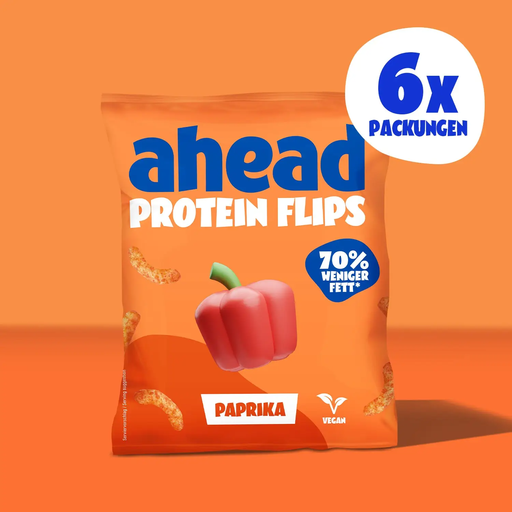
If you’re looking for a protein-focused snack after a workout, you can compare these paprika flips using the information on the pack.
The product title lists six 50 g bags. Check the protein, fat and salt content for the amount you actually plan to eat; a claim about reduced fat doesn’t replace this comparison.
 No image available
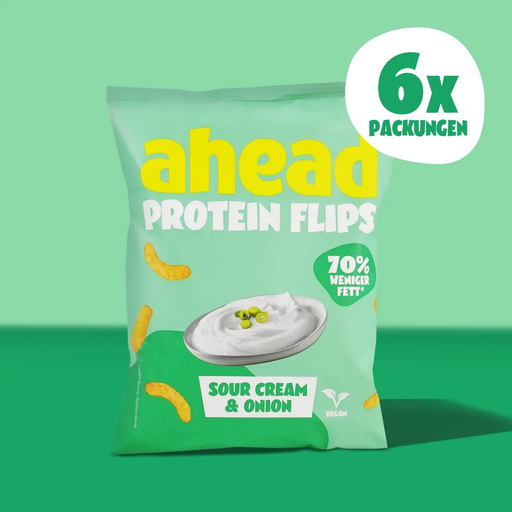
These sour cream crispies are an option if you fancy something to snack on after a workout.
Check the protein and fat content per 100 g and the portion size on the specific pack. The product name alone won’t tell you how much you’ll eat.
No. This claim doesn’t automatically mean there’s a similar reduction in calories. Compare energy, fat, protein, carbohydrates and salt per 100 g, and factor in the amount you plan to eat. The Baden-Württemberg Consumer Advice Centre also highlights this distinction.
No, protein crisps aren’t essential for getting enough protein. The Consumer Advice Centre explains that even people who exercise can get protein from everyday foods. You can still compare the stated protein content with other varieties when choosing a snack.
Not just because of their ingredients. The Baden-Württemberg Consumer Advice Centre points out that alternative crisps don’t necessarily contain proportionately fewer calories just because they have less fat. Compare the salt content of the specific variety too.
Not necessarily: Lorenz Kichererbsen Chips Paprika are described as gluten-free, but contain sour cream powder and dairy ingredients. Check the ingredients list and allergen information on the pack for every variety.
Start with the nutritional information for energy, fat, carbohydrates, sugars, protein and salt per 100 g, and factor in your portion. The ingredients list, allergen information and pack size can then help you decide whether the specific variety meets your needs.