Poster designers who move between desks
If you often need to clear your desk, check whether your laptop can connect to the monitor and accessories available at each workspace.


If you often move between desks and a suitable external monitor is actually available, a compact laptop is likely to be the better choice. If you usually work directly on your laptop, a larger display can give you more room for posters and tools – but it also takes up more desk space. Alongside the display and ports, check the exact device configuration, your software requirements and the specifications for printing.
If you often need to clear your desk, check whether your laptop can connect to the monitor and accessories available at each workspace.
If you mainly edit posters on the built-in display, weigh up its size and image quality against the space available at your shared desk.
For large image files, compare the memory and available SSD capacity with the requirements of the specific software you use and the configuration you’re considering.
A good fit if: you often change workspaces and a suitable monitor is available at each one.
The trade-off: without an external screen, there’s less room on the built-in display for your poster and tool panels.
A good fit if: you usually work directly on your laptop and have enough desk space.
The trade-off: a larger device takes up more room. Also check the exact display variant: a colour gamut specification alone doesn’t guarantee that the final print will match what you see on screen.
| Criterion | What to check before buying | Who should pay particular attention? |
|---|---|---|
| Display and poster colours | Size, finish and stated colour gamut for the exact variant; check print specifications separately. | If I mainly design on my laptop, I need enough room for the artwork and tools. Around 36% of consumers put the display first. |
| Moving between desks and available space | Available desk space and whether the same suitable monitor is provided at every workspace you use. | If I often have to clear my desk, my device needs to work in different spaces. Around 29% of consumers prioritise being able to move between workspaces. |
| Memory and project files | The requirements of your software, plus the RAM and SSD capacity of the exact configuration. | When working with large image files, I want to keep an eye on my software requirements and available storage. Around 21% of consumers pay particular attention to project files and software specifications. |
| Connecting at your workspace | Check that the laptop’s ports match the inputs on your existing monitor and the cable or dock you have available. | If I want to keep using the equipment already on my desk, the connections need to be compatible. Around 7% of consumers prioritise connecting their devices. |
| Overall set-up requirements | Consider the software you need and any connection solutions you may need before buying. | If I’m choosing a laptop as part of a complete workspace, I want to understand what the overall set-up will involve. Around 7% of consumers prioritise set-up costs. |
Manufacturer specifications describe the display itself, not the result of your printing process.
Check the display variant and print specifications separately. For colour-critical work, a suitable proof print may be part of your preparation.
The right specification depends on the software and files you actually use; no single component can tell you everything you need to know.
Start by listing your software, file sizes and working style, then compare these with the exact configuration.
A compact laptop with an external screen is only a suitable option if a monitor is genuinely available and can be connected at each workspace.
Before you buy, check the available desk space, monitor, ports and the cable or dock you already have.
The MacBook Air M5, as specified, is a compact macOS option if you often move between workspaces or have access to an external monitor.
The ProArt P16 H7607 is a Windows range designed for working directly on a 16-inch display.
The Yoga Pro 9i Gen 10 is a 16-inch Windows option if built-in screen space matters more to you than a compact device.
HP offers the ZBook 8 G2i/G2a range for graphic design and other 2D work.
The Joybuy laptops below range from 14-inch devices to 16-inch models, to suit different ways of working at a shared desk. Compare the display size, configuration and ports with your actual workspace.
 No image available
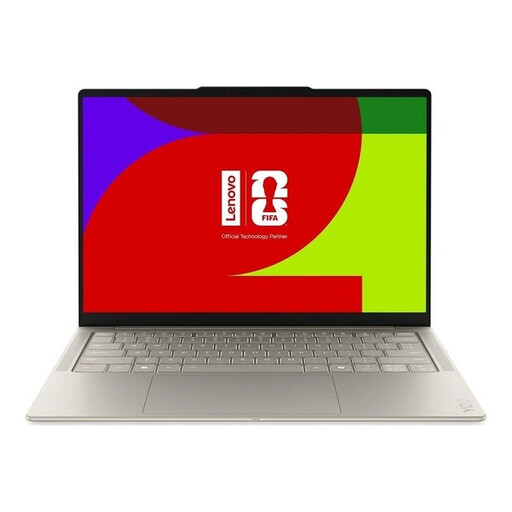
The 14-inch model may suit you if you often move between workspaces and want to work directly on your laptop.
Specifications listed in the product name: 2.8K OLED, 16 GB RAM, 1 TB SSD and Windows 11 Evo.
 No image available
The 16-inch format may suit designers who want more screen space built in; check that it fits on your shared desk.
Specifications listed in the product name: AMD Ryzen 3 PRO 7335U, 16 GB DDR5, 512 GB SSD and Windows 11 Pro Education.
 No image available
The 16-inch format is an option if you want to design directly on the built-in display; bear in mind how much desk space it will need.
Specifications listed in the product name: 2-in-1, 128 GB DDR5, 2 TB SSD and Windows 11 Pro.
 No image available
A 16-inch laptop may suit you if you mainly want to edit posters on the built-in display.
Specifications listed in the product name: 16 GB RAM, 512 GB SSD and German keyboard layout.
 No image available
The 16-inch display may appeal if you work directly on your laptop; check that it fits your available desk space.
Specifications listed in the product name: AMD Ryzen 7 7745HX, 16 GB DDR5 and 1 TB SSD.
For Photoshop Desktop version 27.x and later, Adobe lists 8 GB as the minimum requirement and recommends 16 GB or more. If Photoshop is part of your workflow, compare these figures with the exact laptop configuration; they don’t automatically apply to every poster design programme.
Check that the input on your existing monitor matches the laptop’s display ports and the cable or dock available. For the MacBook Air described, Apple lists Thunderbolt 4; for the ProArt P16 described, ASUS lists USB-C with display support and HDMI.
Check the display specifications for the exact variant, confirm your print service’s requirements and, if needed, arrange a suitable proof print. A manufacturer’s colour gamut specification alone doesn’t confirm that the finished print will match what you see on screen.
When consumers buy online from a business seller, they generally have a 14-day right to cancel from the date of delivery; exceptions and possible return costs should also be taken into account. Your Europe – European Union explains this right. If goods are faulty, you also have a statutory guarantee from the seller lasting at least two years from receipt; this is separate from any voluntary guarantee.