
Lieferung heute & morgen

Qualitätsgarantie

Willkommens-Angebote freischalten: KOSTENLOSE Lieferung | Bis zu 80 % RABATT | Kostenlose 30-Tage-JoyPlus-Testphase
App herunterladen
After breast surgery, a breast lift or liposuction, a bra needs to sit securely without putting unnecessary pressure on or irritating sensitive areas. However, choosing the right one isn't always straightforward: terms like "medical compression bra", "breathable" or "anti-sagging" don't automatically describe a suitable construction.
This shopping guide from the Joybuy Product Recommendation Officer will help you objectively assess product specifications and avoid common buying mistakes. These recommendations are not a substitute for medical advice. The appropriate level of compression, how long to wear it and the type of closure needed after a procedure should always be discussed with your treating clinic.
A very tight model isn't automatically better. If there aren't multiple closure positions or adjustable straps, it's difficult to adapt the fit as swelling changes and during the healing process. An adjustable bra with a front closure can make putting it on and taking it off easier, but it must still match the recommended compression level.
Many products only list S, M, L or XL. This isn't always sufficient for a bra intended for use after breast surgery. Depending on the model, the key measurements are underbust circumference, bust circumference, height and sometimes weight. If a size chart lists body measurements, you should check these with a tape measure rather than relying on your usual bra size.
"Seamless", "breathable" or "medical" are not sufficient selection criteria on their own. What's more meaningful are specific details about the material composition, number of hook rows, cup shape, care instructions and strap adjustability. A post-operative body shaper isn't automatically suitable for every stage of recovery either, as a full-body garment also compresses the stomach, back and hips.
First, check whether the product is approved for the intended period after your procedure. With a post-surgery compression bra, you should not increase the compression yourself. Models with multiple rows of hooks allow for gradual adjustment. This is practical, but it doesn't replace a medical prescription.
With the FeelinGirl compression bras, the front closures range from three to ten rows of hooks, depending on the variant. The number can also vary by size and product variant. So, check the specific product page before you buy.
Nylon and elastane are often combined because they are shape-retaining and elastic. One example is a blend of 53% nylon and 47% spandex in selected FeelinGirl models. However, a higher elastane content doesn't automatically mean more comfort. Wide edges, even stitching and a surface that doesn't rub against sensitive areas are also important.
For a breathable compression bra, look for details about mesh panels, ventilation openings or a special cup construction. Claims like "90% better breathability" should be treated as manufacturer statements and not equated with independent testing.
A front closure is particularly practical when your mobility is limited. Pre-formed cups can hold the breast in a defined shape, but they shouldn't press on surgical sites or create wrinkles. After putting it on, check that the hooks close straight and the straps don't dig in.
According to their product descriptions, several models in this selection are hand-wash only. This includes lying flat to air dry, and avoiding bleach, irons, tumble dryers and dry cleaning. These care instructions are important because heat and the wrong detergent can alter the elasticity.
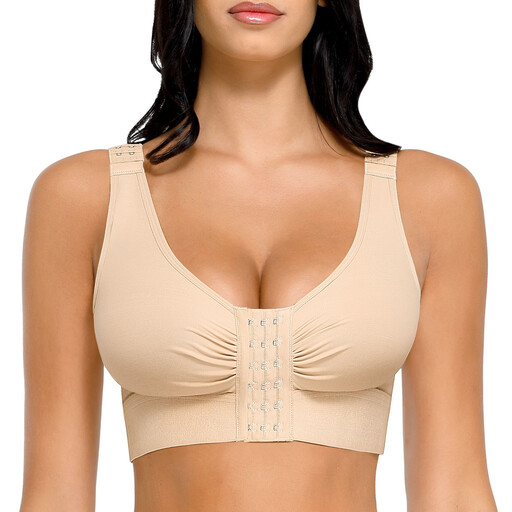
Why this product fits the profile: This bra offers moulded cups, a front closure and, according to the product description, a material blend of 53% nylon and 47% spandex. The size M variant features eight rows of hooks for adjustment.
The rows of hooks allow for gradual adjustment. However, the size should still be chosen based on the size chart and your doctor's instructions.
Front closure, moulded cups and eight rows of hooks in the specified M variant.
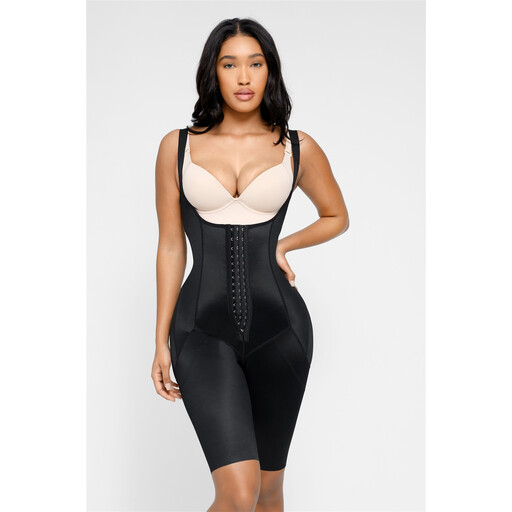
Why this product fits the profile: This body combines a U-shaped chest support with double layers of fabric at the stomach and back, a three-row front closure and adjustable straps.
The compression is adjustable via the front closure. The long crotch fastening is said to make practical use easier, according to the product description.
U-shaped chest support, adjustable straps and sizes from XS to 3XL according to the product description.

Why this product fits the profile: This seamless shapewear body is designed for users who want shaping support for the waist, stomach and back in addition to chest support.
The construction provides specific details such as a three-row closure, adjustable straps, laser-cut leg openings and mesh panels.
U-shaped chest support, medium shaping according to the product description and a zip at the crotch.
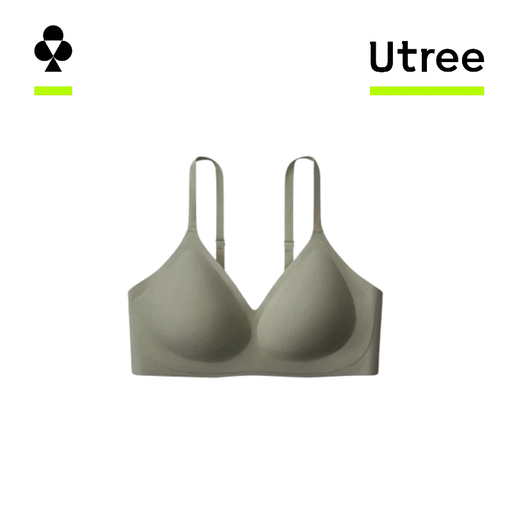
Why this product fits the profile: This seamless, wire-free bra is described as suitable for everyday wear, the office and light activities, and is not marketed as a post-operative compression garment.
Its clear classification as an everyday bra prevents a comfort bra from being mistaken for a medical compression bra.
Wire-free construction, wide side panels and sizes M to XL according to the product description.
We've put together a full, regularly updated list of products that fully meet these strict selection criteria and the safety regulations in force in the EU.
This depends on the procedure, your healing progress and your doctor's recommendation. Product descriptions sometimes mention periods like two to twelve weeks, but this information is not a personalised medical instruction. The guidance from your treating clinic is what matters.
A compression bra focuses on the chest and upper body. A post-operative body shaper also covers the stomach, back and hips. After a combined treatment, a body can be suitable in principle, provided the construction and compression level have been medically approved.
Look for a clear size chart, an easily accessible front closure, adjustable straps and specific details about the material composition. The bra should sit securely without slipping or putting pressure on sensitive areas. The final decision rests on approval from your treating specialist clinic.