Choose your oven based on the recipe, the tin you want to use and the space available for installation or positioning. A built-in oven may suit you if you regularly bake larger quantities or use several trays. A freestanding countertop oven could work for smaller batches, provided the tin fits and the temperature range is suitable. Dr. Oetker’s potato bread recipe starts at around 230 °C on the fan setting and later drops to around 180 °C. These temperatures apply to this recipe, not to every potato bread recipe.
Which type of oven is right for you?
Batch bakers with a built-in oven space
You prepare bread for several working days and want to match the size of your tin to the oven capacity, and potentially make use of several shelves. Bosch lists a 71 l capacity and fan cooking on up to three levels for the HBA571BB4.
Bakers without space for a built-in oven
You’re planning smaller batches and need a freestanding oven with dimensions, space requirements and cooking functions that suit your kitchen and recipe. Rommelsbacher lists tins up to 31.5 cm in diameter for the BG 1805/E and recommends a space at least 55 cm wide.
Regular energy-conscious bakers
You bake often and want to compare the stated energy use for the relevant cooking function with your needs. The Verbraucherzentrale explains that oven energy figures are given per standard cycle.
What to consider when buying
| Buying priority |
What to check before buying |
Who it matters most to |
| Cooking function and temperature |
Check that the recipe’s temperature and cooking function match the specifications of the particular oven. |
If I want to follow a recipe with a set sequence of temperatures, the cooking function and available temperature range need to be suitable. This is a priority for around 33% of consumers. |
| Batch size and tin dimensions |
Check the tin, tray and usable shelf height; if you plan to use several levels, check the details for the specific model. |
If I’m preparing bread for several lunchboxes, I want to know how many suitable tins or trays will fit. Around 27% of consumers say baking capacity is their main priority. |
| Built-in space or countertop space |
For built-in appliances, check the space available; for countertop ovens, check the space they need and the installation instructions. |
If there’s no suitable space for a built-in oven, I need a freestanding appliance with enough safe space around it. Around 20% of consumers focus on the lack of built-in space or the amount of room available. |
| Energy use and cleaning effort |
For labelled ovens, compare the kWh per standard cycle for the relevant cooking function; assess cleaning features based on your needs. |
If I bake often, I want to weigh up the stated energy use alongside the benefits of a cleaning function. Around 20% of consumers say running costs and effort are their main priority. |
Avoid common buying mistakes
-
Having a fan setting doesn’t mean every recipe will work
Dr. Oetker’s potato bread recipe starts at around 230 °C on the fan setting. According to the manufacturer, the Rommelsbacher BG 1805/E reaches a maximum of 230 °C; other recipes may call for a different sequence of temperatures or cooking function.
Before choosing a model, check the full temperature sequence and the cooking function specified in the recipe.
If the oven can’t reach the required setting, you may need to choose a different recipe or baking method.
-
Check your tin and available space, not just the oven capacity
The capacity in litres alone won’t tell you whether your bread tin will fit. Rommelsbacher lists a maximum tin size of 31.5 cm in diameter for the BG 1805/E and recommends a space at least 55 cm wide.
Measure your tin and the space where the oven will go. For built-in appliances, measure the installation space too, and follow the instructions for the appliance.
-
Don’t assume the energy rating tells you the electricity used per loaf
The Verbraucherzentrale describes energy figures per standard cycle, not for your specific potato bread recipe. It also points out that pyrolytic cleaning uses extra electricity.
For labelled appliances, compare the kWh per standard cycle for the relevant cooking function and choose cleaning features based on your actual needs.
Brands and model ranges to consider
Bosch
Built-in ovens. The HBA571BB4 is one example for regular baking on several levels.
- Bosch lists a 71 l capacity, a temperature range of 30–275 °C and fan cooking on up to three levels for the HBA571BB4.
- Steam technology isn’t listed for this model. The information about cooking on several levels comes from the manufacturer and isn’t a potato bread baking test.
Rommelsbacher
Freestanding mini ovens. According to the manufacturer, the BG 1805/E has a 42 l capacity and offers top and bottom heat with fan assistance.
- Rommelsbacher lists tins up to 31.5 cm in diameter and a removable crumb tray.
- The maximum temperature is 230 °C. The space for the BG 1805/E should be at least 55 cm wide, including the feet.
Severin
Freestanding fan ovens. The TO 2068 is one example, with a 20 l capacity.
- Severin lists top and bottom heat and fan cooking, which can be selected separately or together.
- The oven capacity alone won’t tell you whether a particular bread tin will fit. Check the dimensions before buying.
NEFF
Built-in ovens with fan cooking on several levels. For the B54CR71N0, NEFF lists Circo Therm for up to three levels.
- Model-specific information is available on documents, repairs and spare parts.
- NEFF doesn’t list steam technology for the B54CR71N0. The information about cooking on several levels doesn’t guarantee an even potato bread result on every level.
AEG
Built-in ovens with additional features. AEG lists SteamBake with added moisture for the B55PV2161B.
- AEG lists a 72 l capacity and installation dimensions of 590 × 560 × 550 mm for this model.
- The description of added moisture comes from the manufacturer and isn’t an independent comparison test for potato bread. It isn’t listed as a requirement for the recipe cited here.
Joybuy products for this baking task
This selection includes built-in ovens for larger batches and freestanding appliances for smaller ones. For each model, check that the temperature range, tin dimensions and available space suit your recipe and kitchen.
 No image available
Bosch HBA571BB4 Series 2 built-in oven
An option for batch baking if the built-in space is right and you want to use several levels.
Bosch lists a 71 l capacity, a temperature range of 30–275 °C and fan cooking on up to three levels. The product name also specifies pyrolytic cleaning.
Joybuy
 No image available
Comfee 60 cm built-in oven, 70 l
A built-in option if you’re looking for a larger oven and have a suitable space.
The product name lists 60 cm, 70 l, 3 kW, a grill, pizza function, AquaClean steam cleaning, a timer and ECO mode.
Joybuy
 No image available
Bosch Series 6 HBG578ES3 built-in oven
This built-in option may suit you if the installation space is right and the features listed in the product name match how you plan to use it.
The product name lists 60 cm, 3D fan cooking and AirFry. Check the dimensions of your built-in space before choosing.
Joybuy
 No image available
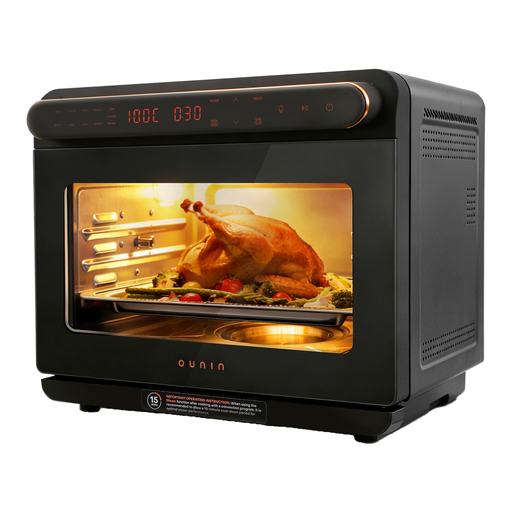
OUNIN 24 l steam combination oven, 10-in-1
A freestanding option if you’re looking for a countertop appliance with the steam baking function listed in the product name.
The product name lists 24 l, Steam Bake, a 1 l water tank and a stainless steel interior.
Joybuy
 No image available
Woltu BF12sz mini oven, 32 l
A freestanding mini oven for smaller batches, provided your tin fits and you have enough space for it.
The product name lists 32 l, 1.600 W, a timer, a crumb tray and a temperature range of 100 to 250 °C.
Joybuy
Frequently asked questions
What temperature should I use for potato bread?
It depends on the recipe. Dr. Oetker’s potato bread recipe starts at around 230 °C on the fan setting and later drops to around 180 °C. Check the full temperature sequence against the oven’s temperature range and cooking functions.
Will my bread tin fit in a mini oven?
Check the actual interior and tin dimensions rather than relying on the capacity in litres alone. Rommelsbacher lists tins up to 31.5 cm in diameter for the BG 1805/E. For other models, check the details for the specific appliance.
Can I use the energy label figures to work out how much electricity my recipe will use?
No. The stated energy use is for a standard cycle, not for your specific potato bread recipe. The Verbraucherzentrale recommends checking the figures for the relevant cooking function. Actual energy use depends on how you bake.
Do I need to preheat the oven for potato bread?
Follow your chosen recipe and the appliance instructions. Dr. Oetker’s potato bread recipe calls for preheating; the European Commission recommends preheating when the recipe or instructions say to do so.


