Batch bakers making larger quantities
If you want to prepare several loaves for the freezer, the stated dough capacity per kneading cycle is what matters – not just the bowl capacity.


For one large batch, choose a stand mixer with a stated dough capacity that covers the calculated total weight of your ingredients; a larger bowl alone is not enough. If you rarely knead large quantities or want to save worktop space, making several smaller batches may be a better option. Figures published by Kenwood, Bosch Hausgeräte Deutschland and Ankarsrum relate to specific models and are not a direct comparison of potato bread performance.
If you want to prepare several loaves for the freezer, the stated dough capacity per kneading cycle is what matters – not just the bowl capacity.
If you make smaller quantities or other bakes as well as potato bread, look for suitable bowls, a dough hook included in the box and controls that make weighing ingredients easy.
If you don’t mind making several batches, you can tailor the batch size to your kitchen and occasional use. Still, check the dough limit for the specific model.
First, calculate the quantity of ingredients for each batch, then compare it with the dough limit for the exact model. Bowl capacity and maximum dough capacity are two different figures.
| What matters | What to check when buying | Who is it important to? |
|---|---|---|
| Dough capacity | Calculate the total weight of the ingredients for each batch; check the dough limit and, where applicable, the flour limit for the exact model. | If I’m making several loaves for the freezer, I want to keep the number of kneading cycles to a minimum. Around 36% of consumers prioritise batch capacity. |
| Kneading performance | Check the dough hook, stated dough limit and test results for bread dough, rather than relying on an overall score alone. | When working with heavy bread dough, I want to know whether the machine and dough hook are up to the job, rather than relying on an overall score. Around 29% of consumers put kneading performance first. |
| Use and space | Compare the machine’s dimensions, bowl and accessories included, and the number of kneading cycles you expect to need. | If I don’t often bake large quantities and have limited worktop space, I’d rather split the batch across several cycles. Around 21% of consumers have this priority. |
| Upfront and ongoing costs | Check the dough limit and the accessories actually included; distinguish voluntary warranty cover from your statutory rights. | If I only bake larger quantities occasionally, I don’t want to pay for capacity or features I’ll hardly use. Around 14% of consumers prioritise keeping upfront and ongoing costs down. |
Bowl size and dough capacity are listed separately. In potato bread, the potatoes and liquid contribute to the total dough weight and are added to the flour.
Calculate the quantity of ingredients for each batch and check the limit for the specific model.
A lower maximum dough capacity may mean more kneading cycles.
An overall result alone doesn’t tell you how a machine performs with heavy bread dough. IMTEST reports that the Smart Touch needed extra work when handling heavy bread dough.
As well as the overall score, check the findings on bread dough and the capacity of the exact model tested.
Different model variants may come with different accessories and contents. Information about one variant doesn’t automatically apply to a similarly named one.
Check the full model number, dough hook, bowl and box contents against the specific offer.
A model range to consider if you’re planning to make large batches of dough.
The Serie 6 MUMS6ZS23D is worth considering if you want a larger bowl and an integrated scale.
The Titanium Chef Baker XL KVL85.004SI is a possible option for a larger batch; the Smart Touch KHC40.080BK is better suited to smaller batches and versatile use.
The Artisan 5KSM175PSEJP may appeal to households that want to use an extra bowl for mixing as well as making bread dough.
The SKM 600 F1 could be a simpler option if you’re looking to make smaller batches and don’t need lots of features.
According to their product details, these stand mixers are designed for working with dough or baking. Check the stated capacities and what’s included against your potato bread recipe.
 Image unavailable
The title lists a 5.5-l bowl and a Dough Mixer for working with dough.
11 speeds; 4.5″ LED touchscreen. The bowl and accessories are not dishwasher-safe.
 Image unavailable
The title lists a dough hook for working with dough, plus other mixing attachments for a range of baking tasks.
5-l stainless steel bowl, 600 W and 10 speeds; the title lists a dough hook, mixing hook, whisk and splash guard.
 Image unavailable
The title describes the appliance as a Dough Mixer for working with dough.
5.5-l bowl, 11 speeds and five preset programmes. The bowl and accessories are not dishwasher-safe.
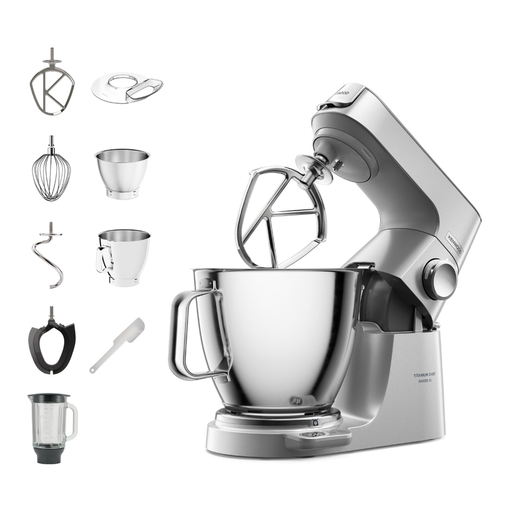 Image unavailable
An XL stand mixer for working with dough; check the exact version and whether a dough hook is included in the specific offer.
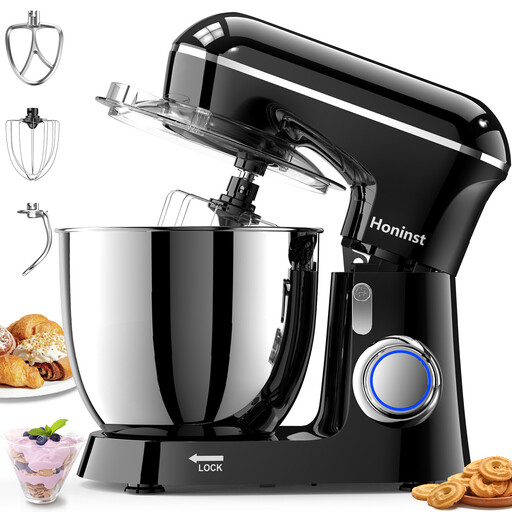 Image unavailable
If you plan to use this appliance for bread dough, bear in mind that it is intended for domestic use and do not exceed the maximum permitted quantities.
The title lists a bowl, dough hook, whisk and beater; 10 speeds.
Add up the quantities of ingredients in your recipe for each planned kneading cycle, then compare the total weight with the dough capacity listed for the exact model. A Dr. Oetker Deutschland recipe, for example, uses 300 g of potatoes and 400 g of wheat flour, plus other ingredients; bowl capacity alone won’t tell you whether the machine can handle it.
Yes, you can freeze bread and defrost it as needed. The Verbraucherzentrale describes freezing bread and defrosting it as required as an option. This is part of planning your baking, not a special feature of the stand mixer.
Check the manual for your exact model to find out which parts are dishwasher-safe and which quantities and kneading times to use. Kenwood advises checking the manual for information on whether individual parts are dishwasher-safe.
No. If you buy from a retailer in Germany, you have statutory consumer rights against the retailer; the Verbraucherzentrale says these generally apply for two years from delivery. A voluntary manufacturer’s warranty is separate and is subject to its own terms and conditions.
Electrical appliances covered by the relevant harmonised EU rules must carry the CE marking. According to Your Europe, this is the manufacturer’s declaration of conformity; it is not an independent quality mark for kneading performance.