Class leader making several loaves
If you’re preparing dough for several participants, check whether the planned amount can be kneaded in one go or whether you’ll need to work in batches.


For potato bread dough in a weekend class, choose a stand mixer that can handle the planned amount of dough per kneading cycle and meets the manufacturer’s stated capacity for bread or yeast dough – don’t base your choice on bowl volume alone. If you’re making several loaves, a higher stated capacity may be important. For smaller or wetter batches, the right attachment and the guidance for the particular machine system matter more. Kenwood, Ankarsrum and Severin specify different capacities for different models, so check them against your recipe.
If you’re preparing dough for several participants, check whether the planned amount can be kneaded in one go or whether you’ll need to work in batches.
If you’re making one loaf per person, the minimum dough quantity the mixer can handle and the guidance on attachments for wetter dough are important factors to consider.
If there’s little time between kneading and the next class session, weighing ingredients in the bowl and keeping operating and cleaning steps straightforward can help.
First, work out how much dough you’ll make per batch and check the stated capacity for the right type of dough. Then you can weigh up the attachments, your workflow and any ongoing costs.
| What matters | What to check before buying | Who is it important to? |
|---|---|---|
| Capacity per batch | Compare the total weight of your recipe with the manufacturer’s limit for bread or yeast dough for the exact model. | If I’m kneading enough dough for several participants in one go, the permitted dough quantity needs to match the total weight. Around 36% of consumers prioritise batch capacity. |
| Attachment for wetter dough | Check which attachments are included and what the manufacturer advises for small or wet batches. | For individual or wetter loaves, I want to know whether the attachment is suitable for the amount of dough and the machine system in question. Around 29% of consumers put dough handling first. |
| Class workflow and cleaning | Look for built-in scales and check the cleaning instructions for the bowl and accessories. | If I need to weigh ingredients during the class and tidy up between batches, I want to avoid unnecessary steps. Around 21% of consumers prioritise the class workflow. |
| Upfront and ongoing costs | Compare only machines with a suitable dough capacity; check any accessories you need and the guarantee terms separately. | If the mixer will only be used occasionally for a class, I want to choose its features and size to suit my actual needs. Around 14% of consumers prioritise cost. |
Manufacturers may specify different maximum quantities for different types of dough. Bosch states that the MUM58231 can handle up to 1.9 kg of yeast dough and 2.7 kg of cake batter. These figures do not apply equally to both types of mixture.
Check the manufacturer’s stated capacity for the exact model code and the type of dough in your recipe.
For the Titanium Chef Baker KVC85.124SI, Kenwood states a maximum bread dough capacity of 2.18 kg.
The MUM58231 may be suitable for batches of yeast dough within Bosch’s stated limit of 1.9 kg.
The manufacturer states that the Assistent Original can handle up to 5 kg of dough.
The Artisan 5KSM70SHX with bowl lift comes with a 6.6-L bowl and a Power Dough Hook.
For the KM 3898, Severin lists built-in scales and a maximum yeast dough capacity of 1.5 kg.
This selection includes stand mixers with features or accessories that may be useful when kneading bread or yeast dough for a class.
 No image available
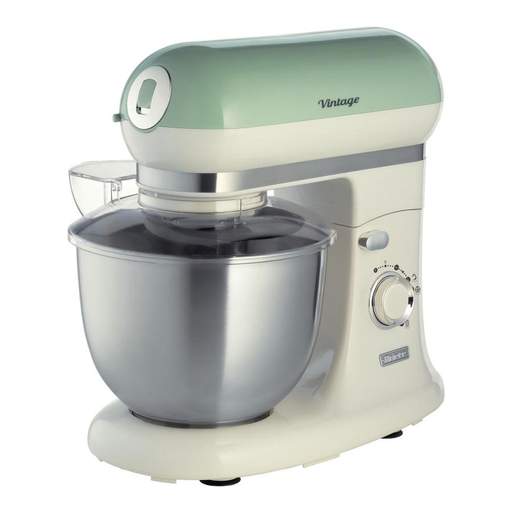
This mixer may be suitable for your class if its permitted bread dough capacity is right for your recipe.
The product name lists a 5-L bowl, 600 W and a dough hook. Bowl volume alone doesn’t tell you how much bread dough the mixer can handle.
 No image available
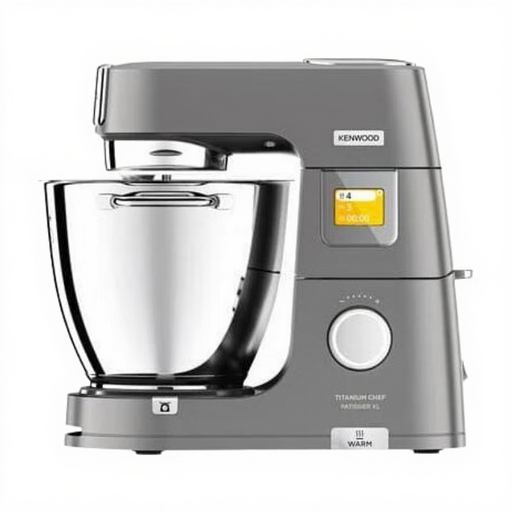
Before choosing this mixer, check that the manufacturer’s stated dough capacity is enough for your planned batch.
The product name lists a 5.5-L stainless steel bowl and 1200 W; it doesn’t specify a bread dough limit in kilograms.
 No image available
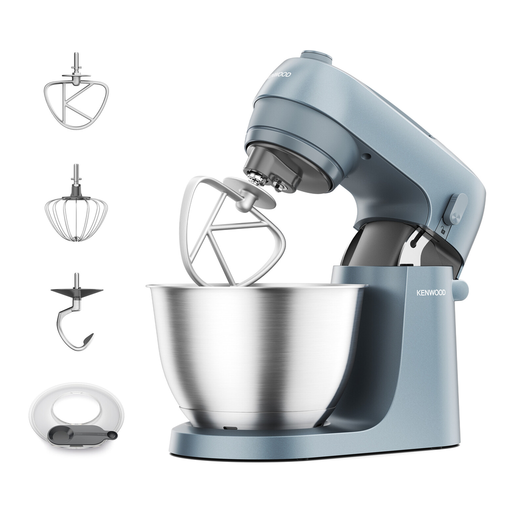
This model may be suitable for your class if its features fit the way you plan to work.
Before buying, check which dough tool is included and the permitted capacity for bread or yeast dough for this exact model.
 No image available
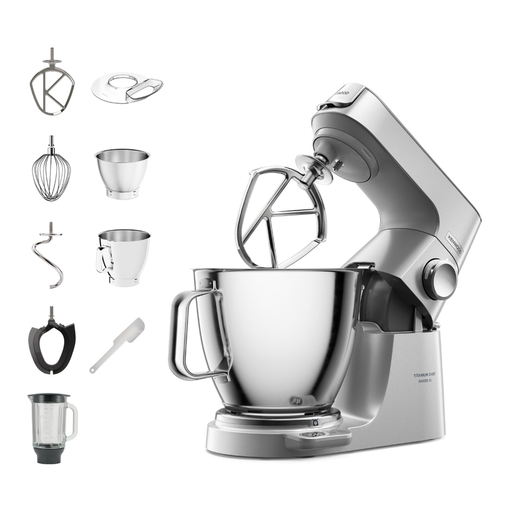
For a smaller class batch, check that your recipe stays within Kenwood’s stated maximum bread dough capacity of 1.5 kg for this model.
This figure is for bread dough, so plan the quantity for the full recipe accordingly.
 No image available
For the KVL85.124SI, Kenwood states a bread dough capacity of up to 2.56 kg. Your planned potato bread batch must stay within this limit.
Bowl size doesn’t replace checking the permitted dough quantity for your specific recipe.
Add up the ingredients for one planned kneading batch and compare the total with the manufacturer’s limit for the right type of dough and exact model code. Bowl volume and figures for cake batter, other mixtures and yeast dough aren’t interchangeable.
For the Ankarsrum Assistent Original, the manufacturer recommends using the roller for a single loaf or dough with a high liquid content, and the dough hook for large quantities. For other mixers, follow the model-specific guidance on attachments and operation.
Follow the cleaning instructions for your particular appliance. For the KM 3899, Severin says to switch the appliance off, unplug it and wait for the motor to stop before cleaning. This instruction for one model doesn’t tell you which parts of other mixers are dishwasher-safe.
No. The German Consumer Advice Centre distinguishes statutory rights, which you can exercise against the seller if a product is faulty, from a voluntary guarantee with its own terms. Check both separately for the specific offer.
Electrical appliances covered by harmonised EU rules that expressly require it must carry the CE marking. The EU explains that this marking is a declaration by the manufacturer, not a certificate from a central EU body. When checking electrical household products, the German Federal Network Agency considers factors including product identification, manufacturer details and German-language instructions with the required warnings. This does not prove that a particular offer complies with the rules.