Bakers working to a fixed oven slot
If you need to coordinate potato preparation, kneading, proving and a shared oven, a machine feature only helps with the task it actually controls.


Choose a stand mixer whose dough hook and model-specific capacity limit suit the full quantity of your potato bread recipe. Scales, a timer and a second bowl can make it easier to hand over between people, but they don’t replace separate planning for preparing the potatoes, proving the dough and oven time. Also check the identity of the appliance, its labelling and the available conformity documents for the specific listing; a CE mark is not an independent test of kneading performance.
If you need to coordinate potato preparation, kneading, proving and a shared oven, a machine feature only helps with the task it actually controls.
Compare the full recipe quantity with the stated dough capacity for the specific model, rather than relying on bowl volume alone.
When ingredients are handed over and mixing steps follow one another, bowl changes, cleaning and available worktop space all matter.
For potato bread, start by checking the quantity of dough and the right kneading attachment. Plan proving and oven use as separate steps too; an appliance timer won’t manage them automatically.
| What matters | What to check before buying | Who is it most relevant to? |
|---|---|---|
| A predictable schedule | Check whether the model has a timer or built-in scales. Plan proving and oven times separately, based on the recipe. | When we share the oven, I want to fit the kneading stage reliably into the schedule. Around 36% of consumers put a predictable schedule first when sharing oven time. |
| Dough quantity and kneading method | Compare the recipe quantity and type of dough with the dough hook and speed instructions for the specific model. | If I’m making several loaves in one batch, I want to know whether the full recipe quantity is within the stated dough capacity. Around 29% of consumers prioritise a suitable dough quantity and kneading method. |
| Changing bowls | Check exactly what’s included and whether both bowls are suitable for the tasks you have planned. | If the next person is ready to start the following mixing step, I don’t want to have to clean the bowl that’s still in use first. Around 21% of consumers put changing bowls first when handing over. |
| Worktop space and cleaning | Measure the available worktop space and check the dimensions and cleaning instructions for the bowl and attachments. | With limited worktop space, I want to know in advance where the mixer will go and how to clean it between tasks. Around 14% of consumers prioritise space and care over extra features. |
Bowl size, maximum flour quantity and total dough weight are different measurements. KitchenAid publishes a maximum flour quantity for certain Artisan models; Ankarsrum states a dough capacity for the AKM6230.
Compare like-for-like measurements and check the instructions for the exact model against the full quantity in your recipe.
If the permitted quantity is too small, you may need to split the recipe into several batches, making it harder to coordinate with your oven slot.
A timer only controls the appliance step it’s designed for; preparing the potatoes, proving the dough and baking still need to be included in your schedule. Backen mit Christina gives 5–10 minutes of kneading and around 1–2 hours of proving time for one potato bread recipe.
Plan the steps around your recipe and use appliance features only for the tasks they actually support.
IMTEST ranked the Kenwood Smart Touch KHC40.080BK first in its test, while also reporting that heavy bread dough needed some extra work. With the Bosch MUMS6ZS13D, some of the heavy bread dough tested remained around the edge of the bowl. These findings relate to the specific models and test conditions, not every potato bread recipe.
Consider the dough tested and the specific model separately from an overall rating, and check how closely the findings match your recipe.
The Series 6 MUMS6ZS13D may suit bakers who want to use scales and a timer while kneading.
According to Kenwood, the Titanium Chef Baker XL KVL85.004SI is designed for buyers who want to weigh ingredients on the mixer and switch between bowls.
The Artisan 5KSM175PSEFL can support consecutive baking steps with two bowls and a dough hook.
The Assistent Original AKM6230 is worth considering if you’re planning to make a larger batch of dough.
According to Philips, the Series 7000 HR7962/01 combines a timer with stated appliance dimensions.
The stand mixers below are described as suitable for kneading bread or yeast dough. They differ in features including the bowls supplied and stated batch capacities.
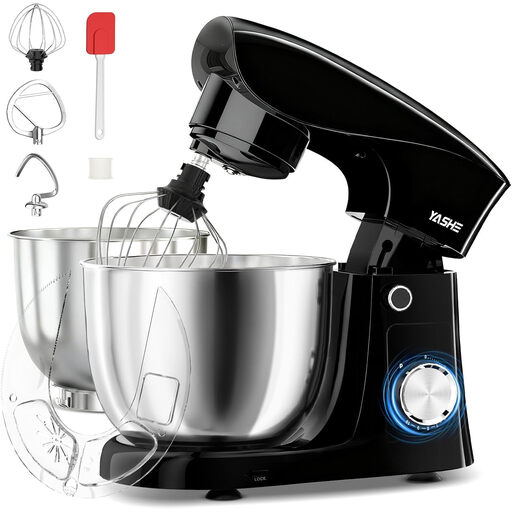 No image available
The two bowls included can help with consecutive mixing steps.
1500 W; dough hook; 4.5 l and 5 l stainless steel bowls; 10 speed settings plus pulse function.
Bowl volume alone doesn’t tell you the permitted quantity of potato bread dough.
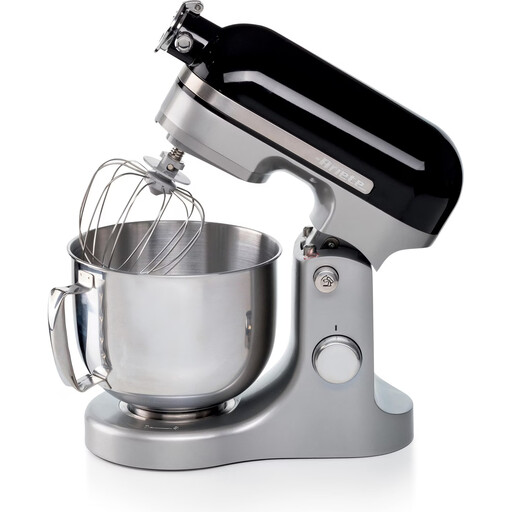 No image available
The stated dough capacity can help you check whether the mixer suits the full quantity in your recipe.
1600 W; 5.5-l stainless steel bowl; 11 speed settings; stated dough capacity of 1.4 kg; dough hook.
Plan your batch around the stated dough capacity.
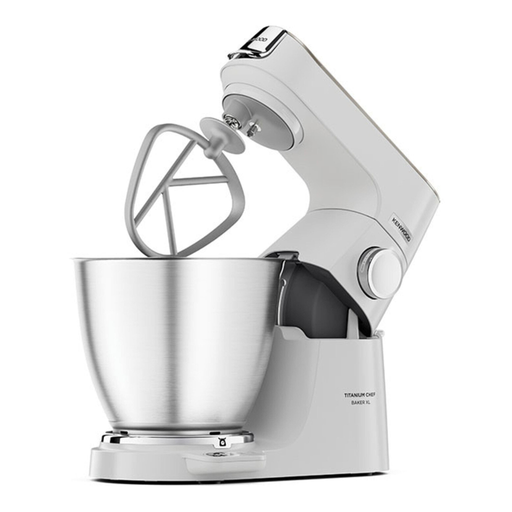 No image available
The built-in scales can make it easier to weigh ingredients directly on the mixer, and a dough hook is listed for working with dough.
1200 W; 7-l bowl; stepless speed control; 3-piece patisserie set.
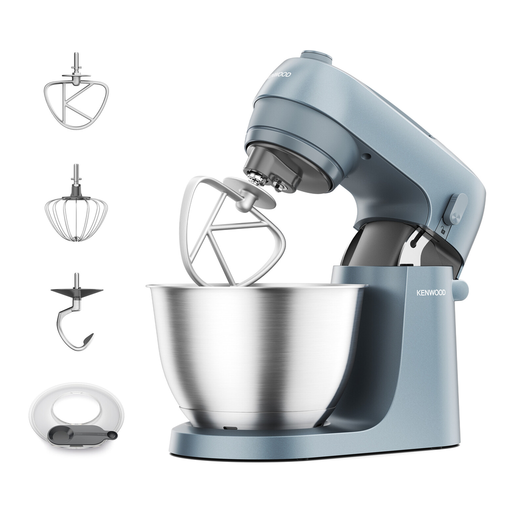 No image available
The stated bread dough capacity and appliance dimensions can help you plan your batch and where to put the mixer.
4-l bowl; 6 speed settings plus pulse function; dough hook; maximum 1.5 kg of bread dough and 0.5 kg of flour; dimensions 33.5 × 18 × 30 cm.
Compare your specific recipe quantity with both stated limits.
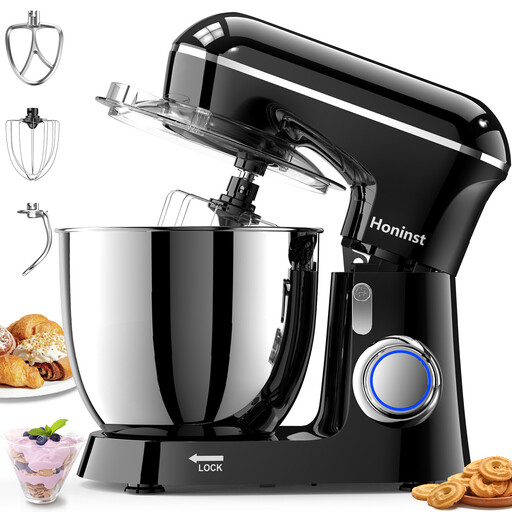 No image available
A dough hook is listed for dough preparation, but no specific capacity for potato bread dough is given.
6.5-quart stainless steel bowl; 10 speed settings; tilting head; dough hook, whisk and flat beater.
No, a mixer timer only relates to the task it controls. Plan potato preparation, proving and baking separately, according to your recipe; a potato bread recipe from Backen mit Christina includes a resting period after kneading.
Compare the ingredients and type of dough in your planned batch with the details for the specific model. KitchenAid states a maximum flour quantity for certain Artisan models; Ankarsrum gives a capacity of up to 5 kg of dough for the AKM6230. Flour quantity and total dough weight are different measurements.
KitchenAid recommends using the dough hook for yeast dough on speed 2 only, and gives limits for mixing and kneading times. Follow the instructions for your specific model and your recipe; this manufacturer guidance doesn’t apply across the board to other brands.
No, CE marking is not an independent comparison of kneading performance. Your Europe explains that it is only required for products covered by harmonised EU rules that require it. Check the identity of the appliance, its labelling and the available conformity documents for the specific listing.