Households with staggered mealtimes
If you don’t all eat at the same time, plan how you’ll keep the curry hot or cool it down and reheat it later. What matters is the temperature of the curry, not just the setting on the appliance.


A portable induction hob is a good choice for potato curry served at staggered mealtimes, provided your pan has a ferromagnetic base. If your cookware isn’t suitable for induction, consider an electric ceramic-glass or cast-iron hotplate. If you want to cook the curry and a side dish at the same time in separate pans, you’ll need two suitable cooking zones. Whatever appliance you choose, the Federal Institute for Risk Assessment (BfR) recommends keeping food at 60 °C or above throughout while hot-holding it. When reheating, the BfR recommends reaching at least 70 °C throughout for two minutes.
If you don’t all eat at the same time, plan how you’ll keep the curry hot or cool it down and reheat it later. What matters is the temperature of the curry, not just the setting on the appliance.
A portable extra hob could be just right for a pan of curry. Check that your pan is suitable for the cooking technology and the stated cooking-zone size, and that you can adjust the heat to simmer the curry.
If you need to use two pans at once, separate cooking zones are essential. Make sure you also have enough space, the right connection and suitable pans for both zones.
Choose the cooking technology to suit your pan and your mealtime routine. No appliance feature can replace checking the temperature of the food.
Right for you if: You have an induction-compatible pan and want an extra hob for bringing food to the boil and simmering.
Things to consider: The pan must have a ferromagnetic base. Power levels, temperature settings and a timer don’t prove that the curry has reached the desired temperature throughout.
Right for you if: You’d prefer a conventional electrically heated cooking surface rather than induction.
Things to consider: The cooking surface itself gets hot and may stay warm after you switch it off. Residual heat isn’t the same as a controlled keep-warm function for the curry.
Right for you if: You want to cook the curry and a side dish at the same time in separate pans.
Things to consider: Two cooking zones need more worktop space. If you choose induction, check that both pans are compatible, as well as the total power and the required connection.
Right for you if: You want to store the curry for longer or don’t need to keep it hot continuously.
Things to consider: You’ll need fridge space and an extra reheating step. The BfR recommends cooling hot food quickly to below 7 °C and, when reheating, reaching at least 70 °C throughout for two minutes.
| What you need | What to check when buying | Who is this important to? |
|---|---|---|
| Serve later portions | Check the food’s temperature; distinguish between a timer and a genuine keep-warm function. | If we don’t all eat at the same time, I want to know whether the curry can be kept safely hot or chilled for later. Around 36% of consumers put serving later portions safely first. |
| Simmer with control | Check the power levels and controls on the specific model; match the pan size to the cooking zone. | When I’m cooking, I want to be able to turn down the heat to suit the pan once the food has come to the boil. Around 29% of consumers prioritise being able to control boiling and simmering. |
| Keep using your existing pans | For induction, check that the pan has a ferromagnetic base; for any hob, make sure the pan suits the cooking-zone size. | If I want to keep using my existing curry pan, it’s essential that it’s suitable for the cooking technology. Around 21% of consumers prioritise compatibility with their existing pans. |
| Use two pans at once | Check the number of separate zones, the space required, the total power and the connection. | I may need two separate cooking zones for curry and a side dish. Around 14% of consumers prioritise being able to use two pans at the same time. |
The appliance setting doesn’t tell you whether the curry has reached the recommended temperature throughout. The BfR recommends keeping food at 60 °C or above throughout while hot-holding it.
Check the temperature of the food. If you plan to store the curry for longer, make sure you can cool it quickly and reheat it thoroughly.
An existing pan without a suitable ferromagnetic base won’t work on an induction hob. Ceramic-glass and cast-iron hotplates use different heating technologies.
First check that your pan is compatible and measure its base. Then compare the cooking technologies and controls on the specific models you’re considering.
For the Rommelsbacher CT 2010/IN, the manufacturer describes the 180-minute timer as a switch-off function. A timer like this won’t automatically keep food warm once it ends.
Check what happens when the timer on your chosen model reaches the end of its cycle, and don’t rely on the timer duration alone when planning later portions.
According to the manufacturer, the Severin DK 1031 has two zones, a total power of 3400 W and measures 59 × 35,5 cm in width and depth. These specifications apply to this model.
For any double hotplate you’re considering, compare the appliance dimensions, connection requirements and suitability of both pans with the product details and instructions.
The portable S-Line 2100 is an example of a single induction hob with several settings.
The CT 2010/IN and CT 2203/TC represent two different types of portable hob: induction and electrically heated ceramic-glass, respectively.
The KP 1091 is a single cast-iron hotplate, while the DK 1031 is a double induction hob for two pans.
The Kult X Mono is a portable single induction hob with a keep-warm programme.
This selection includes induction and ceramic-glass hobs with different cooking-zone layouts. For induction models, check that your pan base is compatible. For built-in hobs, also check the cut-out dimensions.
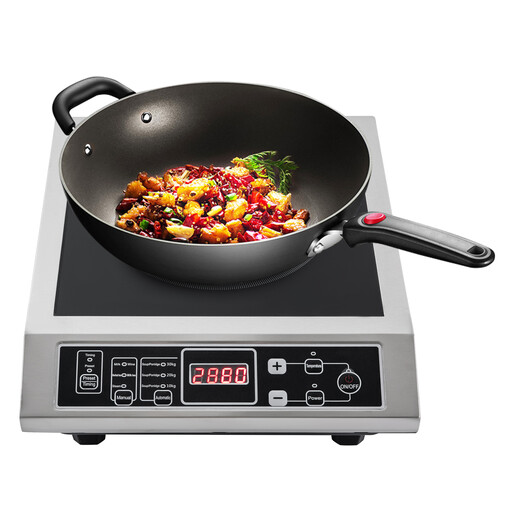 No image available
If you’re looking for an induction hob with several settings, first check that your pan is suitable.
The product title lists eight temperature settings, a timer and overheating protection.
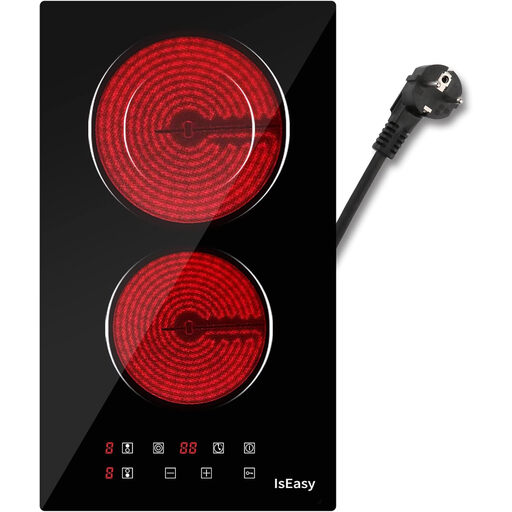 No image available
If you want to cook curry and a side dish on separate zones, check that the cooking zones suit the bases of your pans.
The product title lists two zones, nine power levels, touch controls, a child lock and a timer from 1 to 99 minutes.
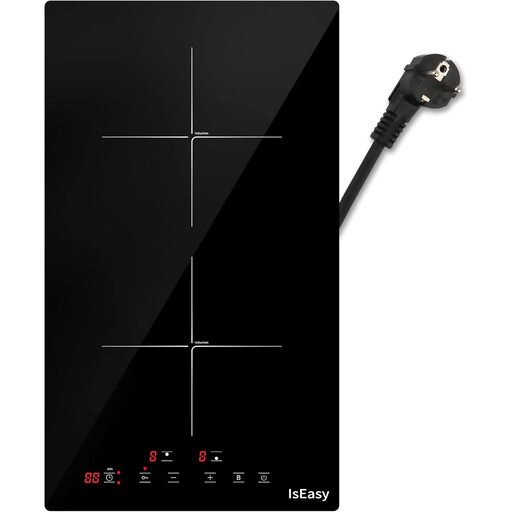 No image available
If you want to use two induction-compatible pans at the same time, check whether a built-in hob will suit your kitchen.
The product title lists 3.400 W, a width of 29,5 cm, nine heat settings and a timer. According to the product details, installation requires a 270 × 490 mm cut-out; check these dimensions against your worktop.
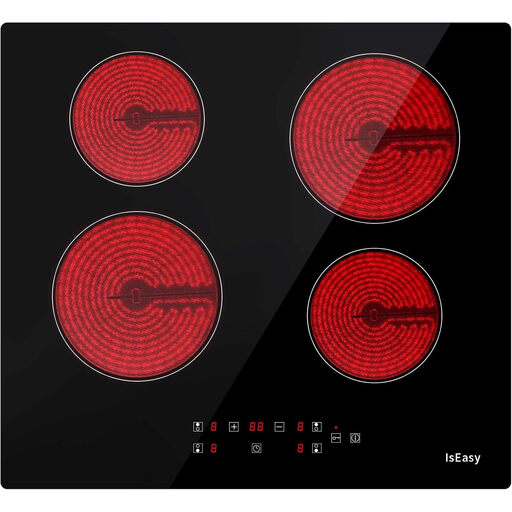 No image available
If you plan to use several pans on the hob at once, check the available space and installation dimensions.
The product title lists four zones, 59 cm, 6.000 W, nine heat settings, touch controls and a child lock. It’s listed as a built-in hob.
 No image available
If you’re looking for a portable induction hob, first check that your pan is induction-compatible.
The product title lists a glass surface, nine heat settings, touch controls and an eight-hour timer.
No, it doesn’t confirm the temperature of the food. The BfR recommends keeping heated food at 60 °C or above throughout until it’s eaten, so check the temperature of the curry.
For longer storage, the BfR recommends cooling hot food quickly to below 7 °C. The BfR’s kitchen hygiene infographic recommends reheating food to at least 70 °C throughout for two minutes. If you’re keeping the curry hot instead, the recommendation is to maintain at least 60 °C throughout.
No, the pan needs a suitable ferromagnetic base. Check the pan’s label or the manufacturer’s information, and compare the base diameter with the size specified for the hob.
Not necessarily. For the Rommelsbacher CT 2010/IN, the manufacturer describes the 180-minute timer as a switch-off function. Check whether the timer on the specific model switches the appliance off or actually controls a keep-warm function.
No. The Verbraucherzentrale distinguishes your statutory rights against the seller from a voluntary guarantee, which is subject to its own terms and conditions. If there’s a fault, check who you bought the product from and what additional guarantee terms are offered.