If you’ll be serving it soon, an oven with a dedicated keep-warm function may be an option; the German Federal Institute for Risk Assessment (BfR) recommends keeping heated food at a minimum of 60 °C throughout. If you’ll be serving portions much later, the BfR recommends cooling hot food quickly to below 7 °C for longer storage, then reheating each portion thoroughly when needed. Choose an oven cavity and design to suit your baking dish and kitchen. A grill or top heat can help brown the surface, while a steam function isn’t automatically a reheat function.
Which option suits you
Households eating at slightly different times
You want to serve a freshly cooked gratin while it’s still hot and keep an eye on its temperature as you hold it warm. A dedicated keep-warm function may be more important than extra automatic programmes. The BfR recommends keeping food at a minimum of 60 °C throughout; Siemens lists a keep-warm setting among the heating modes on the HB774G1B1.
Households eating individual portions later
You want to chill any leftover portions quickly and reheat them thoroughly just before each meal. For longer storage, the BfR recommends cooling hot food quickly to below 7 °C. A reheat function is only relevant if it’s specifically listed for the appliance in question; AEG describes its reheat function as a steam function for warming up leftovers.
Gratin makers who need more space or browning
You’re comparing your baking dish with the usable oven cavity and want to brown the top just right. A grill or top heat can be important for this; the oven design and the dimensions of your dish should suit your kitchen and appliance. The SWR highlights grill functions for browning dishes under the grill, while Rommelsbacher gives a maximum dish size for the BG 1805/E.
Key buying considerations
First decide whether you want to keep the gratin hot for a short time or chill later portions and reheat them. Then consider the size of your dish, browning options and the space available.
| Consideration |
What to check before buying |
Who this matters to most |
| Keeping food safely hot |
A dedicated keep-warm function and the ability to check the gratin’s temperature in several places. The BfR recommends a minimum of 60 °C throughout. |
If I want to serve a finished gratin hot when meals are only slightly staggered, checking the food’s temperature is essential. Around 36% of consumers say keeping food hot is their main consideration. |
| Portions for later |
A suitable dish for your portions and, if you want one, a specifically listed reheat function; reheat each portion thoroughly. |
If you’re eating much later, you’ll want to chill leftovers quickly and reheat only the portion you need. This is the main consideration for around 29% of consumers. |
| Browning and dish size |
Compare the usable internal dimensions with your baking dish and check whether a grill or top heat is listed. |
If I’m using a larger dish and want a browned top, the oven cavity and heating mode need to be suitable. Around 21% of consumers prioritise dish size and browning. |
| Design and running costs |
Check the dimensions of the oven space or a safe surface to place it on, as well as the kWh per standard oven cycle for appliances with this information. |
If you want an appliance that suits your kitchen and you’re comparing energy use, consider how you plan to use it. Space and running costs are the main considerations for around 14% of consumers. |
Common misconceptions when buying an oven
-
A keep-warm setting automatically keeps food safely hot
The oven temperature you set doesn’t tell you what temperature the gratin actually reaches or maintains throughout.
If you’re keeping the gratin hot, check the food’s temperature in several places. The BfR recommends a minimum of 60 °C throughout.
-
Every steam function is suitable for reheating
Steam-assisted baking isn’t the same as a function for reheating chilled food. NEFF distinguishes between Base Steam and Added Steam; AEG describes reheating as a dedicated steam function.
Check whether a reheat function is specifically listed for the model you’re considering, and follow the relevant instructions.
-
The capacity in litres is all you need to check your baking dish
Your dish needs to fit through the oven opening and inside the usable cavity. For the BG 1805/E, Rommelsbacher lists a maximum dish diameter of 31.5 cm as well as the capacity.
Compare the width, length or diameter, and height of your dish with the appliance’s specific dimensions and usable internal measurements.
-
The energy label tells you how much energy is used to keep food warm
The stated kWh figures relate to specific standard oven cycles, not an arbitrary period of keeping food warm.
Only compare standard cycles on a like-for-like basis, and treat longer periods of keeping food hot as a separate use.
Keeping food hot for longer means running the oven for longer. You can’t work out the energy use for this period from the figure for a standard cycle.
Brands to consider
Siemens
Built-in ovens with a dedicated keep-warm function may be worth considering if you’ll be serving food at slightly different times.
- For the HB774G1B1, Siemens lists keep warm, grill and hot air among the heating modes.
- This doesn’t prove that the gratin reaches or stays at a minimum of 60 °C throughout; the model is described as having no steam technology.
Bosch
The HBA571BB4 is an example of a conventional built-in oven with a grill and hot air.
- Bosch lists a 71 l oven capacity, full-width grill and hot air for the HBA571BB4.
- A dedicated keep-warm function isn’t among the listed heating modes. A wide temperature range isn’t the same as a specific keep-warm setting.
NEFF
Steam functions differ in what they’re designed to do.
- NEFF describes Base Steam as an aid to baking and Added Steam as providing extra moisture when roasting, too.
- The names alone don’t confirm that an appliance has a reheat function. Check the features of the specific model.
AEG
For portions you’ll eat later, consider models that specifically list a reheat function.
- AEG describes its reheat function as a steam function for warming up leftovers.
- The claim about moisture on the surface comes from the manufacturer; it isn’t based on an independent comparison using potato gratin. Check the instructions for the specific appliance.
Rommelsbacher
A freestanding mini oven may be an option if you don’t have a suitable built-in space.
- Rommelsbacher lists a capacity of 42 l and space for dishes up to 31.5 cm in diameter for the BG 1805/E.
- According to the manufacturer, the temperature setting starts at 80 °C; a separate keep-warm function with a lower temperature setting isn’t listed for this model.
Joybuy products for gratin and serving at different times
This selection includes a 70 l built-in oven with grill and fan-assisted cooking, as well as an appliance with an oven function and a 15 l capacity. For both, compare your baking dish with the usable interior; the capacity in litres alone doesn’t confirm that a particular dish will fit.
 No image available
Comfee built-in oven, 60 cm, 70 l, 3 kW, fan-assisted cooking, grill and pizza function
This built-in oven may be a good choice for a gratin with a browned top, as long as it fits your oven space and baking dish.
Features include 70 l capacity, 60 cm width, 3 kW power, fan-assisted cooking, grill and a pizza function. It also has a timer, LED display, ECO mode, AquaClean steam cleaning and an A energy rating.
Joybuy
 No image available
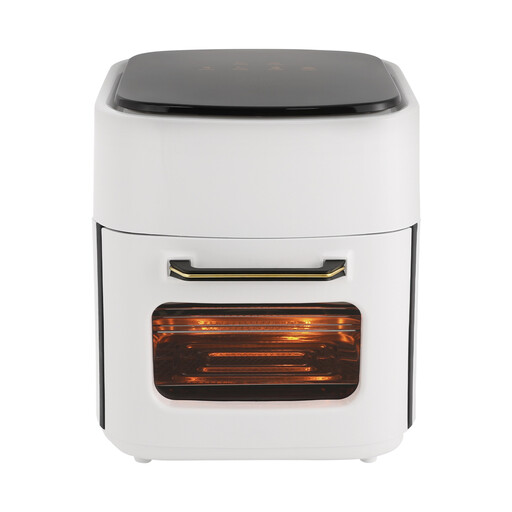
Air fryer with oven function, 15 l, 1,400 W
For potato gratin, this appliance is only suitable if your dish fits in the usable interior and you can cook the portion you want.
Features include 1,400 W power, a temperature range of 80–200 °C and a timer that runs from 5–65 minutes. It also has a touchscreen, preset recipes and a viewing window; according to the product information, the basket is dishwasher-safe.
Joybuy
Frequently asked questions
Is the oven’s keep-warm setting enough?
No. The setting alone doesn’t tell you the temperature inside the gratin. When keeping heated food hot, the BfR recommends a minimum of 60 °C throughout, so check the temperature of the food itself, not just the appliance.
What should I do if I won’t eat the next portion until much later?
For longer storage, cool hot food quickly to below 7 °C, as recommended by the BfR, then reheat the portion you need thoroughly when you’re ready to eat. A reheat function may be suitable if it’s specifically listed for the model in question.
How can I compare energy figures when buying?
Only compare kWh figures per standard oven cycle for the same heating mode and on a like-for-like basis. The Verbraucherzentrale explains that these figures apply to defined oven cycles; they don’t show how much energy is used to keep food hot. The European Commission describes the scope of energy labelling for household ovens.
How can I check whether my baking dish will fit in the oven?
Compare the width, length or diameter, and height of your dish with the oven opening and usable internal dimensions. A capacity in litres alone doesn’t confirm that the dish will fit; the manufacturer’s information for the specific appliance can help you check.


