If your soup pan has a suitable base for induction, a portable single induction hob is a natural choice. Check the pan’s size and weight, and how easy the controls are to use when switching from bringing the soup to the boil to simmering. For pans that aren’t suitable for induction, consider a HiLight ceramic hob or a cast-iron hotplate. A double hob is mainly worthwhile if you regularly cook a second dish at the same time. If you’re batch-cooking for several days, remember to cool portions quickly after cooking and keep them chilled, as recommended by the German Federal Institute for Risk Assessment.
Which hob is right for you?
People batch-cooking lunch in a soup pan
If you’re making several portions in one pan, choose a hob that suits your pan’s size and has easy-to-use power controls for simmering. For longer storage, the German Federal Institute for Risk Assessment recommends cooling hot food quickly to below 7 °C.
People with an existing pan that isn’t induction-compatible
If you’d like to keep using your current soup pan, compare a HiLight ceramic hob or cast-iron hotplate with the option of switching to an induction-compatible pan. Bosch Home Appliances explains the requirements for induction pans, while Rommelsbacher describes the differences between heating methods.
People short on worktop space
If you want to put your hob away after use, check its footprint and dimensions. IKEA describes the TILLREDA as a portable single hob. A second cooking zone is mainly worth considering if you’ll actually be cooking two dishes at once.
What should you look for when buying?
First, make sure the heating method is compatible with your soup pan. Then consider how easy it is to control the heat while simmering, and how much space the hob and pan will take up in your kitchen.
| What matters |
What to check before buying |
Who it matters to |
| Bringing to the boil and simmering |
Check the power settings, controls and timer against the instructions for the specific model. |
If I want to turn the heat down carefully once the soup has boiled, I look for controls that are easy to reach; around 29% of consumers prioritise simmering. |
| Pan size and weight limit |
Compare the pan’s base diameter and its weight when full with the appliance’s specifications. |
If I’m making several portions in a large soup pan, the hob needs to suit its base and weight; around 29% of consumers prioritise suitability for a larger batch. |
| Using an existing pan |
Check the pan’s base and the heating method; induction requires a suitable ferromagnetic base. |
If I want to keep using my current pan, I choose a heating method that suits its base; around 21% of consumers prioritise this. |
| Space and storage |
Check the appliance’s dimensions and make sure you have a flat, stable surface for the hob and pan. |
If worktop space is limited and I want to put the hob away afterwards, its size matters; around 14% of consumers prioritise the space it takes up. |
| Cooking two dishes at once |
Check the number of cooking zones, the appliance’s dimensions and its connection details against how you plan to use it. |
If I regularly cook a second dish alongside the soup, I need another usable cooking zone; around 7% of consumers prioritise cooking two dishes at the same time. |
Avoid common buying mistakes
-
Looking only at the wattage
Even a powerful appliance may not be suitable if the pan’s base doesn’t match the cooking zone or the full pan exceeds the permitted weight limit.
Check the base diameter and weight against the specifications for the model you’re considering. For example, CASO gives a pan size of 12–24 cm and a maximum load of 6 kg for the Touch 2000.
-
Assuming ceramic means induction
The surface alone doesn’t tell you how a hob heats. Rommelsbacher describes the CT 2200/E as a HiLight model and the CT 2010/IN as an induction model. Heated hobs can also give off residual heat.
Before you buy, check the stated heating method and follow the instructions for the specific model when cooking and cleaning.
-
Choosing a second cooking zone without a clear need
A double hob takes up more space. The manufacturer gives the Severin DK 1031’s dimensions as 59 × 35,5 cm.
Measure the space available and consider whether you really will regularly cook two dishes at the same time.
-
Leaving cooked lunch portions unrefrigerated for too long
For longer storage, the German Federal Institute for Risk Assessment recommends cooling hot food quickly to below 7 °C. It also advises keeping perishable food chilled and cool while travelling.
Divide the soup into portions after cooking, cool them quickly, then store and transport them chilled.
Useful brands to consider
CASO Design
The Touch 2000 is a portable single induction hob, with model-specific information on pan size and controls.
- CASO gives a pan size of 12–24 cm, 10 power levels and a maximum load of 6 kg for the Touch 2000.
- These manufacturer specifications don’t guarantee that every soup will simmer evenly in a full pan; the pan’s base and weight need to suit the appliance.
Rommelsbacher
The CT 2010/IN and CT 2200/E single hobs use different heating methods and have different requirements for pans.
- The manufacturer specifies an induction zone of 120–230 mm for the CT 2010/IN and heating rings of 140 and 210 mm for the HiLight CT 2200/E.
- Induction requires a suitable ferromagnetic pan base; with heated hobs, remember that residual heat may remain.
Severin
The product range includes a single cast-iron hotplate and a double induction hob.
- Severin specifies an 18 cm heating ring for the KP 1092 and two induction zones for the DK 1031.
- The double hob takes up more space. Check its dimensions and connection details, and make sure both pans are suitable by consulting the appliance instructions.
IKEA
The portable TILLREDA is a single induction hob for situations where you need to be able to put your hob away.
- IKEA specifies an induction zone with a diameter of 170 mm and a connected load of 2.000 W for this model.
- A suitable magnetic pan base is required; these specifications apply to this version of the TILLREDA.
Silvercrest
The SIKP 2200 B1 induction hob is one example of a portable single hob.
- In its test, updated on 4 August 2026, F.A.Z. Kaufkompass named the SIKP 2200 B1 the test winner.
- The report also noted that it was noisy and bulky. This assessment relates to the model tested and doesn’t replace checking the version on offer.
Joybuy hobs for potato soup
The following Joybuy products include induction and ceramic hobs. Check that the heating method suits your cookware, and that the installation or placement requirements for the specific model work in your kitchen.
 No image available
Induction hob with IGBT technology, 3500 W
The range of settings may be useful when turning the heat down after bringing the soup to the boil. Check that the pan and hob are suitable for the amount of soup you plan to make.
8 temperature settings, 8 power levels, 800–3500 W and a timer function, according to the product name.
View at Joybuy
 No image available
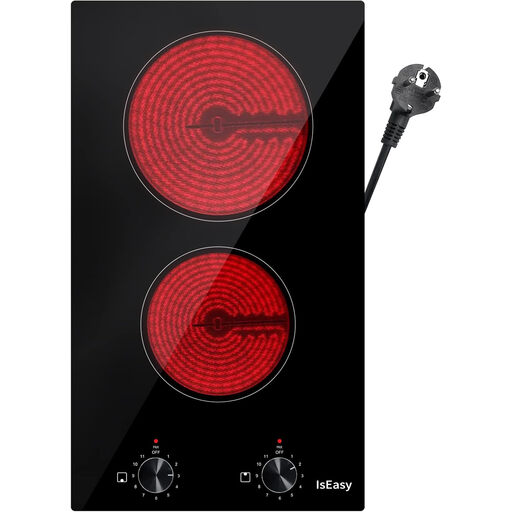
IsEasy Domino ceramic hob, 2 cooking zones
This ceramic model may suit cooks who want to keep using a pan without an induction-compatible base. Check that your pan is suitable in the instructions.
11 power levels, 3.200 W total power and a width of 29,5 cm, according to the product name.
View at Joybuy
 No image available
IsEasy portable single induction hob, 2100 W, 28 cm
This single induction hob is an option for cooking in one pan, as long as the pan’s base and size meet the appliance requirements in the instructions.
9 heat settings, ceramic surface and an 8-hour timer, according to the product name.
View at Joybuy
 No image available
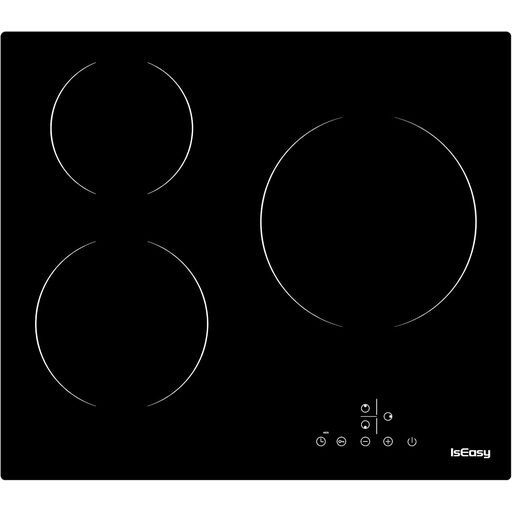
IsEasy ceramic hob with three zones, 60 cm
This three-zone model is better suited to a kitchen with enough space. Before buying, check that the planned built-in or freestanding setup will work in your kitchen.
5.500 W, 9 power levels and a timer, according to the product name.
View at Joybuy
 No image available
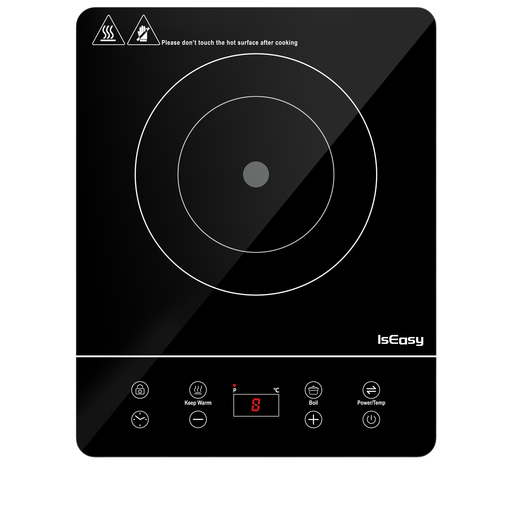
IsEasy single induction hob, 2100 W, 28 cm
This single cooking zone may suit a soup pan, provided its base is induction-compatible and fits the appliance.
9 power levels, 9 temperature settings, an 8-hour timer and child lock, according to the product name; 220–240 V.
View at Joybuy
Frequently asked questions
Will my current soup pan work on an induction hob?
Only if the pan has an induction-compatible base and fits the size range of the specific hob. Rommelsbacher specifies a ferromagnetic base and a 120–230 mm cooking zone for the CT 2010/IN. CASO gives a pan size of 12–24 cm and a maximum load of 6 kg for the Touch 2000.
Can I keep potato soup unrefrigerated for several working days?
No. For longer storage, the German Federal Institute for Risk Assessment recommends cooling hot food quickly to below 7 °C. It also advises storing perishable food at between 2 and 7 °C at most, and keeping it cool while travelling. A hob or keep-warm function isn’t a substitute for refrigeration.
How do I position and clean a portable hob safely?
Follow the instructions for the specific model and place the hob on a flat, stable surface. For the TILLREDA, IKEA recommends wiping it after use with a cloth dampened with warm water and mild detergent. Let hot surfaces cool before cleaning, and avoid steel wool and abrasive cleaners.
Does the wattage tell me how much electricity a hob uses, and does it automatically come with a warranty?
Wattage alone doesn’t show how much electricity you’ll use to cook your particular batch of soup. According to the Verbraucherzentrale, hobs don’t have their own EU energy label. Your statutory rights against the seller and a voluntary guarantee are different things. Check the terms of any guarantee offered separately.
What certification should I look for on a new electric hob?
Electrical appliances operating at 50–1.000 V AC are subject to the relevant conformity requirements. The European Commission explains that manufacturers are responsible for ensuring conformity and applying the CE marking. The Bundesnetzagentur points out that the marking isn’t an independent quality seal.


