Key buying considerations
First, decide whether a built-in oven is an option at all. Then make sure the usable tray area is right for your portion size.
| Buying consideration |
What to check before buying |
Who it matters most to |
| Space for several portions |
Check the internal dimensions of the trays and what’s included; any guidance on cooking on multiple levels at once must apply to the exact model. |
If I’m preparing several portions for lunch, I want to be able to arrange the wedges side by side. Around 33% of consumers prioritise usable tray area for this. |
| Space for an oven without built-in installation |
Compare the external dimensions, a suitable place to set it up and the tray size. |
Without a space for a built-in oven, I want a freestanding appliance that fits where I plan to put it. Around 27% of consumers focus on the space it takes up. |
| Running costs |
Compare energy consumption figures only on a like-for-like basis; don’t treat wattage as the same thing as consumption per recipe. |
If I bake often, I want to estimate running costs using comparable figures. Around 20% of consumers prioritise this. |
| Preparing food to take away |
Check the fan oven controls and removable parts; plan cooling and transport separately. |
For my lunch, an easy preparation routine and safe storage while I’m out matter most. Around 20% of consumers prioritise this. |
Joybuy products
This selection includes built-in ovens and compact baking appliances for making potato wedges.
 No image available
Bosch HBA571BB4 Series 2 built-in oven
Worth considering for preparing food on multiple levels if you have a suitable built-in oven space.
71 l; 3D Hotair for up to three levels; pyrolytic cleaning.
Built-in appliance: check the niche dimensions and installation requirements.
View at Joybuy
 No image available
Comfee built-in oven, 60 cm, 70 l
An option for cooking in a built-in oven, provided you have a suitable niche.
70 l; 3 kW; AquaClean; LED display with timer; energy efficiency class A.
Built-in appliance: check the niche dimensions against the space you plan to use.
View at Joybuy
 No image available
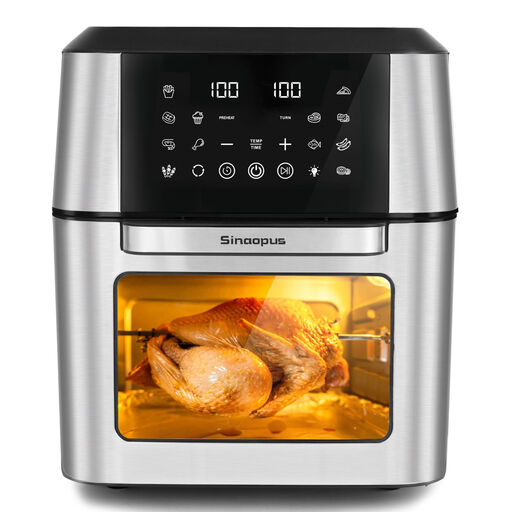
Sinaopus 12-l air fryer and mini oven
The air fryer and mini oven combination offers a baking function for smaller batches.
12 l; 1800 W; 12 programmes; touchscreen and timer.
View at Joybuy
 No image available
WOLTU BF12sz mini oven, 32 l
A freestanding baking appliance if you don’t want to use a built-in oven and have space for it.
32 l; 1600 W; timer and crumb tray; temperature range 100 to 250 °C; for baking and grilling.
View at Joybuy
 No image available
WOLTU mini oven, 10 l, with pizza function
A compact appliance for smaller portions of lunch; check that the available oven space is right for the quantity you need.
10 l; temperature range 100 to 230 °C; pizza function.
View at Joybuy
Frequently asked questions
Which oven specification matters more than capacity in litres when cooking several portions?
The key is whether the wedges will fit side by side in a single layer on the right-sized trays, and whether the instructions for that exact model recommend cooking on multiple levels at once. The Küchengötter recipe spreads the wedges across two trays and calls for turning them during cooking.
How should I store baked potato wedges for lunch?
The Federal Institute for Risk Assessment recommends cooling hot food quickly to below 7 °C for longer storage. Perishable food should be stored at between 2 °C and 7 °C at most, and kept cool while you’re out. This is a food-safety recommendation, not a promise that the wedges will stay crispy.
Do all mini ovens have the same EU energy label as built-in ovens?
No. The energy-label rules set out in Regulation (EU) No 65/2014 exclude small and portable ovens from their scope; the consolidated text on EUR-Lex is the authoritative source. The absence of a label doesn’t in itself prove that an oven uses a lot of energy. For labelled ovens, you can compare consumption per standard baking cycle.
What should I know about product safety and complaints in Germany?
CE requirements may apply to electrical and electronic equipment. According to Your Europe, CE marking is a manufacturer’s declaration, not an individual EU approval. If a product is faulty, distinguish your statutory rights against the seller from a voluntary manufacturer’s guarantee. The Verbraucherzentrale explains the difference for consumers in Germany.


