
Lieferung heute & morgen

Qualitätsgarantie

Willkommens-Angebote freischalten: KOSTENLOSE Lieferung | Bis zu 80 % RABATT | Kostenlose 30-Tage-JoyPlus-Testphase
App herunterladen
A powder foundation can save you time in the morning, come in handy when you’re out and about, and help reduce shine in targeted areas. But claims such as ‘24-hour wear’, ‘airbrush-like finish’ or ‘suitable for all skin types’ don’t automatically mean a product is right for you. The key factors are shade, coverage, application technique and the formula itself.
Claims such as ‘18 hours’ or ‘24 hours’ usually come from the product information provided by the manufacturer. They don’t necessarily describe the same application under identical conditions. Sweat, skincare, friction from clothing and frequently touching your face can all affect how long it lasts.
So look out for terms such as transfer-resistant, sweat-resistant or buildable coverage too. These give you a more specific idea of how versatile the product will be in everyday use.
A mattifying powder foundation can help reduce the appearance of shine. However, a highly mattifying product may make dry patches more noticeable. For combination skin, targeted application is often best: use more product on your T-zone and less on your cheeks and dry areas.
Make-up described as ‘pore-refining’ won’t make pores disappear either. This wording usually refers to a soft-focus effect created by fine powder particles.
A foundation can be light enough but still look wrong if the undertone doesn’t suit you. Look for the difference between:
For foundation for fair skin, shade descriptions such as ‘Fair’, ‘Light’, ‘Neutral’, ‘Cool’ or ‘Warm’ can be particularly helpful. If possible, test the shade along your jawline rather than just on your hand.
A compact foundation can be used as a light make-up powder, a medium-coverage foundation or a full-coverage foundation, depending on the tool and how you apply it. A brush usually distributes the product more thinly. A sponge or powder puff applies more colour to the skin and is useful for targeted coverage.
If the coverage is buildable, apply each additional layer thinly. This can help you avoid a heavy or patchy finish. Also check whether the product is intended for dry application or, according to the product information, can also be applied damp.
For oily skin or a shiny T-zone, matte textures with claims about shine control are a natural choice. For dry or sensitive skin, fragrance-free formulas may help you narrow down your options. However, this doesn’t rule out an individual sensitivity. Stop using the product if irritation occurs.
Check the full INCI list on the packaging. Claims such as vegan, cruelty-free, paraben-free or fragrance-free should come directly from the product description or manufacturer. Ingredients can change.
A foundation with SPF offers a stated sun protection factor as part of the product information. SPF 15 or SPF 20 doesn’t automatically replace comprehensive sun protection, particularly during prolonged UV exposure. If you’re considering a refill system, also check whether you replace just the product or the compact case too.
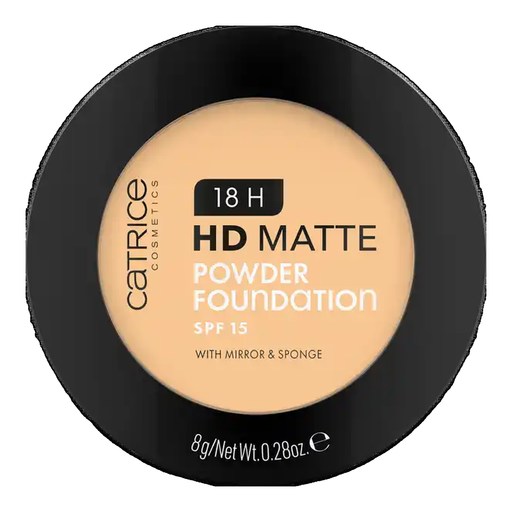
Why this product suits this profile: According to the product description, this compact comes with a mirror and powder puff, making it suitable for everyday use and quick touch-ups when you’re out and about.
The product information specifies a lightweight pressed texture, medium to high coverage and SPF 15. This clearly sets out the key factors to consider, rather than describing the product by its finish alone.
Described as matte, with a non-comedogenic formula according to the manufacturer, plus an integrated mirror and applicator.
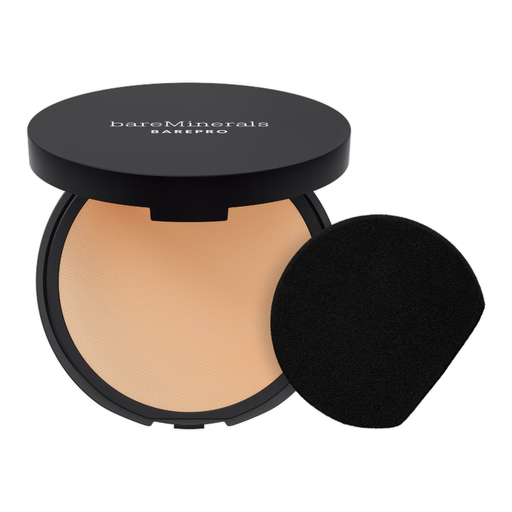
Why this product suits this profile: According to the product information, shade 17-Fair Neutral is designed for fair skin with a neutral undertone. Its high, buildable coverage is intended to create an even, matte finish.
The product details list the shade, undertone, coverage and finish separately. This makes it easier to choose than a blanket claim such as ‘for all skin tones’.
Described as vegan and cruelty-free, and free from alcohol, fragrance and preservatives.
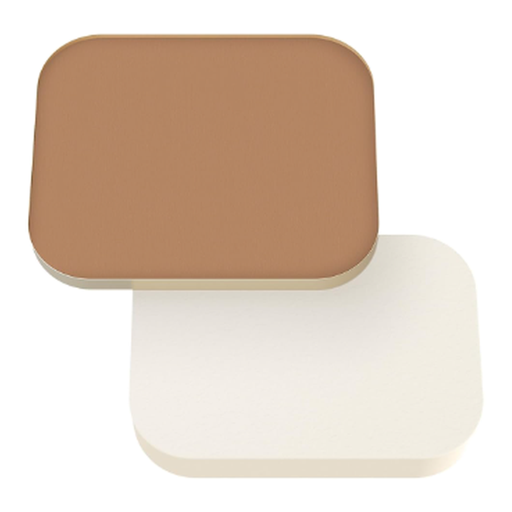
Why this product suits this profile: The refill format is a good option if you use compact foundation regularly and would rather not replace the case every time you buy more.
The product information specifically mentions a one-click refill system, SPF 20 and several undertone options. Before buying, check that the shade listed is right for your skin.
Refillable compact packaging, described as matte, full coverage according to the product description and a vegan formula according to the brand.
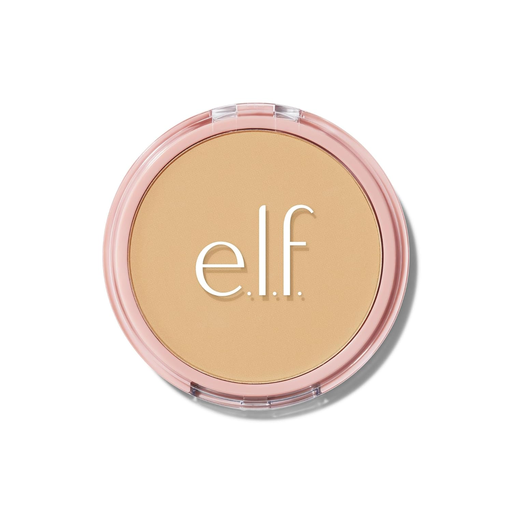
Why this product suits this profile: According to the product description, this lightweight, buildable powder foundation is designed for a natural, soft-focus look and quick touch-ups.
Its coverage is described as light to buildable. If you’re not looking for a full-coverage foundation, this can help you choose a product that better matches the look you want.
According to the product information, it is vegan and cruelty-free, with squalane and a hyaluronic acid derivative in the formula.
Store the compact in a dry place and keep it closed securely. Clean sponges and powder puffs regularly, or replace them according to the manufacturer’s instructions. Stop using the product if you notice a change in its smell, colour or texture. Always follow the shelf-life and batch information on the packaging.
We’ve put together a complete, regularly updated list of products that meet these strict selection criteria and fully comply with the safety regulations in force in the EU.
A matte or mattifying powder foundation can be a practical choice for oily skin and shiny areas of the face, as powder helps reduce the appearance of excess shine. However, check how your skin responds and avoid applying unnecessarily thick layers.
Wear time depends on the formula, your skin type, the climate, your skincare and how you apply it. Manufacturer claims of 18 or 24 hours should be treated as product information, not a guarantee for every everyday situation. For touch-ups on the go, a compact with a mirror and applicator is particularly handy.
Not always. Pressed face powder is often used to set make-up or mattify the skin, and may be transparent or lightly tinted. Powder foundation, on the other hand, usually contains more pigment and is designed to even out the complexion on its own, with a defined level of coverage. Check the packaging and product page to confirm the intended use.