
Lieferung heute & morgen

Qualitätsgarantie

Willkommens-Angebote freischalten: KOSTENLOSE Lieferung | Bis zu 80 % RABATT | Kostenlose 30-Tage-JoyPlus-Testphase
App herunterladen
A dead battery on your smartphone or laptop is never convenient, especially when there's no power outlet in sight. A power bank, also known as a mobile battery or portable charger, is the obvious solution. However, the market is overwhelming, filled with technical jargon and marketing promises. Many buyers invest in a device that fails to meet their expectations. Before you make a decision, it's crucial to understand the most common pitfalls.
The 3 Most Common Traps When Buying a Power Bank:
To avoid a bad purchase, you should carefully check three technical parameters. These determine whether a power bank is suitable for your needs.
A power bank's capacity is usually stated in milliampere-hours (mAh). This value describes the nominal capacity of the internal battery cells. More relevant in practice, however, is the usable capacity that remains after accounting for energy losses (typically 25–35%).
A more precise measurement is the capacity in watt-hours (Wh). This metric is particularly important for air travel, as most airlines impose a limit of 100 Wh for power banks in carry-on luggage. A 20,000mAh power bank with a typical cell voltage of 3.7 volts has about 74 Wh and is therefore generally airline-compliant.
Rule-of-Thumb Formula for Calculating Charge Cycles:(Nominal Capacity in mAh × 0.65) ÷ Your Device's Battery Capacity = Approximate Number of Full Charges
Charging speed is measured in watts (W). While 5 to 10 watts are considered standard, modern devices require significantly more power for fast charging.
Pay attention to the type and number of ports. A modern power bank should have at least one USB-C port with PD support for both input and output. Additional USB-A ports offer compatibility for older devices. Check the spec sheet to see how the power is distributed when multiple ports are used simultaneously. Finally, weight and dimensions are also crucial factors, especially if you carry the portable charger with you daily.
Based on the criteria mentioned, we have selected a few models for different use cases.
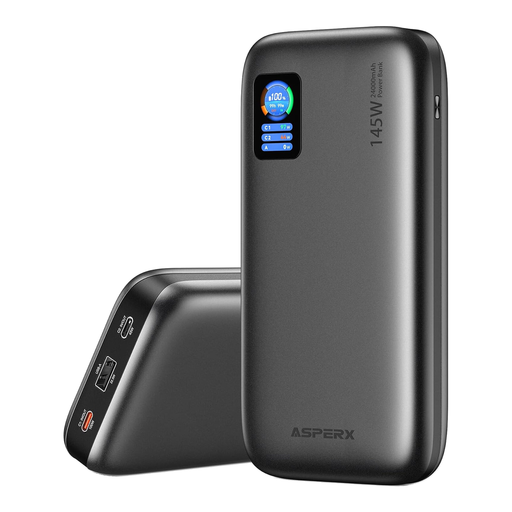
Why This Fits Their Persona: Ideal for professionals and digital nomads who need a reliable power source for their laptop (e.g., MacBook Pro), tablet, and smartphone. Its high capacity and powerful output make it the perfect companion for long workdays or travel.
It avoids the shared-power trap by delivering a dedicated output of up to 100W from a single USB-C port, which is sufficient for most laptops. The TFT display shows real-time performance, creating transparency.
High Power Output (100W PD): Charges laptops and other devices at maximum speed. Informative Display: Shows battery level, remaining time, and power metrics.
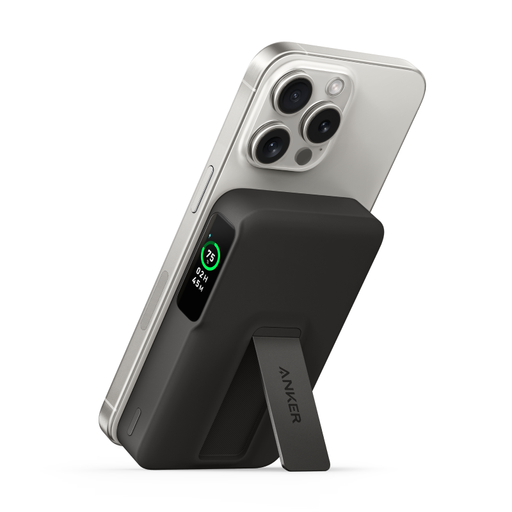
Why This Fits Their Persona: Perfect for iPhone users seeking a seamless, wireless charging experience. The integrated kickstand and compact design make it ideal for the desk, travel, or watching videos on the go.
The Qi2 certification guarantees true 15W wireless fast charging, bypassing the trap of vague "fast-charge" promises found on many magnetic chargers. The performance is standardised and reliable.
Qi2-Certified Charging: Offers twice the speed of older wireless chargers. Integrated Kickstand: Allows you to use your smartphone while it charges.
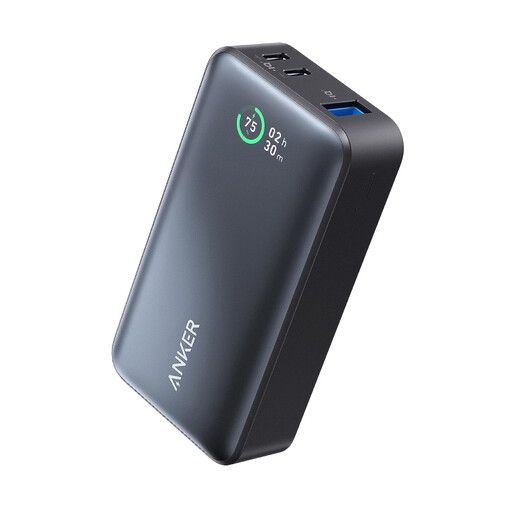
Why This Fits Their Persona: A solid all-rounder for daily use. With 10,000mAh, this Anker power bank provides enough energy for multiple smartphone charges while being compact enough for any bag. Ideal for commuters, students, and for everyday emergencies.
It delivers a clear 30W output, which is a significant and verifiable improvement over standard chargers. This avoids the vague "fast-charging" trap by offering concrete performance for modern smartphones.
Compact Design: Lightweight and portable for easy transport. 30W Fast Charging: Charges an iPhone up to 3x faster than a standard charger, according to the manufacturer.
We've compiled a complete, real-time updated list of products that fully meet these strict selection criteria and relevant safety regulations.
Yes, power banks must be transported in your carry-on luggage. Most airlines limit the capacity to 100 watt-hours (Wh) per battery. Power banks with a capacity between 100 Wh and 160 Wh often require airline approval. Devices with more than 160 Wh are generally prohibited. A power bank up to 27,000 mAh is usually under the 100 Wh limit. To be safe, always check your airline's specific regulations.
The efficiency rate describes how much of the stored energy (nominal capacity) is actually delivered to your device. Due to voltage conversion, heat generation, and internal consumption, this value is typically between 65% and 75%. A high-capacity power bank of 20,000 mAh will therefore realistically deliver around 13,000 to 15,000 mAh. This is not a defect, but a physical process to consider when planning your capacity needs.
To maximise the lifespan of the lithium-ion battery, you should follow a few guidelines: